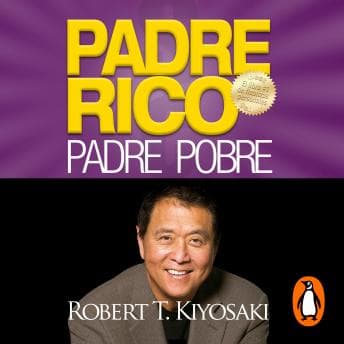

Look, I'm gonna be honest with you. I've probably listened to the English version of Rich Dad Poor Dad at least three times over the past decade. Each time I think I'm done with Kiyosaki, some founder I'm consulting for brings it up like it's scripture, and I end up revisiting it. So when I saw the 25th anniversary Spanish edition narrated by Jesús Flores, I figured - why not? My Spanish is rusty, and Jenny's been on me about being more "culturally connected." Two birds, one audiobook.
Here's my bottom line: If you've never encountered Kiyosaki's core framework, this audiobook delivers the fundamentals in about 6 hours. That's efficient. The asset vs. liability distinction? Still useful. The mindset shift about making money work for you? My parents lived the opposite of this for 30 years, and I wish they'd had access to this thinking earlier. But - and this is a big but - if you're already past the basics of personal finance, you're going to be checking your watch.
The Kiyosaki Paradox
Here's what drives me crazy about this book, and it's been bugging me since 2003. Kiyosaki presents everything as this revolutionary insight that "they" don't teach you in schools. And yeah, financial literacy education is garbage in most countries. He's right about that. But the actual advice? Buy assets that generate income. Don't confuse your house with an investment. Learn to read financial statements. It's the same wealth-building DNA you'll find in Science of Getting Rich, just with fewer anecdotes about two dads. This is what my parents did instinctively - they just didn't have the vocabulary for it. They bought the dry cleaning business. They bought the building. They reinvested. No TED talk required.
The book spends a LOT of time on mindset and not enough on mechanics. Which, fine, mindset matters. But after 25 years, I was hoping the anniversary edition might add some updated frameworks. It doesn't. The core message is unchanged - either timeless principles or evidence that Kiyosaki found a formula that sells. (Probably both.)
For someone new to financial thinking though? Skip to the chapters on assets and liabilities. The Rich Dad/Poor Dad framing device is clever but gets repetitive. You don't need the full backstory three times.
Jesús Flores at the Mic
Okay, so the narration. Jesús Flores brings this clean, professional energy that matches the book's tone. His Castilian Spanish is crisp - I was worried I'd struggle with regional variations, but he keeps it accessible. The pacing is steady, which matters because Kiyosaki tends to repeat himself, and a narrator who rushed would make that worse.
What I appreciated: Flores doesn't try to be dramatic. This isn't a thriller. It's financial education wrapped in memoir, and he treats it that way. Clear. Direct. The kind of voice you'd want explaining a concept at 2x speed during your morning commute. (Yes, I listened at 2.0x. The content doesn't require slow absorption.)
I couldn't find a ton of background on Flores online, but based on this performance, he's got the right instincts for non-fiction. He knows when to emphasize and when to let the content breathe. That's harder than it sounds.
Who Gets Value Here (And Who Doesn't)
If you're a Spanish-speaking listener who hasn't been exposed to Kiyosaki's framework, this is a solid starting point. The 6-hour runtime respects your time more than most business books. The production is clean. Flores makes it easy to absorb.
But here's my honest take: If you've read any modern personal finance content - Ramit Sethi, Morgan Housel, even the FIRE movement basics - you've already absorbed Kiyosaki's DNA. This book influenced everything that came after. Which makes it historically important but not necessarily essential listening in 2024.
Listen if: You're new to wealth-building concepts, want to improve your Spanish while learning something useful, or need a refresher on first principles. Skip if: You've spent any real time with personal finance content in the last five years - you already know this stuff.
I finished it during a consulting trip to Austin. Three flights, a lot of airport waiting. It passed the time. Jenny asked if I learned anything new. I said, "It reminded me why my parents were smarter than they knew." She said that was sweet. I said it was just accurate.
The ROI Calculation
The core message is worth the listen. The other 5 hours? Depends on where you are in your financial education. For beginners, it's foundational. For everyone else, it's a refresher that might spark a useful thought or two.
My 2.0x speed couldn't save the repetitive sections, but the core message still holds up. Just don't expect it to revolutionize your thinking if you've been paying attention to personal finance for the last decade.