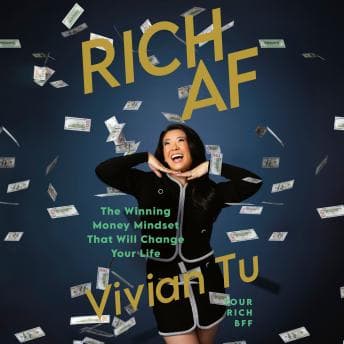

So everyone keeps telling me this is the personal finance book for our generation, the one that finally makes money make sense. And look - I wanted to love this. I really did. A former Wall Street trader who pivoted to TikTok financial education, narrating her own book about the money secrets rich people gatekeep? On paper, that's my exact jam. But somewhere around hour 3, cruising down the peninsula at 6:47 AM, I realized I was mentally refactoring a Kafka consumer config instead of listening. And that's... not a great sign.
Let me be clear: Rich AF isn't bad. It's just not new if you've already done even baseline personal finance homework.
The "I Learned This From r/personalfinance in 2019" Problem
Here's the thing. Vivian Tu has a genuine gift for breaking down financial concepts without being condescending. Her explanation of tax-advantaged accounts - the difference between traditional and Roth IRAs, when a 401(k) match is literally free money you're leaving on the table - is crisp and accessible. She's got this energy like your slightly older coworker who actually likes explaining things at lunch. That's rare and valuable.
But if you've read I Will Teach You to Be Rich by Ramit Sethi, or even skimmed the Bogleheads wiki, you're going to spend a lot of this 8-hour runtime nodding along going "yep, knew that." HYSA recommendations, index fund investing, the latte factor reframe, negotiating your salary - it's the personal finance greatest hits album. Well-produced greatest hits, sure. But I kept waiting for the deep cut that never came.
Where Vivian does add something Ramit doesn't is the mindset stuff - she talks about growing up as the daughter of Chinese immigrants and how that shaped her relationship with money, the scarcity thinking versus abundance thinking. Those parts felt genuinely personal and honest. But they're sprinkled in, not the backbone of the book. I wanted more of that Vivian and less of the "here are the 5 types of bank accounts" Vivian.
Author-Narrated: The Double-Edged Sword
Vivian narrates this herself, and she's... fine? She's clearly comfortable talking - you don't build a multi-million-follower TikTok presence without that skill. Her delivery is conversational and upbeat, like she's recording a really long podcast episode. Which is both the strength and the weakness. That persuasion-through-likability thing is actually a skill worth studying on its own terms — Thank You for Arguing breaks down exactly why the "trusted friend" register is so disarming, and I kept thinking about it while listening to Vivian work the format.
The strength: it genuinely feels like getting advice from a friend. Not performative, not stiff. She laughs at her own jokes occasionally, drops in asides that feel unscripted (even though they obviously aren't). There's a warmth there.
The weakness: it's monotone in energy. Eight hours of the same upbeat, encouraging cadence. No gear shifts. When she's talking about the emotional weight of financial anxiety versus explaining compound interest math, the delivery is basically identical. A professional narrator - someone like, I don't know, a Julia Whelan type - would've given those vulnerable moments room to breathe. Vivian kind of powers through them at the same chipper pace.
I bumped this to 1.75x immediately. Business books that could've been blog posts, remember? At that speed it's honestly a pretty efficient ~4.5 hour listen. But that's kind of damning with faint praise.
Who This Is Actually For (And It Might Not Be You)
If you're 22, just got your first real paycheck, and the phrase "index fund" makes your eyes glaze over - this book is genuinely great for you. Vivian meets you exactly where you are without judgment. She's the on-ramp.
If you're me - someone who's been maxing out retirement accounts for years and has opinions about three-fund portfolios - the ROI on this audiobook is pretty low. I kept doing the math: 8 hours of listening time × $15 credit = am I learning $15 worth of new information here? Honestly, no.
The downloadable PDF with charts and glossary is a nice touch, though I didn't look at it until after I finished. Probably should have. Some of the tax strategy stuff would've landed better with visuals, and that's an inherent limitation of the audio format for this kind of content.
The Commit Message
Rich AF is a solid git init for your financial education - clean setup, good defaults, well-documented. But it's not the advanced course it occasionally pretends to be. Vivian Tu is likable and genuine, and I genuinely respect the mission of democratizing financial literacy. I just wish the book had a second half that went deeper instead of wider. If Kevin's little sister (fresh out of college, first job at a startup) asked me for a finance audiobook rec, I'd point her here without hesitation. For the rest of us who've already been in the repo for a while? You can skip this commit.