Look, I need to rant for a second. If you're going to write a villain who's been locked away in the Summerlands for five years - which is essentially a magical timeout dimension - and then bring him back as your big bad, you've gotta make me feel the threat. Gideon Masters should be terrifying. He's a warlock who's had half a decade to stew in rage and dark magic. And Brackston gets there... eventually. But she takes the scenic route. The very, very scenic route.
I was deep into a board game solo run of Mage Knight at like 1 AM (because my thesis certainly wasn't calling) when I started this one, and I'll be honest - the pacing in the first few hours almost lost me. My Mage Knight session had more forward momentum, and that game is notoriously slow.
The Wordcount Boss Battle
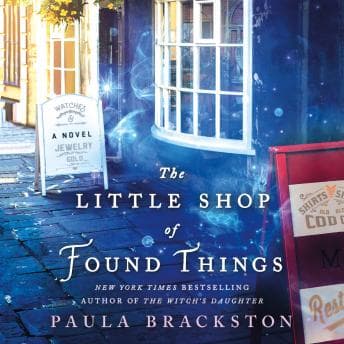
Here's the thing about Return of the Witch - Brackston can write atmosphere like nobody's business. The 17th century Batchcombe sequences have this damp, oppressive weight to them that actually made my apartment feel colder. And when Elizabeth and Tegan jump to the 19th century, there's a gaslight-and-cobblestone vibe that scratches the same itch as a really well-described D&D setting. The world-building across time periods is genuinely impressive - she doesn't just name-drop centuries, she furnishes them.
But. And this is a significant but. The prose is dense in a way that doesn't always earn its density. There are passages where Brackston describes Elizabeth's emotional state, then describes it again from a slightly different angle, then has Elizabeth internally narrate the same feeling a third time. It's like reading a college essay where someone's padding their word count - and I say that as someone who is actively padding his thesis word count, so I recognize the technique. Some listeners have flagged this exact issue, calling it "so wordy," and yeah, they're not wrong. If you don't like info-dumps, this isn't for you (but you're wrong - usually. In this case, some trimming would've been welcome).
The POV switching between Elizabeth and Tegan is where the narrative gets tangled. There are stretches where I genuinely lost track of whose head I was in. The first-person sections bleed into third-person, and without distinct enough voice differentiation in the writing itself, it can feel muddy. This is a structural issue that the audio format amplifies rather than solves.
Marisa Calin and the Narration Conundrum
Marisa Calin is an award-winning narrator - Audie, Odyssey, AudioFile Earphones, the whole shelf - and her skill is evident in the period-specific sections. She's got this measured, slightly formal cadence for Elizabeth that works beautifully in the historical passages, giving them a gravitas that matches the 1600s and 1800s settings. Her Tegan reads younger, more contemporary, which helps differentiate the two protagonists.
But here's where I wobbled: Calin's consistency across the POV switches doesn't always hold. During the transitions between narrators - especially mid-chapter flips - the vocal shift isn't always sharp enough to instantly signal "okay, we're with Tegan now." For a book that already has a clarity problem with its POV structure, the narration needed to do more heavy lifting to compensate, and it doesn't always manage it. She's still good - this is a 3.5 performance in a book that makes her job harder than it needs to be.
Gideon's voice, when he shows up, has a satisfying menace to it. Calin doesn't overplay the villainy, which I appreciate. He's cold and controlled rather than scenery-chewing, and that's the right call for a centuries-old warlock who views manipulation as craft.
The Magic System (Such As It Is)
Okay, here's where my Sanderson-poisoned brain struggled. Brackston's magic is vibes-based. It's feelings and instinct and the power of connection and love. Which is fine - not every system needs to be hard magic with rules you can flowchart. But when your climax hinges on magical confrontation, I want to understand the stakes mechanically. What can Gideon do that Elizabeth can't? What did Tegan learn in her travels that changes the equation? The answers are vague. My D&D group would be asking "but what's her spell DC?" and the book would just wave its hands and say "love is the strongest magic."
That said, the time-travel mechanic is handled well enough. The rules feel consistent even if they're never explicitly codified, and the historical settings aren't just window dressing - they actively shape what magic looks like and how it's practiced in each era. That part I respected.
Who This Hex Is For
If you loved The Witch's Daughter and you're invested in Elizabeth and Tegan's relationship, this delivers on that emotional throughline. The mother-daughter bond between them is the real engine of the book, and it's earned across two books' worth of history. Listeners who binged it in a day - and apparently some did - were clearly riding that attachment.
If you're coming from epic fantasy and want tight magic systems, clear POV structure, and lean prose? This will test your patience. It's cozy witchcraft with a villain problem and a verbosity problem. Not bad. Not essential. Somewhere comfortably in between. Night Shift landed in that same comfortable middle zone for me - same-genre vibes, similar atmospheric strengths, similar feeling of "glad I did it, wouldn't evangelize it.".
My Thesis Can Wait, But Maybe Not for This One
I finished it. I didn't regret it. But I also didn't immediately queue up the next Brackston book, which tells you something. At 13 and a half hours, it's a mid-sized commitment, and I think at 1.25x speed, the pacing issues smooth out considerably - the prose breathes better when it's moving a little faster. It's a pleasant listen for a rainy afternoon when you want witchy atmosphere without too much darkness. Just don't expect Sanderson-level world-building or a magic system that'll make you reach for a whiteboard.