
Look, I'll be honest with you. I picked this up because one of my students—junior, bright kid, never reads what I assign—told me I "wouldn't get it" because it's "for her generation." So naturally, I had to prove her wrong. Walked the lakefront with Denise for about three days straight just to finish this thing.
And here's the thing: she was half right.
The Familiar Bones, Welded Together
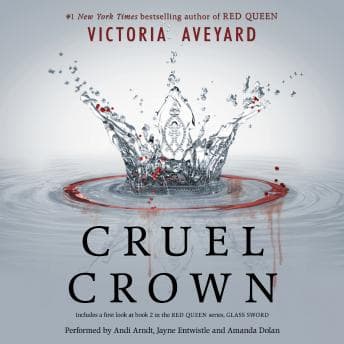
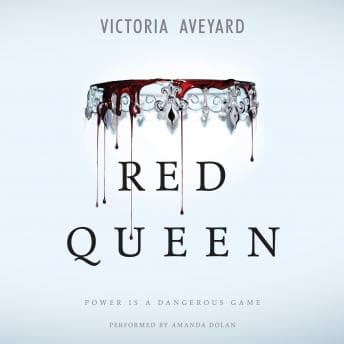
Red Queen is doing something interesting, even if it's not doing it in a way that would make my grad school professors nod approvingly. Victoria Aveyard has essentially taken the bones of every dystopian YA novel from the past fifteen years—the chosen one, the rebellion, the love triangle, the class divide—and welded them together with superhero powers and Game of Thrones-style political backstabbing. Battle of the Labyrinth does something similar with its chosen-one framework, though Rick Riordan at least has the decency to throw in some humor. It's not subtle. But subtlety isn't really the point here.
The world-building is heavy. Like, really heavy in the first few hours. Mare Barrow lives in a society divided by blood—Reds serve, Silvers rule with their supernatural abilities. You've seen this before. You know you've seen this before. The audiobook doesn't pretend otherwise. But somewhere around hour four, when the political intrigue actually kicks in and Mare's playing a dangerous game of pretending to be something she's not, I stopped comparing it to other books and just... listened.
Amanda Dolan's Mare: Craft With a Catch
Amanda Dolan's narration is where things get complicated for me.
She's technically solid. Really solid, actually. Her Mare has this edge of disdain that feels earned—you can hear twenty years of Red resentment in how she delivers certain lines about the Silvers. And she differentiates the secondary characters well. The princes sound distinct. The revolutionaries have their own cadence. This is craft. This is someone who understands that narration is performance art, not just reading words aloud.
But.
(And my students would roll their eyes at me for this "but.")
There's something about Dolan's voice that occasionally tips into what I can only describe as... whiny? Not constantly. Not even frequently. But during certain emotional peaks, Mare's frustration comes across less as righteous anger and more as teenage petulance. Which—okay, Mare IS a teenager, so maybe that's accurate? But it pulled me out of the story a few times. I found myself rewinding to catch plot points I'd missed while internally debating whether the vocal choice was intentional characterization or just an unfortunate delivery.
Slow Build, Strong Finish
The pacing is mostly fine, though "mostly fine" is doing some heavy lifting there. The first third drags. There's no way around it. Aveyard is building her world brick by brick, and while I appreciate the thoroughness, I definitely graded a few papers during the early chapters. (Principal Martinez, I was NOT listening to this during your curriculum meeting. I was absolutely paying attention to the new testing protocols.)
But when the plot finally accelerates—when Mare is thrown into the Silver court and has to navigate betrayals she can't see coming—the audiobook earns its twelve-plus hours. The palace intrigue here actually reminded me of Rich People Problems—different setting entirely, but that same energy of watching someone navigate a world where every conversation is a potential trap. The climactic sequences are genuinely engaging. Dolan's dramatic instincts serve the action well, and there were moments walking along Lake Michigan where I actually stopped moving because I needed to hear what happened next. Denise was not thrilled about this.
Here's what I keep coming back to: This reminds me of what Hemingway said about the iceberg theory—except Aveyard is showing you the whole iceberg, the water, the boat, and the captain's lunch menu. It's maximalist storytelling. Everything is explained. Every power, every political faction, every emotional beat is laid out clearly. My students would love this. I mean, they DO love this—that's why I'm listening to it.
And maybe that's okay? Not every book needs to be Middlemarch. (Though Middlemarch is superior in every way. Fight me.)
The production quality is clean—no audio issues, no weird background noise, professional all the way through. If you're commuting or doing mindless tasks, this is solid company. Just don't expect to multitask during the exposition-heavy opening.
Who's This For (And Who Should Skip)
If you loved The Hunger Games and wished it had more palace intrigue and superpowers, this is your book. If you're a YA fantasy fan who doesn't mind familiar tropes executed with energy, you'll have a good time. But if you're looking for literary complexity or subtle character work, maybe read the print version so you can skim the slower sections.
Dolan understands that pause is punctuation, and she uses that understanding well during the tense moments. I just wish those moments came a little sooner.
Mr. Williams's Final Grade
Worth pausing the faculty meeting for? During the back half, absolutely. The first few hours, you can probably keep one ear on the budget presentation.
My student asked me what I thought. I told her I got it. She seemed disappointed I didn't hate it. Teenagers.