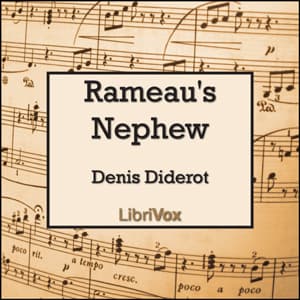

Okay, I picked this up because it was 3 hours and 31 minutes — which is basically one nap time plus two school drop-offs. That's a completable book in my world. And I figured, why not? I've been on a streak of contemporary romance and maybe my brain needed something different. Something with a little more intellectual heft. Something an 18th-century French philosopher wrote about a guy arguing in a café.
I may have overestimated my readiness for 18th-century French philosophy during toddler nap time.
Two Guys Arguing in a Café (That's the Whole Book)
So here's the deal. Rameau's Nephew is basically one long conversation between Diderot himself (or a version of him, called "Moi" — that's "Me" in French, I still remember some college French, thank you very much) and the nephew of the famous composer Rameau ("Lui" — "Him"). The nephew is this wild, shamelessly self-aware mooch who freeloads off wealthy patrons, performs ridiculous pantomimes of entire operas in the middle of a café, and argues that morality is basically just a game the powerful play. Moi tries to push back with Enlightenment ideals about virtue and art, and Lui keeps pulling the rug out from under him with this chaotic, almost stand-up-comedian energy.
The nephew's extended pantomime scene — where he physically acts out an entire opera, playing every instrument and singer at once, sweating and flailing around — is genuinely wild. Even in audiobook form, you can feel the absurdity of this man absolutely losing himself in performance while the narrator of the "conversation" just... watches. It's funny. It's uncomfortable. It reminded me of watching Lucas do his "shows" in the living room except with more philosophical despair. That unhinged performative energy actually reminded me of Office BFFs, where Jenna and Angela bring that same chaotic best-friend-performing-for-each-other vibe — just with way less existential crisis.
But here's where I have to be honest: this is a conversation-heavy philosophical dialogue from 1761, and it reads like one. There's no plot. There are no chapters in the traditional sense. It's two men talking about genius, flattery, hypocrisy, music, education, and whether it's better to be honest and poor or morally bankrupt and comfortable. Sometimes I'd pause it to get Sophie out of the crib and come back genuinely unsure if they'd moved on to a new topic or were still circling the same one. This book did NOT survive 47 pauses well. I had to rewind more than once.
BensonBrunswin and the LibriVox Reality Check
This is a LibriVox recording, which — look, free audiobooks are a gift. I use LibriVox all the time for the kids' bedtime stories. But you know what you're getting: volunteer narrators with varying equipment and energy levels. BensonBrunswin reads clearly and at a steady pace, and I never struggled to understand what was being said. That's genuinely good. But the performance is pretty flat for a text that LIVES on the contrast between two very different personalities. Moi is supposed to be the measured, rational philosopher. Lui is supposed to be this electric, unpredictable force of chaos. In this recording, they sound... pretty similar. The nephew's big pantomime moment — which should crackle with manic energy — comes across more like someone reading stage directions than performing them.
For a free recording? Totally serviceable. But if you're expecting the kind of vocal characterization that would actually make this dialogue sing (pun intended, given all the music talk), you might wish for a more theatrical narrator.
Who's This Actually For?
If you studied philosophy or literature in college and want a refresher without committing to a 20-hour tome, this is great. It's short, it's genuinely witty in places, and Diderot's central question — can a person be fully self-aware about their own moral compromises and still be... kind of admirable? — is the sort of thing that sticks with you. I found myself thinking about it while making mac and cheese, which is how I know something actually landed.
But if you're looking for a story, or comfort, or something that'll carry you through the chaos of a week with small children? This isn't it. I'm not sorry I listened. But I'm also not going to pretend this replaced my usual rotation of books where people fall in love and nobody debates the nature of artistic genius for forty-five straight minutes.
Back to My Regularly Scheduled Programming
I respect this book. I'm glad it exists. Diderot was doing something genuinely sharp and funny 260 years ago, and the nephew character is one of those literary creations that feels almost too modern — a charming, self-destructive con artist who knows exactly what he is and dares you to judge him. But the flat narration and the pure dialogue format made it hard to stay locked in during the fragmented listening windows that are my actual life. If you've got a long bath and a glass of wine and zero interruptions? Maybe. If you're listening between snack demands and school pickup? Grab something with a plot.