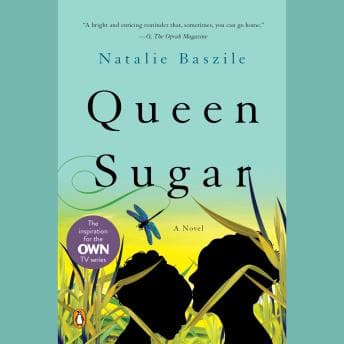

I was in the middle of a branding project for a high-end skincare line—think minimalist, clean, lots of white space—when I started Queen Sugar. And let me tell you, the contrast was jarring. Because this book? It is the opposite of minimalist. It is thick. It is humid. It is messy.
I was sitting at my desk with Diego (the cat, not a person) draped over my keyboard, sweating through another Texas afternoon, and honestly? The heat coming off this audiobook made my AC feel like it was broken.
The Humidity is a Character
Let's be real for a second. If you're coming here because you watched the TV show and you want high-octane drama every five minutes, you might want to adjust your expectations. This isn't that. This is a slow burn. Like, molasses slow.
Natalie Baszile writes like a painter who refuses to put the brush down until every single leaf on the tree has a shadow. (As an art school dropout, I respect the commitment, even if it made me impatient sometimes.) You are going to learn a lot about sugarcane farming. Like, way more than you ever thought you needed to know. At one point, I was vectoring a logo and realized I was zoning out during a long description of soil quality.
But when she focuses on the atmosphere? My god. The Louisiana setting feels heavy and real. You can smell the dirt and the rain. It's a mood. It's a vibe. It's a book for a rainy Sunday when you have nowhere to be and just want to sink into someone else's complicated life.
Miriam Hyman's Got That Grit
Miriam Hyman is the narrator here, and I couldn't find much about her other work, but she has this incredibly grounded voice. It's warm, but there's a grit to it. She doesn't do that annoying thing where narrators try too hard to do a "Southern belle" accent and end up sounding like a cartoon.
She plays Charley—the main character who inherits this farm—with this perfect mix of determination and "I have no idea what I'm doing." It felt honest. That prickly, secret-heavy family static is also what made Home Is Where the Bodies Are land for me, though that one brings a much sharper knife to the dinner table. And the way she voices the family tension? Chef's kiss.
Speaking of family—my heart. The dynamic between Charley and her brother, Ralph Angel, is painful. It's that specific kind of family baggage where you love someone but you also kind of want to shake them until their teeth rattle. My Abuela would have had so many candles lit for Ralph Angel. She would have loved the drama, gasped at the secrets, and then complained that they didn't go to church enough.
Worth the Slow Stretches?
Here's the thing: It drags in the middle. I'm not gonna lie to you. There were moments around the 7-hour mark where I checked the time remaining and sighed. It's heavy on the internal monologue and heavy on the agricultural logistics.
But the emotional payoff? It's there. It's a story about a Black woman walking into a white man's world (cane farming) and refusing to back down. It's about reinvention. And even though I wanted to speed it up sometimes (I didn't, because I'm a 1.0x purist, but the temptation was real), I missed the characters when it was over.
Who should listen: If you want something that feels like a long, complicated conversation on a porch swing with a glass of lemonade that's gotten a little too warm—this is it. Who should skip: If you like your fiction fast and plot-heavy, this pace will test you.