
Why Are Families Like This?
You know what drives me absolutely up the wall? Families who wait until the funeral to actually start communicating. I see it in the ER waiting room literally every night. The mom dies, and suddenly the three kids who haven't spoken in a decade are screaming at each other over who gets the Buick while I'm trying to explain the death certificate.
So, listening to Home Is Where the Bodies Are on my drive home felt a little too much like overtime. But in a good way. Like watching a train wreck where I don't have to triage the victims.
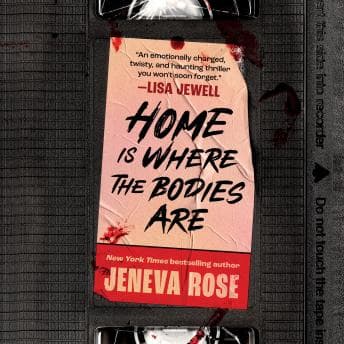
Here's the setup: Mom dies (of course), and the three estranged siblings—Beth, Nicole, and Michael—reunite to sort through the junk. And because nobody in these books ever just finds a nice photo album, they find a VHS tape of their dad covered in blood.
(Side note: I had to explain what "tracking" on a VCR was to a med student last week, so the 90s nostalgia hit me hard here. I felt old. Thanks, Jeneva Rose.)
The Avengers of Audiobooks
Let's talk about why I actually stayed in my car for ten minutes after pulling into the driveway. The cast.
January LaVoy. Brittany Pressley. Cassandra Campbell. Andrew Eiden.
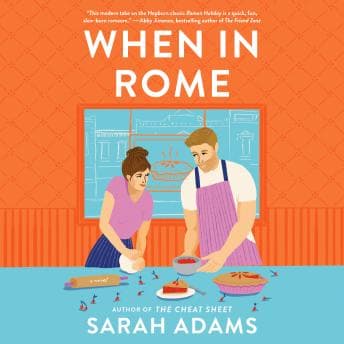
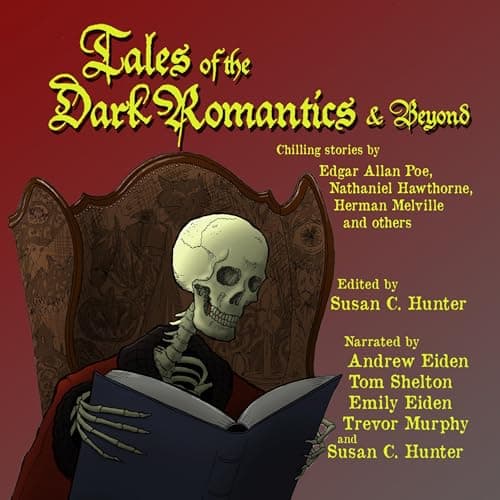
Hearing Andrew Eiden go from the gentler charm of When in Rome: A Novel to this blood-soaked sibling circus is the kind of tonal whiplash audiobooks make weirdly fun.
.If you listen to thrillers, you know these names. Getting them all in one book is like getting a full trauma team where everyone actually knows what they're doing. Usually, I'm stuck with one narrator trying to do a "gruff male voice" that just sounds like my patient in Bed 4 who smokes two packs a day.
But here? Each sibling has a distinct voice. It matters. Because the family dynamic is the whole point. You've got Beth (the martyr who stayed home), Nicole (the addict), and Michael (the golden boy who ran away).
As a nurse, I have a built-in radar for fake addiction portrayals. Usually, authors write addicts like cartoons. But the way Nicole was handled—and voiced—felt gritty. Messy. Not pretty. Brittany Pressley (I think she did Nicole? The credits were a blur at 4 AM) nailed that desperate, defensive tone.
It made the bickering stressful to listen to. But like... the good kind of stressful. The kind where you're glad it's not your family.
When the Mystery Clicks (Maybe Too Fast)
Okay, so the VHS tape reveals a murder pact from 1999. The pacing? Fast. Super fast.
Perfect for the commute because there's no dead air. You don't have those long, boring chapters where someone describes the weather for three pages. It moves.
Promise gave me that same keep-me-awake-after-a-shift propulsion, which is basically my highest audiobook metric.
.However—and look, maybe it's because I diagnose people for a living—I saw the twist coming from a mile away. Pretty much from the first few chapters. There's a specific medical/psychological angle (I won't spoil it) that was a dead giveaway if you've been around the block.
Did I care? Not really.
Sometimes I don't want to be outsmarted. Sometimes I just want to be right. I yelled at my dashboard, "I KNEW IT!" when the reveal happened. Satisfying. Like calling a Code Blue before the monitor even alarms.
Who's This For (And Who Should Skip)
If you want a slow-burn literary mystery, go somewhere else. If you want to watch a dysfunctional family implode while trying to solve a murder from the 90s—and you've got a commute that needs something with teeth—this is it. Skip if predictable twists genuinely bother you; stay if you just want to feel smug when you're right.
Clocking Out
This isn't high art. It's a messy, dramatic, blood-soaked family reunion.
The dialogue feels real—snappy, mean, and full of history. The production is clean (thank god, nothing worse than mouth noises when you're trying to decompress).
My mom would probably say it's too dark and "why are they so disrespectful to their parents?" But for me? It kept me awake on I-10. That's the only endorsement that matters.