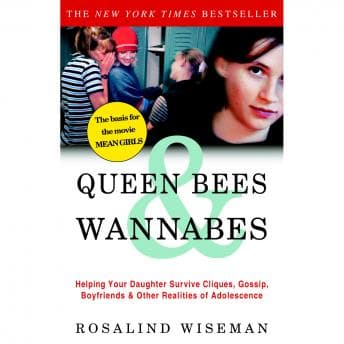

I was jogging along the Charles River this morning—trying to outrun my own dissertation deadline—when I passed a group of teenagers near the Harvard bridge. Three girls walking in a phalanx. One talking, two listening with that desperate, wide-eyed intensity that screams "please don't exile me." I almost stopped to take notes. Instead, I turned up the volume on Queen Bees and Wannabes because, apparently, I enjoy professional masochism.
The Taxonomy of Girl World
Most people know this book as the source material for Mean Girls. But listening to the actual text is less like watching a Lindsay Lohan movie and more like reading a classified CIA manual on psychological warfare. As a researcher, I have to respect Rosalind Wiseman's commitment to categorization. She doesn't just say "girls can be mean." She dissects the social hierarchy with the precision of a coroner.
We get the Queen Bee, sure. But Wiseman also introduces us to the "Banker" (who collects information to use as currency later) and the "Floater" (the Switzerland of the cafeteria). It's fascinating. And terrifying. There were moments during the "Check Your Baggage" sections—where Wiseman forces you to confront your own high school trauma—that I literally had to pause the track. My therapist is going to have a field day with this. The book argues that these aren't just phases; they're patterns of human behavior that shape how we view intimacy forever.
Every Good Endeavor made a similar argument about pattern formation—though in a very different register—and I found myself drawing the same uncomfortable parallels between my professional habits and whatever damage happened in the school cafeteria.Lee Adams as Crisis Negotiator
Adams narrates this with a style I can only describe as "competent crisis negotiator."
It's not an emotional performance, and thank God for that. If she tried to do "teen girl voices" during the anecdotal sections, I would've thrown my phone into the river. Instead, Adams adopts a forthright, coaching tone. When she reads the sample scripts—literal lines parents should say to their daughters—she shifts into this firm, supportive cadence that's distinct from her drier, more analytical narrative voice.
There's a specific section about "The Silent Treatment" where Adams drops her pitch slightly, stripping away the emotion to explain the mechanics of social isolation. It chilled me. She sounds like she's debriefing a hostage situation, which, let's be honest, is exactly what parenting a teenage girl feels like.
Clinical But Necessary
The audio format does have one drawback: the lists. There are a lot of bullet points here. "Here are five ways to handle X." In a physical book, you scan. In audio, you have to sit through Adams reading every single one. It can get repetitive around hour seven.
But the value here isn't entertainment; it's intel. I found myself mentally diagnosing characters in the novels I read (and let's be real, some of my colleagues in the psych department) using Wiseman's labels.
My mother used to handle my teenage angst by cooking aggressive amounts of dal and telling me to study harder. If she had this audiobook, I suspect our wars over eyeliner and curfew might have ended with fewer slammed doors. It's a heavy listen—dense, practical, and occasionally triggering if you remember exactly what it felt like to be excluded from the lunch table in 1998. But psychologically? It tracks. Every single bit of it tracks.
Who This Is (and Isn't) For
Parents of daughters approaching or surviving middle school—this is your field guide. Teachers, counselors, anyone who works with adolescent girls will find the framework genuinely useful. Skip it if you want entertainment or if your high school wounds are still too fresh for clinical examination.
Priya's Diagnosis
File this under "books I wish didn't feel so accurate." Wiseman has written something that functions less as parenting advice and more as a psychological decoder ring for female adolescence. The audiobook format makes it accessible for busy parents, even if those lists drag. Worth the listen—just maybe not all in one sitting.