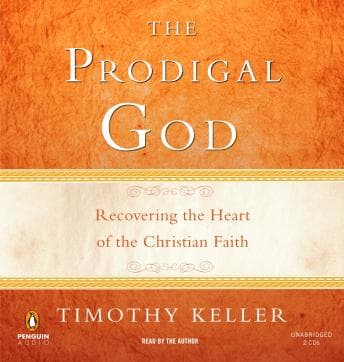

Timothy Keller has done something I didn't think was possible—he made me see the prodigal son story with completely fresh eyes. And I've taught this parable. I've preached about it in Sunday school contexts. I thought I knew it.
I didn't.
The Older Brother Problem
Here's the thing that wrecked me about this audiobook: Keller spends as much time on the older brother as the younger one. Maybe more. And that's when it hit me—I've spent twenty years identifying with the wrong character. Most of us church-going, rule-following, faculty-meeting-attending types? We're not the prodigal. We're the older brother standing outside the party, arms crossed, keeping score.
Keller calls this "elder brother lostness" and honestly, it stung. The younger son's rebellion is obvious—everyone can see it. But the older son's resentment, his sense of entitlement, his transactional relationship with the father? That's the quiet lostness that sits in church pews every Sunday. (Don't tell my students I said that. Or do. Maybe they need to hear it.)
The intellectual precision here reminds me of what C.S. Lewis did with Mere Christianity—taking familiar material and revealing the architecture underneath. Augustine pulled off something similar in City of God, reframing Rome's fall to show believers what they'd been missing about divine providence. Keller doesn't just retell the parable; he excavates it.
When the Author Reads His Own Work
Now, about the narration. Keller reads this himself, and it sounds exactly like what it is—an extended sermon from a pastor who's been preaching for decades. Some listeners find this monotonous. I get that. If you're expecting theatrical voice work or dramatic character shifts, this isn't it.
But here's my take: this works precisely because it's Keller reading Keller. The warmth in his voice when he describes the father running toward the prodigal—running, which was undignified for a Middle Eastern patriarch—you can hear that he's moved by his own material. This isn't performance. It's conviction.
I listened to this during my lakefront walks, and the sermon-like pacing actually fit the rhythm of walking. There's something meditative about it. The ideas need space to breathe, and Keller's measured delivery gives them that space. At 2.5 hours, it's not asking much of your time, but it asks a lot of your assumptions.
The Prodigal God (Not Son)
The title is the key, and I almost missed it. Keller argues that "prodigal" doesn't just mean wayward—it means recklessly extravagant. And the most prodigal character in this story isn't either son. It's the father. It's God, spending love with abandon on both the rebellious child and the resentful one.
This reframing is what makes the book work for both skeptics and longtime believers. If you've dismissed Christianity as a system of moral performance—do the right things, get the reward—Keller dismantles that. Hitchens would probably roll his eyes at Keller's approach, but even God Is Not Great couldn't dismiss this kind of self-examination within belief systems. If you've been a Christian for decades and secretly keep a mental ledger of your faithfulness, Keller dismantles that too.
My students would probably find this dry. They want action, conflict, resolution. But what Keller offers is something different—a slow, careful argument that builds toward a gut-punch. The author chose these words deliberately, and at 1.0x speed, you can feel the structure of his thinking.
Who Should Listen (And Who Should Walk Away)
If you want a dynamic audiobook experience with multiple narrators and sound design, skip this. If sermon-style delivery makes you zone out, this probably isn't your format.
But if you're someone who grew up in church and feels a little burned out on the familiar stories—or if you're skeptical of Christianity and want to see what a thoughtful, non-preachy (okay, technically preachy, but in the best way) case looks like—this is worth your two and a half hours.
What Stays With You After the Walk
I finished it three days ago and I'm still thinking about the older brother. Still thinking about my own elder-brotherliness. Still thinking about a father who runs.
That's what great teaching does. It stays with you.