
Bottom Line: The grandfather of modern fantasy. Short, sweet, and surprisingly good audio for a volunteer project.
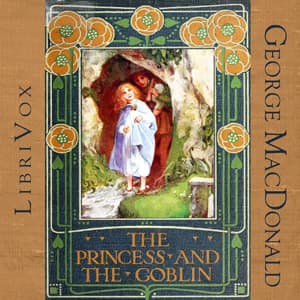
Okay, let's talk about legacy code. You know how you look at a modern distributed system and wonder, "Who wrote the original kernel that made all this possible?" Well, George MacDonald wrote the kernel for C.S. Lewis and J.R.R. Tolkien. This book is basically the main() function for 20th-century fantasy.
I usually skip the "Kids & Family" genre unless I'm babysitting my nieces and need to distract them from destroying my mechanical keyboard. But Kevin (the boyfriend) insisted. Said I needed to respect the classics if I claim to love the genre. Fine. I gave it a shot on a Tuesday morning commute.
When "Free" Actually Means Quality
Here's the thing—this is a LibriVox recording. For the uninitiated, that means it's public domain, read by volunteers. Usually, that's a massive gamble. Sometimes you get professional quality; sometimes you get a guy recording in his bathroom with a loud fan in the background while his dog barks at the mailman.
Andy Minter (RIP to a legend of the community) is the former. He treats this like a paid gig. The man does voices. Distinct ones.
Some reviews I read complained the goblins sounded "cartoonish." I mean... they're goblins? They live underground, have sensitive feet, and hate rhymes. They should sound weird. It's a feature, not a bug. Minter's narration is warm, clear, and frankly better than some Audible originals I've paid credits for. He nailed the pacing—kept me awake on the 6 AM train, which is the ultimate unit test for any audiobook.
The Source Code for Tolkien
You can literally see the DNA of The Hobbit here. Mines, goblins, ancient magic, a journey into the dark. But it's softer. Only 5 hours long. I finished it in two commutes (would've been one if Caltrain had delayed me, which, let's be real, is 50/50).
It's not a complex, distributed system of a plot like The Expanse or Bobiverse. It's linear. Simple. But the logic holds up. The magic system has rules—singing hurts goblins' feet because they have no music in their souls. Weird? Yes. But consistent. I respect a hard magic system, even in a Victorian fairy tale. Sanderson's Way of Kings takes that concept and runs it through a full enterprise architecture—hard magic rules at scale. The prose is a bit dense—very 19th-century—so I bumped it to 1.35x speed. At 1.0x, it felt a little too much like a bedtime story, and I have code to write.
Who's This For (And Who Should Bail)
Fantasy fans who want to understand where the genre came from—this is your origin story. Short commute listeners who want something complete in under a week. Skip it if you need complex plots or can't handle Victorian prose, even at 1.35x.
Closing the Loop
Is it cutting edge? No. It's 150 years old. But listening to Minter read it feels like being told a story by a very enthusiastic, talented grandfather. The ROI is high for the time investment—it's free, it's short, and it gives you major street cred with fantasy nerds.
Plus, now I can tell Kevin I've read the "classics" and go back to my space operas in peace.