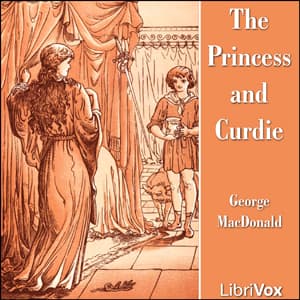

Look, everyone talks about The Princess and the Goblin like it's the ur-text of modern fantasy (because, well, it kind of is), but nobody warns you that the sequel hits different. And I mean that in the most complicated way possible.
I was deep into a thesis-avoidance spiral at 2 AM, telling myself I'd just listen to "one chapter" of something cozy before bed. Six hours later, the sun was coming up and I had Feelings about Victorian morality tales.
MacDonald's Magic System Goes Dark
So here's the thing - The Princess and Curdie isn't the whimsical romp you might expect from the first book. MacDonald basically said "okay, we did the cute goblin adventure, now let's talk about the corruption of kingdoms and the moral decay of humanity." The great-great-grandmother's magic here? It's not just mysterious and beautiful anymore. There's a test involving fire that determines your moral worth, and Curdie gains the ability to feel people's true nature through their hands - sometimes feeling beast-paws instead of human flesh.
That's Sanderson-level world-building consequences, except MacDonald did it in 1883. The magic system is *chef's kiss* in terms of internal logic, even if it's wrapped in Victorian Christian allegory thick enough to spread on toast.
Curdie's companion on this mission? A creature called Lina who's basically a chimera of nightmare fuel - described as having the body of a dog but wrong in every conceivable way. That same kind of unsettling-but-loyal companion energy shows up in Call of the Wild, though Buck's transformation goes the opposite direction—from civilized to primal. She's terrifying and loyal and honestly more interesting than half the human characters. My D&D group would absolutely try to adopt her as a party pet.
Lizzie Driver Carries the Weight
People say Driver is "the perfect voice" for these novels, and... yeah, actually, they're right. She handles the shift in tone between the first book and this one without making it feel like a different series entirely. Her Curdie sounds appropriately older, more weathered. The great-great-grandmother retains that otherworldly quality that made her so compelling originally.
But here's what nobody mentions - this is a LibriVox recording, which means you're getting volunteer work, not professional studio production. The audio is clean enough, but don't expect the polish of an Audible Original. If you're the type who notices slight room tone variations, you'll notice them here. I wasn't bothered (I've listened to worse while my neighbor's dog barked through entire chapters of other books), but fair warning.
The Ending Will Mess You Up
I'm not going to spoil it, but MacDonald does something at the end of this book that feels almost vindictive toward his own creation. The resolution is... bleak? Morally consistent with everything he set up, but bleak. If you need tidy happy endings, this isn't for you. The whole point is that MacDonald wasn't writing escapism - he was writing a warning dressed up as a fairy tale.
This is the kind of book that influenced C.S. Lewis and Tolkien, and you can feel it. The DNA is all there. But it's also the kind of book that doesn't hold your hand or promise you a comfortable ending just because the protagonists are good people.
Who Should Actually Listen
Listen if: You want to understand where modern fantasy came from, you're okay with Victorian prose rhythms, or you're a parent looking for something with actual moral complexity to discuss with older kids. Also if you're a thesis-procrastinating grad student who finds comfort in 19th-century allegory at 3 AM. Very specific demographic, I know.
Skip if: You wanted more goblin hijinks (they barely appear), you need fast pacing, or you're not in the mood for a story that's essentially asking "what if everyone in power became morally corrupt and the kingdom rotted from within?" (Bit too real sometimes, honestly.)
Yes, it's 40 hours. Yes, it's worth it. Wait, no - it's six hours. My brain is fried. It's six hours and still worth it, which is actually more impressive per-hour value.
Roll for Wisdom Save
This isn't the book I expected, but it might be the book MacDonald intended all along. The first novel was the setup; this is the payoff - and the payoff is that fairy tales have teeth. Driver's narration carries you through the darker material without losing the wonder, and at six hours, it's a reasonable commitment for anyone curious about the roots of the fantasy genre.
Just maybe don't start it at 2 AM unless you're prepared to see sunrise. I listened to this instead of writing my thesis, and I regret nothing.