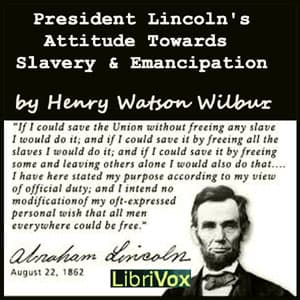

Let me cut to the chase - I expected a dry academic slog through Lincoln hagiography. What I got was something far more interesting: a document that reads like a 1913 after-action report, written by someone who clearly had an axe to grind but backed it up with receipts.
I finished this one during a long drive back from a client site in Dallas. Five and a half hours of I-35 construction zones, and honestly? Wilbur's methodical case-building kept me more engaged than I expected. Ranger was snoring in the back seat, which I take as approval.
The Intel Report You Didn't Know You Needed
Here's what makes this worth your time: Wilbur wrote this roughly fifty years after the Emancipation Proclamation, when plenty of Civil War veterans were still alive and the mythology machine was running full throttle. He's essentially conducting a counter-narrative operation. The man pulls Lincoln's own letters, speeches, and documented conversations - primary sources that most people have never actually read.
What surprised me was how complicated Lincoln's actual position was. We get the Great Emancipator narrative drilled into us, but Wilbur lays out the tactical evolution of Lincoln's thinking. The guy was a politician first, an idealist second. That's not criticism - that's reality. You don't win wars or pass legislation by being a purist. I've seen enough commanders navigate political minefields to recognize the dance.
Where History Gets Uncomfortable
Wilbur doesn't shy away from Lincoln's earlier statements that would make modern audiences squirm. The debates with Douglas, the colonization proposals, the careful tiptoeing around abolition to keep border states in the Union. This isn't the marble statue Lincoln. This is the calculating, pragmatic operator who understood that emancipation was as much a military strategy as a moral imperative.
And honestly? That makes him more impressive to me, not less. Anyone can hold principles when it costs nothing. Lincoln held them when the calculus was brutal and the stakes were existential. Wilbur gets this, even as he's clearly advocating for a particular interpretation.
Guero Behind the Mic
Guero delivers this like a LibriVox volunteer - which, fair enough, that's essentially what this is. Straightforward reading, no dramatic flourishes, no attempts to voice different historical figures. It's functional. Not going to win any Audies, but it doesn't get in the way either.
At 1.25x speed, the pacing worked fine for me. The prose is already from 1913, so you're dealing with Victorian-era sentence structures regardless. Some passages run long - Wilbur was clearly paid by the word or just loved his subordinate clauses. But that's the source material, not the narrator's fault.
Who's This Mission For?
History buffs who want primary source analysis rather than modern interpretation will find this valuable. I got a similar jolt of reality from Blitzed: Drugs in the Third Reich - another book that strips away mythology to show how things actually worked. Civil War enthusiasts who've only gotten the Ken Burns version should hear this perspective. And anyone interested in how historical narratives get constructed and contested - this is a case study.
Who should skip it? If you want entertainment, look elsewhere. If you need production values and professional voice acting, this isn't it. And if you're not comfortable with a 1913 author's assumptions and language about race - some of which hasn't aged well - you might find it frustrating.
Cooper's Assessment
Worth your time? This is a historical document that happens to be available as an audiobook, not an audiobook designed for modern consumption. The value is in the content, not the delivery. Wilbur did his homework, even if his conclusions are shaped by his era's blind spots.
I came away with a more textured understanding of Lincoln than I had before. Not the saint, not the secret racist some revisionist takes push, but the commander-in-chief navigating an impossible situation with the tools available. That's the Lincoln I can respect - the one who got things done when perfect wasn't an option.
Ranger woke up for the last chapter. Make of that what you will.






![Steve Jobs [unabridged audiobook] audiobook cover](/_next/image?url=https%3A%2F%2Fcovers.audiobooks.com%2Fimages%2Fcovers%2Ffull%2F9788499923406.jpg&w=1920&q=75)