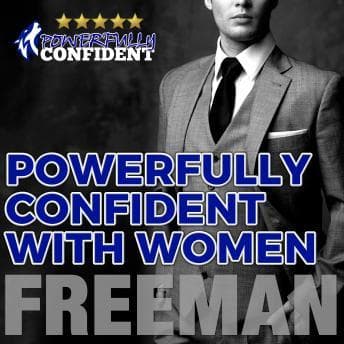

So I'm sitting on the 6:47 AM Caltrain, half-dead from an on-call page at 3 AM, and I decide - you know what, let me try something completely outside my usual sci-fi wheelhouse. A self-help book about confidence with women. At 3 hours 24 minutes, it's basically one commute plus a gym session. Low time investment. How bad could it be?
Pretty bad, actually.
The Blog Post That Wanted to Be a Book
Bottom Line: This could've been a Medium article. Maybe three Medium articles, if we're being generous.
Look, I've listened to my share of business books that pad their runtime with repetitive examples and unnecessary anecdotes. This is that, but worse. The core thesis - become confident, women will like you, also everyone else will respect you - gets repeated in slightly different phrasings for three hours. "Alpha male" this, "top 5% of men" that. The actual actionable advice? Maybe 20 minutes of content stretched like taffy.
The author narrates his own work, which... okay, I respect the hustle. But there's a reason professional narrators exist. PUA Freeman (and yes, that's the name we're working with here) reads with the cadence of someone presenting quarterly metrics to a skeptical board. Flat affect. Minimal variation. When he's supposed to be inspiring you to "make the world your playground," it sounds like he's reading a user manual for a dishwasher.
The ROI Problem
Here's my engineer brain kicking in: what's the return on investment for 3.5 hours of my life?
The book promises a "dramatic paradigm shift" through "three phases of male maturation." But it never clearly defines what those phases are or how you'd know you've moved from one to another. There are no metrics. No checkpoints. No debugging process for when things go wrong. It's all vibes-based personal development, which - fine, some people respond to that - but then don't market it like it's a systematic approach.
The "approach anxiety" section is probably the most concrete part. There's genuine advice about reframing rejection, treating social interactions as low-stakes practice. But then it veers into territory that made me genuinely uncomfortable - talking about women like they're a monolithic category with predictable responses to specific behaviors. Top 1%: Habits, Attitudes & Strategies For Exceptional Success has similar "be in the top X%" energy, but at least it focuses on career success rather than treating human relationships like an algorithm to crack. As if we're all running the same codebase.
(Spoiler: we are not.)
Who Is This Actually For?
I kept trying to figure out the target audience. Genuinely shy guys who need a confidence boost? Maybe. But the "alpha male" framing and the emphasis on being "irresistibly desired" suggests something more... pickup artist-y. The author's name is literally "PUA Freeman." The branding isn't subtle. For a more grounded take on self-improvement without the pickup artist baggage, How to Live on Twenty-Four Hours a Day offers actually useful time management advice that doesn't make me feel like I need a shower afterward.
And look - I'm not saying confidence isn't important. Kevin was pretty nervous when we first met, and watching him grow more comfortable in his own skin over the years has been genuinely attractive. But that came from therapy, honest conversations, and actually listening to feedback. Not from a 3-hour audiobook telling him to join "the top 5% of all men."
The production quality is bare bones. No music, no chapter breaks that I could discern, just Freeman talking at you. At 1.5x speed (my default), it's tolerable. At 1.75x (my "this could've been a blog post" speed), it becomes almost comically rushed, like a terms-of-service reading.
The Part That Actually Bugged Me
There's this recurring theme about "making other people feel amazing" as a strategy for getting what you want. And on the surface, sure, that's fine advice. Be kind, be generous, people respond to that.
But the framing is entirely transactional. Make people feel good SO THAT they'll give you things - attention, respect, attraction. It's not about genuine connection or, you know, actually caring about other humans. It's optimization. And I say this as someone who literally optimizes systems for a living: some things shouldn't be optimized.
The book ends with a challenge to "stop hiding in the comfort zone," which felt weirdly aggressive. Like, my comfort zone includes a stable job, a good relationship, and a cat who tolerates me. I'm okay here, thanks.
Bottom Line
If you're a guy struggling with genuine social anxiety and you've never read anything about confidence before, there might be a kernel of useful perspective here. The section on accepting your weaknesses rather than fighting them has some merit.
But for the price of an Audible credit? No. This is background noise at best, and at worst it's reinforcing some pretty dated ideas about gender dynamics. The author-narration doesn't help - it needed a professional to inject some energy into the delivery.
Who should listen: Guys with zero prior exposure to confidence-building content who can grab this on a deep discount. Who should skip: Anyone who's read literally any modern self-help, or who finds pickup artist framing off-putting.
I finished it in one commute plus half a gym session. I could've been listening to the new Murderbot book instead. Lesson learned.