
"Choose what you want most over what you want now."
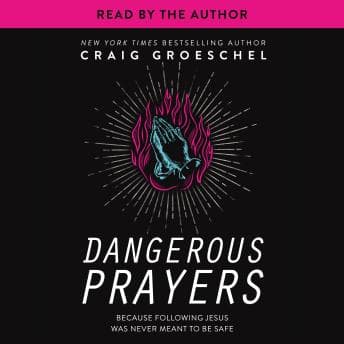
That line hit me around hour three, and I had to pause my run to actually sit with it. Not because it's revolutionary - my mom basically screamed this at me in Korean every time I wanted to skip SAT prep for a Lakers game - but because Groeschel frames it inside a system that actually works.
Let me be upfront: I'm not the target demo here. I don't go to church regularly (sorry, Mom), and when someone says "God's power, not your willpower," my consulting brain starts twitching. But I gave this a fair shot because three separate startup founders I advise mentioned it in the same month. When that happens, I pay attention.
Atomic Habits Goes to Church (And That's Not an Insult)
The comparison everyone makes is Atomic Habits, and yeah, it's accurate. Groeschel is pulling from the same behavioral psychology playbook - habit stacking, identity-based change, the power of small consistent actions. But here's what surprised me: he's actually more honest about failure than James Clear is. Clear's book can feel like a productivity machine with no room for the messy human part. Groeschel spends real time on why you keep choosing the thing you hate, why shame spirals make everything worse, and why falling isn't failure.
That last point - the falling-isn't-failure framework - is where the faith component actually earns its keep. Instead of the secular self-help move of "just forgive yourself and try again" (which, let's be real, is easier said than done when you're three days into a relapse of whatever your thing is), Groeschel grounds the permission to restart in something bigger than you. Whether you buy the theology or not, the psychological architecture is sound. I've seen this exact pattern work with founders who are grinding through their third pivot. You need something outside yourself to pull you forward when self-motivation tanks.
The 5-Hour Gift
Finally, a business book that respects your time. At 5 hours 42 minutes, this is lean. Groeschel doesn't pad. He tells a story, makes his point, gives you a practical step, moves on. At 2.0x speed I was done in under three hours, and I didn't feel like I missed anything. That's rare. Most self-help authors could learn from this - you don't need 10 hours to deliver 10 ideas.
Groeschel reading his own stuff works here because the humor lands better in his voice. There's a bit early on about his own junk food habits that got an actual laugh out of me - not a "business book chuckle" but a real one. His delivery is pastor-polished but not preachy, which is a tightrope most faith-based authors fall right off of. He sounds like a guy you'd grab coffee with, not someone performing a sermon at you.
The companion PDF with exercises is a nice touch, though I'll be honest - I downloaded it and haven't opened it. The audio stands on its own.
Where the Framework Wobbles
Here's where Jenny would say I'm being harsh. Jenny is right. But I have to say it: the book leans heavily on personal anecdotes and biblical references, and if you're not bought into either of those authority structures, some chapters will feel like they're floating without an anchor. The psychology sections are strong but surface-level - he's referencing studies without going deep into methodology, which is fine for a general audience but left my consultant brain wanting receipts.
Also, the "start before you're ready" advice is solid for individual habit change but doesn't address systemic barriers at all. My parents didn't need a book about habit formation. They needed capital, health insurance, and a day off. Not every problem is a mindset problem, and Groeschel doesn't always distinguish between the two. Walking with God through Pain and Suffering actually grapples with that gap more honestly - Keller doesn't pretend that faith reframes structural hardship into a habit problem. The advice to "choose what you want most" assumes you have choices, which is a privilege the book never really acknowledges.
That said - for the person who genuinely has the resources and opportunity but keeps self-sabotaging? This is probably the most accessible faith-based habit book I've encountered. The key takeaway is worth the listen. And at this length, the padding problem that plagues the genre barely exists.
Who Gets the ROI
If you're faith-oriented and have bounced off Atomic Habits because it felt too clinical, this is your book. If you're secular but open-minded, there's still 60-70% useful material here - just know the God framework is load-bearing, not decorative. If you actively bristle at faith-based reasoning, skip it. There are plenty of secular alternatives covering the same behavioral science.
If you're a founder burning out on willpower alone - and I know you are because I talk to you every week - give this three hours at 2x. The permission-to-fail framework alone might save your next quarter.
Bottom line: a tight, practical book that takes the habit-change playbook and adds a spiritual dimension that, whether you share the theology or not, addresses the emotional gap most productivity books pretend doesn't exist. My parents did all of this instinctively. Now it has a TED talk. But at least this one doesn't waste your time getting there.