
The Voice in Your Head (And Tolle's in Your Ears)
I was on my morning jog through Cambridge when Eckhart Tolle asked me, in that impossibly calm voice of his, whether I was aware of my breathing. And I thought - well, I was, but now I'm hyperaware of it, thanks. I nearly tripped over a curb because I was suddenly so focused on the present moment that I forgot about the future moment where my foot needed to land somewhere safe.
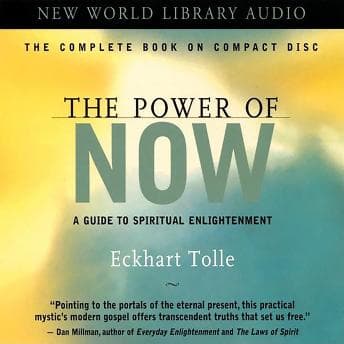
Look, here's the thing about The Power of Now as an audiobook: it's a fascinating case study in how delivery can completely transform content. I've read this book before - years ago, in print, probably while procrastinating on my dissertation. But hearing Tolle read his own words? That's a different psychological experience entirely.
What Makes This Work (Psychologically Speaking)
Tolle's voice is... disarming. There's no other word for it. He speaks with this gentle German-accented English that has zero urgency, zero performance. My therapist would have thoughts about how his vocal patterns actually trigger parasympathetic nervous system responses - the man basically sounds like a walking meditation app, but in a good way? The pacing is deliberately slow, almost hypnotically so, and I found myself unconsciously matching my breathing to his pauses.
The research actually shows that author-narrated nonfiction creates a different kind of trust with listeners. I noticed a similar authenticity in How to Live on Twenty-Four Hours a Day, though that one takes a more practical approach to the same underlying question of how we actually spend our mental energy. When Tolle talks about ego dissolution and presence and all that, you're not hearing an actor interpret his ideas - you're getting the source. And there's something about his delivery that makes even the more abstract concepts feel less like philosophy lecture and more like a conversation with someone who genuinely figured something out and wants to share it.
That said, I'll be honest: at 1x speed, this audiobook tested my patience. I bumped it to 1.25x around chapter three and suddenly everything clicked better. His natural pace is meditative, which is the point, but for a morning commute or workout? You might want that slight acceleration. (Don't tell the mindfulness purists I said that.)
The Psychology Behind the Spirituality
What makes this book compelling from my perspective is that Tolle is essentially describing dissociation from rumination - he just uses spiritual language instead of clinical terms. When he talks about "the pain-body" and observing your thoughts rather than being consumed by them, he's describing cognitive defusion techniques that behavioral psychologists have been studying for decades. The protagonist here - and yes, I'm treating you, the listener, as the protagonist - exhibits classic patterns of anxiety-driven future-thinking and depression-linked past-dwelling. Tolle's framework gives you a narrative structure to understand why your brain does this.
I found myself asking: why does this particular framing connect with millions of people when clinical descriptions of the same phenomena don't? And I think it's because Tolle offers identity, not just technique. He's not saying "here's a coping skill." He's saying "here's who you actually are underneath all that noise." That's powerful psychology wrapped in spiritual packaging.
The book does get repetitive - he circles back to the same core ideas from multiple angles, which some listeners find frustrating. But honestly? For this kind of content, repetition might be the point. You're not learning facts; you're trying to shift habitual thought patterns. That takes hearing something seventeen different ways before it lands.
This repetition-as-technique approach stands in stark contrast to something like Think and Grow Rich, which hammers you with action steps and concrete frameworks - different psychology entirely.
Fair Warning
Okay, so. This isn't going to work for everyone, and I respect that.
If you're someone who needs concrete action steps and measurable outcomes, you're going to be annoyed. Tolle isn't interested in your productivity goals. He's also not particularly interested in acknowledging the material conditions that make "just be present" easier for some people than others. (Try telling a single parent working three jobs to simply observe their thoughts without judgment. Meh.)
The narration, while soothing, can veer into monotone territory during longer stretches. I zoned out a few times during the Q&A sections - they're structured as dialogues, but since Tolle is reading both parts, the conversational energy doesn't quite land. Some listeners have mentioned his accent creates occasional comprehension issues, though I didn't experience that personally.
And look - if spiritual language makes you roll your eyes, this probably isn't your book. Tolle talks about Being and Consciousness and Enlightenment with capital letters, and he means it. He understands human nature, but he frames that understanding in a particular tradition that won't click for everyone.
Who Should Listen (And Who Should Skip)
If you're dealing with anxiety, overthinking, or that specific modern exhaustion of always being mentally somewhere else - this is worth your time. The audiobook format specifically adds something the print version lacks: a living example of the calm Tolle describes. Skip it if you need practical self-help with clear frameworks, or if spiritual language makes you impatient.
The Verdict
I listened to this over about a week - some during jogs, some while cooking elaborate dal that I ate alone (preferred, remember), some right before bed. The bedtime sessions were actually the most effective. There's something about Tolle's voice in a dark room that genuinely quiets the mental chatter.
For skeptics or people wanting actionable self-help, sample first. You'll know within twenty minutes whether his approach works for you.
Pretty much everyone else? Give it a shot at 1.25x speed, preferably during low-stakes activities. Let his voice do its weird magic. And if you find yourself suddenly very aware of your breathing while reading this review - well. That's the vibe.