
The 405 vs. The Power of Now
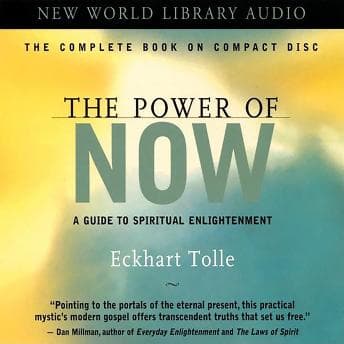
Dead stop on the 405. The kind of LA traffic that makes you question every life choice leading up to that moment. I should've just queued up The Power of Now—Tolle's earlier hit that covers 80% of the same ground in less time. My blood pressure was doing things my cardiologist warned me about. So, naturally, I decided to listen to the book every neurotic founder in Silicon Valley pretends to have read.
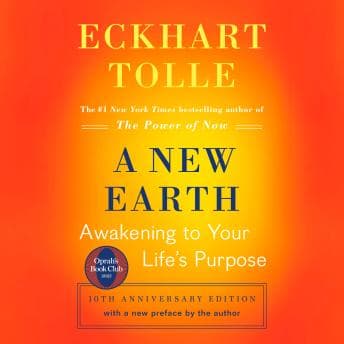
A New Earth. Eckhart Tolle.
Jenny told me I needed to "center myself." I told her I needed a stiff drink and a term sheet signed. She won. (She always wins.) So there I was, staring at a Tesla bumper, letting a German spiritual teacher explain why my road rage was just my "pain body" acting up.
The Speed Problem (Seriously)
Here's the ROI calculation on the narration: Eckhart Tolle narrates this himself. And look—the man is enlightened. Clearly. You can tell he's enlightened because he has absolutely nowhere to be.
He speaks. So. Slowly.
I usually listen at 2.0x. For Tolle? Had to crank it to 2.5x just to get him to sound like a normal human having a coffee chat. At 1.0x, it's not an audiobook; it's a sedative. A guided coma. If you listen to this at normal speed while driving, you are a danger to society. You will fall asleep and drift into the HOV lane.
But—and I hate to admit this—the voice works. Once I adjusted the speed to "David Park Efficiency Levels," there's something weirdly authoritative about his monotone delivery. He doesn't try to sell you the ideas. Just states them. Like he's reading a grocery list of universal truths. No drama. No "performer" energy. Just... calm.
The "Ego" Stuff is Actually Business Strategy
I went into this expecting crystal-healing fluff. I mean, Oprah loves it, which usually means it's 80% emotion and 20% substance. (Don't come for me, Oprah fans. The data supports this.)
But the breakdown of the Ego? It's basically a diagnostic manual for why startups fail.
Tolle talks about how the Ego thrives on conflict and identification with things. I sat there listening to Chapter 3, thinking about a Series B founder I'm coaching right now. The guy is brilliant, but he identifies so hard with his valuation that he's torching his culture. Tolle calls it "identification with form." I call it "being a liability." Same thing.
The concept of the "Pain Body"—this idea that we carry around old emotional baggage that hijacks us—is just a fancy way of explaining why my parents would get into screaming matches over a misplaced stapler at the dry cleaners. That kind of inherited trauma gets explored way more rawly in I'm Glad My Mom Died, though Jennette McCurdy skips the spiritual framework entirely. It wasn't about the stapler. It was the accumulated stress of 1988-1995 surfacing all at once.
Honestly? It's useful. Strip away the "vibrational frequency" language and you get a solid framework for emotional intelligence. I've started using the "watch the thinker" concept during board meetings. When a VC starts posturing, I just watch their Ego do a little dance. Way cheaper than therapy.
The Fluff Factor
That said, let's not get carried away. The book is repetitive. Incredibly repetitive.
Tolle circles the same three points for nine hours:
- You are not your mind.
- The present moment is all there is.
- Stop identifying with your stuff.
We get it, Eckhart.
From an efficiency standpoint, this could have been a tight 2-hour lecture. The middle section drags. I zoned out somewhere around Chapter 6, checked my email, merged onto the 10, and realized I hadn't missed anything crucial.
The Bottom Line
If you want a step-by-step tactical guide, this ain't it. Go read High Output Management.
But if you're like me—stressed, over-caffeinated, and constantly optimizing every second of your life—this might actually be the counter-balance you need. Just do yourself a favor: use the speed controls. Enlightenment doesn't have to take nine hours.
Who should listen: Type-A founders, chronic optimizers, anyone whose therapist has suggested they "slow down." Who should skip: If you need action items and frameworks, you'll be frustrated by the circular philosophy—stick to business books.