What happens when you strip a ghost story down to its bones — not the jump scares, not the gothic window dressing, but the actual reckoning with death as a force that has rules and consequences?
I was splitting kindling outside the cabin in late October, the kind of Montana dusk where the sky goes from orange to deep violet in about fifteen minutes, and I had Elisa Parmigiani's voice in my ears narrating Cass Blake's arrival in New Orleans. Something about that timing landed. The air going cold, the light going sideways, and this kid walking straight into a city that — at least the way Schwab writes it — breathes with the dead the way old-growth forests breathe with mycorrhizal networks. Everything connected underneath.
New Orleans as Ecosystem, Not Postcard
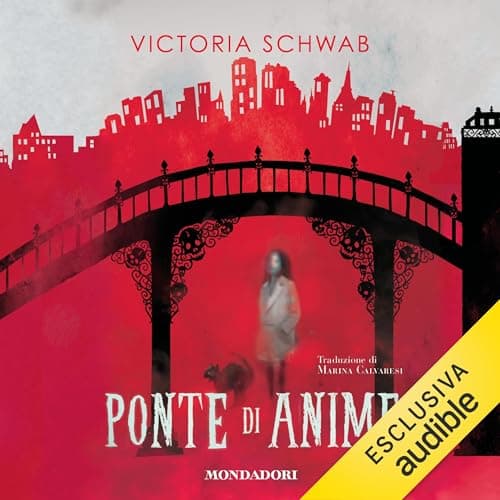
Here's where Schwab earns my respect and also tests my patience. She gets the layering right — the secret societies, the voodoo history, the way death and celebration coexist in that city like predator and prey in the same drainage. New Orleans in Ponte di anime isn't a backdrop. It's an organism. The séance scenes carry actual weight because Schwab treats the spiritual infrastructure of the place with a certain seriousness, even inside what is fundamentally a middle-grade adventure. The Emissary of Death — il messaggero della Morte — isn't some cheap villain reveal. It's a systemic threat, like a wildfire that's been smoldering underground for years and finally crowns. Tomb attempts something similar with its central antagonist — a threat that feels structural rather than personal — though it doesn't commit to the idea with nearly the same conviction.
But — and this is where my field ecologist brain kicks in — the book rushes through its own best ideas. At six hours and eleven minutes, this is a lean listen. Almost too lean for a trilogy closer. You get the sense that Schwab knows exactly what this city should feel like, but the pacing doesn't let you sit in it long enough to truly absorb the atmosphere. It's like driving through Glacier at sixty miles an hour. You see the peaks. You don't feel them.
Cass, Jacob, and the Weight of Sacrifice
The relationship between Cass and Jacob — her ghost best friend — is genuinely the engine of this series, and the Italian translation (credit to the translator, Marina Calvaresi) apparently sharpened Schwab's prose into something more fluid and direct than the English original. Multiple Italian readers flagged this, and listening through Parmigiani's delivery, I believe it. The dialogue between Cass and Jacob feels natural, quick, the way real friendships sound when you've been through enough together that half the conversation is shorthand.
The sacrifice theme hits harder than I expected. Climate grief hit different in this one — not because the book is about climate, obviously, but because the core question is the same one I sit with every season: what are you willing to lose to protect what matters? Cass faces that question with a directness that Schwab doesn't sugarcoat, even for a younger audience. Spirit of Steamboat sits in that same territory — sacrifice as the actual price of love, not metaphor — and Walt Longmire carries it with the same kind of earned quietness Schwab reaches for here. There's a scene near the end where the cost of her choice becomes physically real, not abstract, and Parmigiani's voice drops into something quieter there. Deliberate. It worked.
What Parmigiani Brings (and What She Doesn't)
I'll be honest — I don't have enough data to make a definitive call on Parmigiani's range across multiple characters. The research doesn't flag specific vocal distinctions between characters, and I didn't catch anything particularly inventive in how she differentiates the cast. What she does well is pacing. Her reading tempo matches the book's middle-grade energy without ever feeling rushed or condescending, and in the quieter emotional beats she pulls back instead of pushing — which is exactly the right instinct. She doesn't oversell the horror elements either. The creepy moments land because she trusts the text.
That said, for a New Orleans story soaked in cultural specificity, I wanted more vocal texture. More atmospheric variation. The narration is competent and warm, but it doesn't add a second layer the way the best narrator performances do.
Who Should Listen (And Who Should Skip)
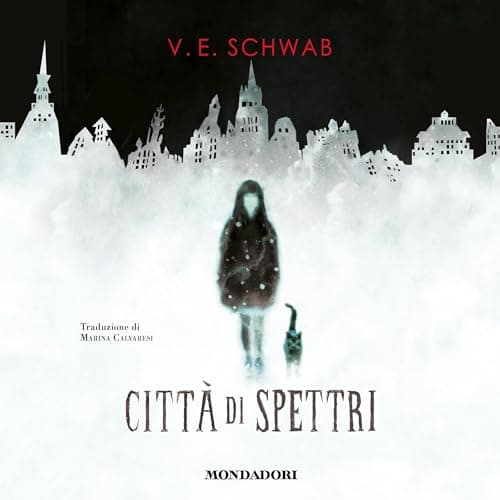
If you've followed Cass through the first two books — Città di fantasmi and Tunnel degli spiriti — this wraps the trilogy with genuine emotional stakes and a satisfying confrontation. As a standalone entry point, though, it would feel thin. You need the accumulated relationship with Jacob, the established rules of the Veil, for the ending to carry its full weight. Skip this if you haven't read the first two — not because it's bad on its own, but because the payoff depends on mileage you haven't logged yet.
Schwab's strength has always been economy of world-building, and here she applies that to a city that could've easily swallowed the story whole. She didn't let it. Whether that restraint serves the book or starves it depends on what you want from a finale.
Last Light on the Ridge
Nature doesn't forgive mistakes. Neither do I. But Schwab didn't make mistakes here — she made choices. A tight, fast trilogy closer that prioritizes emotional payoff over atmospheric sprawl. I respect it. I just wish she'd let me sit in New Orleans a little longer, the way the land deserves.