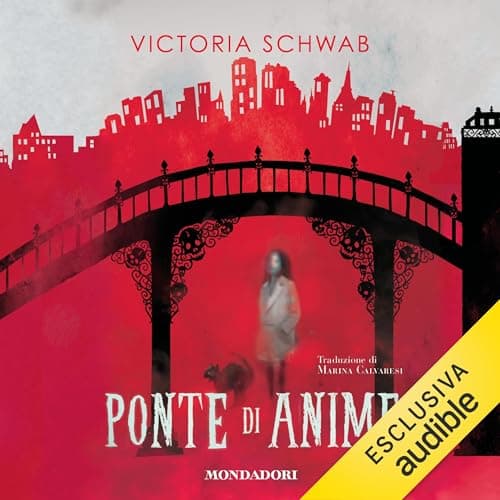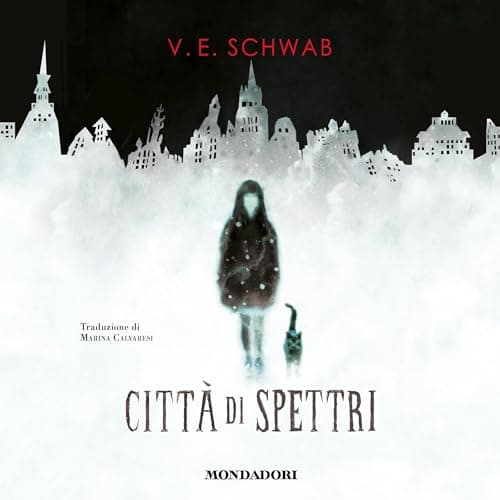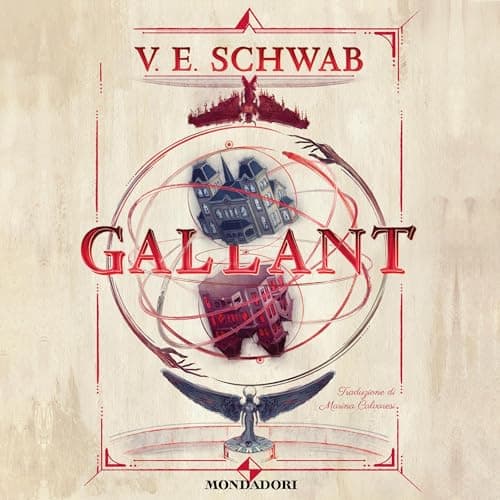

Look, I need to rant about something. V.E. Schwab wrote a gothic horror fairy tale — shadows that move wrong, a crumbling wall between worlds, a literal personification of decay — and somehow the marketing landed this in "fantasy" without a single horror tag. This is horror. The bones of it are horror. Shirley Jackson walked so Schwab could sprint through that iron gate and drag us into the Wastes. O filho perfeito gave me that same bone-deep certainty that I was holding horror wearing another genre's coat.
I was shelving returns at the library last Thursday, late shift, the fluorescents doing that thing where they flicker just enough to make you question reality. Popped in my earbuds and let Elisa Parmigiani's Italian narration pull me into Merilance. And here's the thing — this is the Italian edition, narrated in Italian, so I'm experiencing Schwab's gothic through a completely different linguistic lens. Parmigiani reads this like a bedtime story that knows it shouldn't be told at bedtime. Her pacing during the passages from the mother's diary — those fragmented, desperate entries — lands somewhere between lullaby and warning.
The Door You're Not Supposed to Open (But Obviously Will)
Olivia Prior doesn't speak. Literally. She's a mute protagonist in an audiobook, which is a wild narrative choice that somehow works. Everything we get from her is internal, filtered through Parmigiani's interpretation. The mother's diary entries are the real engine here — cryptic drawings described as ink blots, phrases that read like riddles dissolving into madness. Schwab structures the book so you're piecing together what happened to Olivia's mother at the same pace Olivia is, and the diary's descent from coherent warnings ("Le ombre non sono vere") into fractured desperation creates this slow-drip dread that I live for.
But — and this is where I get complicated about it — at under eight hours, the book moves fast. Maybe too fast. The world beyond the wall, the Wastes, this bleached-bone mirror version of Gallant where everything is ash and absence? We barely get to sit in it. The entity there, this figure who wears decay like a second skin, is genuinely unsettling in concept. A being that consumes and unmakes. But we spend so little time with the horror of that place that it feels like Schwab built a haunted house with twelve rooms and only let us into four.
Parmigiani Reads Like She Believes in Ghosts
I don't have a ton of specific data on Parmigiani's body of work, so I'll be straight with you — I'm judging purely on what I heard. And what I heard was someone who understands that gothic narration isn't about volume, it's about restraint. She doesn't oversell the creepy moments. When Olivia first sees the ghouls — those shadow-things that linger at the edges of Gallant's grounds — Parmigiani doesn't shift into dramatic horror mode. She keeps the tone almost matter-of-fact, which makes it worse. Because that's how Olivia experiences them. They're just... there. Part of her reality.
The Italian adds a layer I wasn't expecting. Gothic horror and Italian have this natural affinity — the vowels stretch, the consonants click — and passages describing the garden, the crumbling wall, the iron door, they sound like they belong in this language. If you're not fluent in Italian, this obviously isn't your edition. But if you are? The atmosphere gets a boost.
Where I wanted more was differentiation between the living characters at Gallant. The cousin, the household staff — they blur together vocally in a way that made me rewind a couple times during the middle act. Not a dealbreaker, but noticeable.
Who Gets to Walk Through the Gate (And Who Should Turn Back)
Pick this up if you want gothic atmosphere that trusts silence over screaming. Skip it if you need your horror worlds fully mapped — the Wastes deserved three more hours of exploration, and if incomplete worldbuilding frustrates you, that's going to itch. This understands that horror isn't about gore — it's about dread. The dread of a door that exists specifically because something on the other side wants you to open it. Schwab gets that.
I listened in the dark. Mistake? Maybe. Worth it? Absolutely. My podcast listeners are going to love the discussion about mute protagonists in audio formats — there's something genuinely interesting about a character who can't speak being given voice by a narrator. It creates this tension between presence and absence that mirrors the whole book's obsession with what's there and what's not.
Schwab's shorter works hit different than her doorstop series. This is a fairy tale with teeth — not enough teeth for my taste, but sharp where it counts. Shirley (my cat) knocked my phone off the nightstand during the climax, which felt thematically appropriate.