
So there I was, 2 AM, absolutely not working on my thesis, scrolling through LibriVox looking for something short enough to finish before sunrise. Two hours and thirteen minutes? Perfect. Just a quick palate cleanser before bed. (Dr. Patel, if you're reading this, I was definitely sleeping at a reasonable hour.)
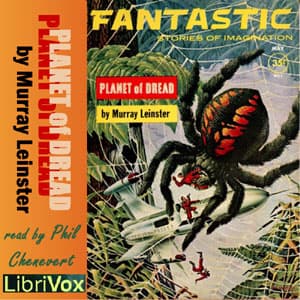
Planet of Dread is Murray Leinster doing what Murray Leinster does best—taking a genuinely clever science fiction premise and running with it at full speed. The setup: humanity figured out that the only way to make alien worlds habitable was to basically copy-paste Earth's entire ecosystem onto them. Grass, goats, viruses, stink bugs—the whole package deal. Sounds reasonable until you realize what happens when nobody's checking on that ecosystem for a hundred years.
The answer, as Moran and the crew of the space yacht Nadine discover, is *bugs*. Really, really big bugs.
The Magic System Is... Ecology?
Okay, hear me out. Leinster wrote this in 1962, and the man basically invented terraforming-gone-wrong before it was cool. The internal logic here is Sanderson-level consistent—if you transplant Earth life to a planet with different conditions and just... leave it alone... evolution does its thing. Insects become apex predators. The food chain inverts. Everything that was small and manageable becomes large and hungry.
It's not hard magic, obviously, but the rules are clear: this planet follows biological logic, just scaled up to nightmare proportions. My D&D group would absolutely steal this for a campaign setting. Imagine your party landing on a world where the wandering monster table is just "giant versions of things that already wanted to eat you."
The worldbuilding happens fast—this is a novella, not an epic—but Leinster packs in enough detail that you understand the stakes. Dune does something similar with its desert ecology—different scale, same commitment to making the environment feel like a character. The descriptions of the crew navigating through fungal forests while dodging predatory insects the size of cars hit that sweet spot between pulp adventure and genuine ecological horror.
Phil Chenevert: The LibriVox MVP
Here's the thing about LibriVox recordings—they're volunteer work, and quality varies wildly. Phil Chenevert is one of those narrators who makes you forget you're listening to a free public domain recording. He doesn't do a million distinct character voices (the cast is small enough that it doesn't matter), but he completely inhabits the narratorial perspective. The pacing is excellent—he knows when to speed up during action sequences and when to let the horror of the situation breathe.
There's something about his delivery that makes the pulpier elements land better than they probably should. When Leinster describes giant wasps or carnivorous plants, Chenevert's matter-of-fact tone sells it. This isn't camp; it's survival horror with a 1960s sensibility.
Stormlight This Ain't (And That's Fine)
Look, I'm usually the guy recommending 40-hour epics with appendices and magic system charts. But sometimes you need a story that does one thing really well and then gets out. Planet of Dread is pulp science fiction from the golden age—it moves fast, it doesn't waste time on subplots, and it delivers exactly what the title promises.
The character work is thin by modern standards. Moran is competent and determined; the other crew members are mostly there to have problems that need solving. Deep psychological exploration? Not this book. But if you want to listen to humans use their brains to survive an ecosystem that wants them dead? The rules are clear, the consequences are logical, and the solutions require actually understanding how the world works. Pretties operates on that same principle—Westerfeld built a world with clear rules about beauty and society, then let the logical consequences play out.
Also, it's free. LibriVox, people. The progression satisfies even at this length because Leinster understood pacing. Every chapter escalates the threat while giving the characters new tools to fight back.
Who Gets Stranded on This Planet
You'll love this if: you appreciate classic SF, you want something short for a lunch break or commute, you're curious about the roots of survival horror in science fiction, or you just really like the idea of giant bugs.
Skip it if: you need character development deeper than "competent protagonist solves problems," you're allergic to pulp sensibilities, or you specifically need multiple narrator voices for your audiobooks.
Roll for Initiative Against Giant Wasps
I finished this at 4 AM and immediately wanted to run a one-shot where my players crash-land on a planet of oversized insects. Murray Leinster won a Hugo for a reason—the man understood how to build a world with rules and then make those rules terrifying. Phil Chenevert's narration elevates solid source material into a genuinely enjoyable listen.
For free? This is a steal. For two hours of your time? Worth every minute.