
So here's something I never expected to say: I spent three weeks of my commute with a 17th-century Puritan allegory and I'm... not mad about it?
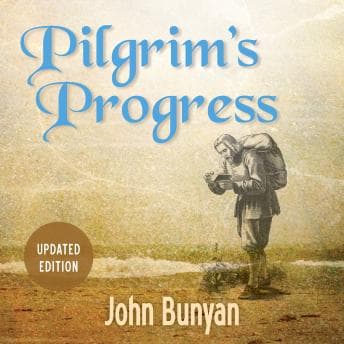
Look, I grew up going to church in Seattle, drifted away in college, and now my relationship with religion is best described as "it's complicated." But someone on a podcast I trust recommended this version of Pilgrim's Progress as a fascinating piece of early English literature, and I figured—14 hours, that's like a week and a half of train rides. Why not.
The Allegory That's Basically a Side-Scroller
Okay, hear me out. This is basically a video game where Christian (yes, that's literally his name) has to navigate from Point A to the Celestial City while avoiding traps, fighting bosses, and meeting NPCs who are either helpful or trying to kill him. The characters are named things like Pliable, Obstinate, and Ignorance—which, yeah, subtle it ain't. But there's something weirdly satisfying about the transparency. No ambiguity. You know exactly what each character represents.
What makes this version different is that they've embedded the actual Bible verses into the text instead of just citing references. And honestly? This was the right call. Even as someone who's not super devout anymore, having the verses woven in made the allegory hit differently. You understand WHY Christian makes certain choices because the scriptural backing is right there.
The modernized English helps too. I tried reading the original once in college and gave up after about three pages of "thee" and "dost" and "wherefore." This version keeps enough of the original flavor to feel authentic without making you work for every sentence.
Christensen's Voice Work: Solid with Caveats
Here's where I have mixed feelings. Christensen does solid work with the character voices—I actually laughed out loud at some of the exchanges, especially the scenes with Pliable being, well, pliable. He gives each character enough distinction that you can follow conversations without getting lost, which is crucial when you're half-asleep on the 6:17 AM train.
The emotional delivery is there too. There are some genuinely dark moments in this story—Christian literally goes through the Valley of the Shadow of Death—and Christensen doesn't phone it in. You feel the weight of the spiritual struggle.
But. (And this is a real but.) The audio quality is... not great? There's something slightly off about the production that I can't quite put my finger on. It's not terrible, but when you're used to Audible's polished productions, you notice. At 1.5x speed it was fine, but I wouldn't recommend this one for a quiet bedtime listen where every little audio hiccup becomes noticeable.
14 Hours of Theological Debug Logs
I'm not gonna lie—there are stretches where this drags. Some of the theological discussions go on longer than a standup meeting that should've been a Slack message. And at 14+ hours, you feel every minute during certain sections.
But the payoff moments? Actually pretty good. There's a reason this book has been around for 350 years. The scene at Vanity Fair, the fight with Apollyon, the ending at the Celestial City—these are legitimately moving if you let yourself get into the allegory.
Perfect for: Long commutes, background listening during code reviews (I said what I said), anyone curious about foundational Western literature.
Skip if: You're looking for fast-paced action, or if religious allegory makes you want to throw your phone out the train window.
Worth the Bandwidth?
The ROI on this audiobook is honestly decent if you're in the right headspace. It's not going to change your life (unless you're having a spiritual crisis, in which case, maybe?), but it's a solid way to experience a classic without actually having to read 17th-century English. And the Bible verse integration genuinely adds value—even my boyfriend Kevin, who's aggressively agnostic, admitted the storytelling was "surprisingly not boring" when I made him listen to a chapter.
If you're looking for something that will shift your mindset more directly, Awaken the Giant Within takes a less allegorical approach to personal transformation—though it's way less subtle about it.
I finished this in about 10 commutes at 1.5x. Would I listen again? Probably not—it's a one-and-done experience. But I'm glad I did it once.