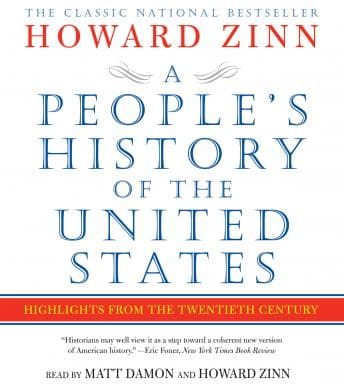

Look, I've got a bone to pick with this audiobook before we even start. It's abridged. Eight hours and forty-six minutes to cover 500 years of American history from the perspective of everyone who got steamrolled by it. That's like trying to brief a battalion commander on a decade of Middle Eastern policy in the time it takes to fly from Fort Hood to Bagram. Something's getting left out.
But here's the thing - I listened to this anyway. Twice, actually. Once on a consulting trip to Houston, once while Ranger and I were doing our morning five-miler around Town Lake. And despite my complaints, it's worth your time.
The History They Didn't Teach at West Point
Zinn's thesis is simple: American history looks different from the bottom than from the top. And he's not wrong. I spent 25 years in the Army believing certain narratives about this country, and Zinn challenges damn near all of them. Columbus? A genocidal maniac, not an explorer. The Founding Fathers? Wealthy elites protecting their property interests. Every war we've fought? Sold to the public with lies while the poor did the dying.
Now, do I agree with everything Zinn writes? Hell no. The man was a self-described socialist, and his bias shows up on every page. He cherry-picks evidence like a prosecutor building a case, not a historian seeking truth. But - and this is important - he's citing primary sources the whole time. Letters from soldiers. Speeches from labor organizers. Testimony from enslaved people. The receipts are there.
What got me was the labor history. I knew about the Civil War, the Indian Wars, all the stuff that involved uniforms and rifles. But the Ludlow Massacre? The Triangle Shirtwaist fire? The absolute brutality corporations unleashed on workers just trying to get an eight-hour day? That wasn't in any history class I ever took. And it should've been. That's the kind of ground-level perspective you get in Bury My Heart at Wounded Knee too - history from the people who lived it, not the ones who wrote the official reports.
Matt Damon - Not Quite Mission Accomplished
Here's where it gets complicated. Matt Damon reads this book with genuine conviction. You can tell he believes in what Zinn wrote. His delivery is clear, paced well, and he captures the outrage that runs through the text.
But.
(And I hate saying this because I respect the man's work.)
When Zinn starts cataloging atrocities - and there are long stretches where it's just horror after horror - Damon's voice goes flat. Not quite monotone, but close. Like he's reading a casualty report. Which, in a way, he is. Some listeners have called it "sleepy" and I get that. After the third massacre in as many chapters, even righteous anger starts to sound tired.
The best parts? When Howard Zinn himself reads the introduction and conclusion. The old man's voice cracks with decades of conviction. You can hear his life in it - the war veteran, the civil rights marcher, the professor who got fired for his beliefs. That's authenticity you can't fake.
I listened at 1.25x and that actually helped Damon's sections. Tightened up the pacing, kept the energy moving. Worth trying if you find yourself drifting.
Who Should Listen (And Who Should Stand Down)
This audiobook is for people who can handle having their assumptions challenged without getting defensive. It's not comfortable listening. Zinn isn't trying to make you feel good about America - he's trying to make you see it clearly, warts and all. If you need your history wrapped in a flag and tied with a bow, stand down. This isn't for you.
If you've served, you might find yourself getting angry. I did. Some of it was anger at Zinn for what felt like oversimplification. Some of it was anger at myself for not knowing this stuff already. And some of it - honestly - was anger at the institutions I'd spent my career defending.
That's the thing about Zinn. He makes you uncomfortable, but he makes you think. And thinking is always better than not thinking.
Should you listen? If you want the full experience, buy the unabridged version and read it yourself. This abridged audiobook is like a reconnaissance mission - you'll get the lay of the land, but you're missing details. For commutes, for getting the general thrust of Zinn's argument, for deciding if you want to go deeper? It works.
Ranger didn't seem to mind Damon's narration, for what that's worth. But then again, that dog's sat through worse briefings than this.
End of Debrief
It's an important book, imperfectly delivered, that every American should at least engage with. Agree with Zinn or don't - but know what he's arguing before you dismiss it. That's just good intel work.







![Steve Jobs [unabridged audiobook] audiobook cover](/_next/image?url=https%3A%2F%2Fcovers.audiobooks.com%2Fimages%2Fcovers%2Ffull%2F9788499923406.jpg&w=1920&q=75)