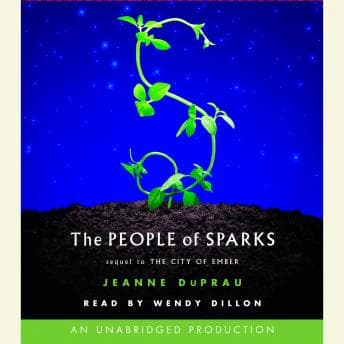

This is a book about two communities on the brink of war over scarce resources, and I've seen this scenario play out in real life more times than I'd care to count.
Let me cut to the chase: The People of Sparks is a solid YA sequel with a surprisingly relevant premise that's undercut by a narration problem serious enough to affect the mission. I listened to this one during a late Saturday cleaning session - Ranger was giving me the stink eye from his bed while I organized the garage, and honestly, his judgment of the audiobook might have been more generous than mine.
When 400 Refugees Show Up and Nobody Has a Plan
The setup here is genuinely interesting. The Emberites - people who've lived underground their entire lives - crawl out into daylight and stumble into Sparks, a small aboveground community still rebuilding after some unnamed catastrophe. Sparks takes them in. Feeds them. Gives them shelter. And then the math stops working. There aren't enough resources. Resentment builds. Anonymous vandalism starts pushing both sides toward open conflict.
DuPrau is writing a parable about immigration, resource scarcity, and how fear turns neighbors into enemies. For a kids' book, that's ambitious, and she mostly pulls it off. The escalation feels authentic - small grievances snowball, hotheads on both sides gain influence, and the reasonable voices get drowned out. I've sat in enough briefings about stabilization operations to recognize the pattern. When Tick starts rallying the Emberites toward violence and Doon refuses to join? That moment landed. It's the kid version of watching a squad leader hold the line when everyone else wants to go kinetic.
But here's the thing - the pacing drags in the middle third. The conflict builds slowly, which is realistic but doesn't always make for riveting listening. Some of the character decisions feel frustratingly naive, though I'll grant that these are literally children who grew up in a cave, so maybe I should adjust my expectations.
The Narrator Problem That Won't Go Away
Wendy Dillon's narration is where this audiobook takes real damage. Her straight narration is actually pretty good - there's a rich, throaty quality to her voice that sets the atmosphere of this post-disaster world. When she's describing the landscape or the tension between communities, it works.
But the character voices? Rough. Her children all sound vaguely whiny and indistinguishable from each other, which is a serious problem when your two protagonists are kids. Lina and Doon should feel distinct - one's impulsive and artistic, the other's methodical and stubborn - but through Dillon's voice they blur together into the same slightly irritating register. It actively works against the characters. There were moments where the text was clearly building sympathy for Lina or Doon, and the whiny vocal delivery just... deflated it. Like watching a good play with the wrong casting.
I'll give Dillon credit for continuity - she narrated the first book too, so if you came from City of Ember, the transition is smooth. But continuity only matters if the performance serves the story, and here it frequently doesn't.
Who Should Gear Up For This
If you've got kids who loved The City of Ember and want to know what happens next, the story itself delivers. The themes about conflict resolution and empathy are handled without being preachy (mostly). But I'd honestly recommend the print version over the audio. The narration doesn't ruin the book - it just keeps taking points off the scoreboard.
Adults looking for a quick listen? You'll get more out of it if you've got any background in conflict studies, humanitarian work, or - yeah - military operations in contested areas. DuPrau probably didn't write this thinking some retired Colonel in Austin would be nodding along going "yep, that's exactly how a refugee crisis destabilizes a host community," but here we are.
At 1.25x speed, this clocked in at a manageable pace. I'd actually recommend bumping it up - the slower sections benefit from the acceleration, and Dillon's narration voice gains a little urgency that it sometimes lacks at normal speed.
Mission Assessment
Worth your time? Here's the debrief: good premise, relevant themes, mediocre audio execution. The story earns a solid B for tackling hard questions through a YA lens. The audiobook format specifically earns a C because Dillon's character work keeps tripping over its own feet. If you're streaming this through a library app, go for it. If you're spending a credit? Save it for something where the narrator doesn't work against the material. I spent a credit on American Royals II: Majesty recently and had the opposite problem - narration that outpaced the material itself, which is its own kind of frustration.
Ranger slept through this one. Make of that what you will.