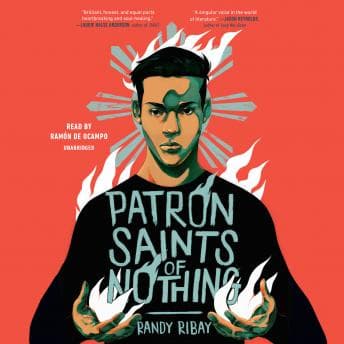

I was sitting in the break room at 4 AM, half-eating a cup of instant pancit canton (don't judge, night shift provisions are what they are), and I had about twenty minutes before my next round. I put my earbuds in and hit play on the last couple chapters of this book. And then I just sat there, noodles going cold, staring at the vending machine like it personally betrayed me.
This one hit different. And I need to talk about why.
The Guilt of the Cousin Who Stayed
Let me tell you something about being Filipina-American and the eldest. You carry things. You carry the family's expectations, the unspoken comparisons between you and the cousins back home, the guilt of having it "easier." Jay Reguero - this seventeen-year-old kid who's basically been living his comfortable Michigan life playing video games - finds out his cousin Jun was killed in Duterte's drug war. And nobody in the family wants to explain. Nobody wants to acknowledge it. The titas change the subject. The uncles get quiet. If you've ever been in a Filipino family where something ugly happened and everyone just... closes ranks? Randy Ribay nailed it so precisely I wanted to call my mom.
Jay's trip to the Philippines isn't just a mystery investigation. It's the slow, awful process of realizing that the cousin you exchanged letters with - the one you thought you knew - had a whole life you never bothered to really see. Because you were busy. Because you were comfortable. Because distance made it easy to not ask the hard questions. That specific guilt? The guilt of the diaspora kid who drifted away? Ribay writes it like he pulled it straight from my chest.
And here's where it gets complicated and real: the book doesn't give you a clean villain or a clean victim. Jun is not a saint, despite the title playing with that idea. The family members who won't talk aren't simply being cruel - they're terrified, they're ashamed, they're protecting themselves in a country where the president literally encouraged extrajudicial killings. Ribay trusts readers enough to sit with that mess.
Ramón De Ocampo and the Slow Burn That Earns Its Fire
Okay, real talk about the narration. The first hour? I almost switched books. Ramón de Ocampo opens with this flat, almost detached delivery for Jay, and my initial reaction was "oh no, nine hours of this monotone?" But here's the thing - and I feel a little embarrassed I didn't catch it sooner - that flatness IS Jay. That's the voice of a kid who's been sleepwalking through his senior year, disconnected from his heritage, coasting. The emotional numbness is the point.
By the time Jay lands in Manila, De Ocampo has already started shifting. The voice warms up, cracks open. His tone during the family dinner scenes - where everyone's talking around the elephant in the room with that particular brand of Filipino hospitality-as-armor - gave me actual chills. He does these subtle accent shifts for the different family members, and look, I can't tell you if every Tagalog inflection is textbook perfect, but the Filipino mentality? The way the titas sound concerned and controlling at the same time? The way Tito Maning's authority comes through in clipped sentences? That felt right. That felt like my family's living room.
The scenes where Jay reads Jun's old letters - De Ocampo voices them with this younger, gentler quality that just wrecked me. You can hear the difference between who Jun was and who Jay wanted him to be.
When Fiction Gets the Real World Right
I spend my professional life in a world where people die from real causes, where families get real bad news, where the politics of healthcare funding actually determine who lives and who doesn't. So when a book tackles something like the Philippine drug war - where thousands of people were killed, many of them poor, many of them somebody's Jun - I have zero patience for anything that feels exploitative or tourist-y about it.
Ribay doesn't exploit. He contextualizes. He shows you the propaganda posters. He shows you the neighbors who support Duterte because crime went down on their block. He shows you the impossible position of a family that loves a kid who may have been involved in drugs but absolutely did not deserve to die for it. Compare that to, say, a typical American thriller that uses a foreign country's political crisis as set dressing for a white protagonist's adventure - this is the opposite of that. I reviewed Naked Heat not long ago and yelled at my dashboard through half of it precisely because it does the opposite — treating its setting like wallpaper while the plot barrels through. Jay is both insider and outsider, and the book never lets him (or you) off the hook for either position.
My mom would love this. She'd also cry and then deny crying and then ask me why I'm not a doctor again. But she'd love it.
Who Needs This in Their Ears
If you're FilAm, this might feel like someone finally wrote the book you've been waiting for. If you're not, this is one of the most honest windows into the immigrant family experience - the push and pull between two countries, two selves - that I've come across in audio. It's labeled YA, but don't let that stop you. The questions it asks about complicity, about what we owe the people we love, about what silence costs - those aren't young adult questions. Those are human questions.
Skip this if you need a fast-paced thriller with a neat resolution. This is a slow burn that rewards patience. The mystery of Jun's death matters, but it's not really a whodunit. It's a why-didn't-I-care-sooner.
Carlos asked why I was crying in the car. I blamed allergies. In July. In Phoenix. He didn't buy it.
Night Shift Prescription: Take With Open Heart
Nine hours at a measured pace. Perfect for that post-shift decompression when you need something that makes you feel deeply but won't spike your cortisol the way a medical thriller does. I listened across three drives home and one ill-advised break room session, and the pacing held. Give De Ocampo until at least hour two before you judge the narration - the payoff is worth the patience.