
I have to grade thirty essays on The Catcher in the Rye by tomorrow morning, but instead, I'm listening to a man explain holding patterns and minimum visibility requirements. Why? Because unlike Holden Caulfield, Jason Schappert actually knows where he's going. And frankly, after reading ten pages of teenagers trying to deconstruct 'phoniness,' the absolute, binary precision of FAA regulations is soothing my soul. There is no subtext in an instrument landing system. You either capture the glideslope or you don't.
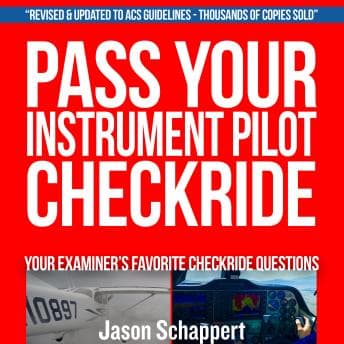
I picked this up because I was curious about how technical instruction translates to audio—a medium I usually reserve for Dickens or drift-off-to-sleep memoirs. Schappert is the author and the narrator, which usually goes one of two ways: either they're so passionate they spit into the microphone, or they sound like they're reading a ransom note. Schappert lands somewhere in the middle. He sounds exactly like what he is: a flight instructor who has repeated these answers five thousand times.
Some reviews I looked up mentioned that he sounds like his "heart isn't in it" for this second edition. I actually disagree. To me, he sounds like a teacher in his twentieth year (a feeling I know intimately). It's not lack of heart; it's the efficiency of someone who knows the material cold. He's not performing; he's drilling. The format is strictly Q&A. He poses a question your examiner might ask, then gives the answer. It's flashcards for your ears.
As I listened while marking up a particularly disastrous thesis statement with my red pen, I realized the limitations of this format. You can't really learn concepts here. There's a section on weather fronts that felt incredibly rushed—scant discussion on the nuance of occluded fronts, which seems like something you'd want to know before flying into a cloud. If you don't already know the theory, this book won't teach it to you. It's a review tool, not a textbook.
But here's the specific utility: The pacing. Schappert moves fast. At 1.0x speed, it's digestible. At 1.5x, it's a stress test for your brain, simulating the pressure of the actual checkride. My students think studying means staring at a closed book and hoping for osmosis. This audiobook forces active recall. The science behind why that works is something I stumbled through in Evolve Your Brain: The Science of Changing Your Mind—dense in places, but it reframed how I think about drilling versus passive review in a way I wish I'd had twenty years ago. If you're a pilot driving to the airfield, this is probably the best use of your commute.
Who Should Listen (And Who Should Skip)
If you've done your ground school and need a final drill before facing the examiner, queue this up on your commute. Skip it if you're still learning the fundamentals—this won't teach you why occluded fronts matter, just that they do.
For a layperson like me, it was a fascinating glimpse into a world where 70% is not a passing grade. For the target audience, it's a solid, if slightly dry, final polish before the big day. Just don't expect a literary experience. The prose is purely functional—Hemingway would have loved the lack of adjectives, but Faulkner would have fallen asleep at the yoke.