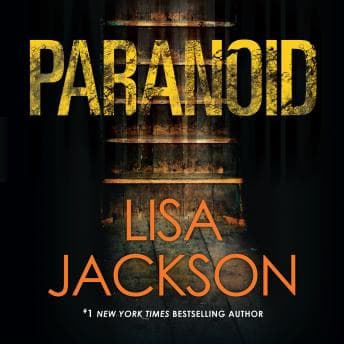

Look, I wanted to love this. Lisa Jackson knows how to construct paranoia - the kind that makes you check your rearview mirror twice and wonder if that cologne in your apartment is actually new or if you're losing it. That's horror-adjacent territory, and I'm here for it. But this audiobook? It's complicated.
The premise is genuinely unsettling. Rachel Gaston accidentally killed her half-brother Luke twenty years ago when someone swapped her pellet gun for a real weapon during a teenage prank gone catastrophically wrong. Now, as her high school reunion approaches, she's convinced someone's watching her. Following her. And here's the thing - she's right. Jackson understands that paranoia isn't about being crazy. It's about being right when everyone thinks you're crazy. That's real dread.
When the Shrillness Becomes Its Own Character
I need to talk about Christa Lewis's narration, because it's genuinely divisive and I understand both camps. Some listeners found her work excellent - gripping, even. I can see why. When she's in the zone, particularly during the thriller beats, there's an urgency that works. But Rachel's voice? It's pitched high enough that I found myself adjusting my volume down within the first few minutes. Not because of the content - because of the frequency.
Here's where it gets tricky. Rachel is paranoid. Rachel is anxious. Rachel is a woman who's been carrying guilt for two decades and feels like she's unraveling. So does a shrill, almost whiney voice... work for the character? Is Lewis making a choice, or is this just how she voices distressed women? I genuinely couldn't tell. And that ambiguity frustrated me more than a clearly bad performance would have.
Shirley (my cat) was unimpressed. I was... conflicted.
The Plotting Knows What It's Doing
Jackson's structure is solid. The connection between the new string of murders and Luke's death unfolds at a pace that respects your intelligence without leaving you behind. There's her ex-husband, Detective Cade Ryder, still entangled in her life in ways that feel messy and real rather than convenient. The small-town Oregon setting - Edgewater - has that insular quality where everyone knows everyone's business and nobody forgets anything. Twenty years means nothing when you never left.
The book commits to its paranoid POV. We're in Rachel's head, experiencing her uncertainty about what's real and what's anxiety. That's harder to pull off than it sounds. Too much and it becomes exhausting. Too little and you lose the psychological tension. Jackson walks that line well. Time for Mercy does something similar with its courtroom paranoia, though it stretches even longer.
At nearly fourteen hours, though, there's some bloat. The pacing drags in the middle third - Jackson's juggling multiple suspects, Rachel's fractured relationships, and the reunion setup. It's a lot of plates spinning, and not all of them needed to be in the air.
Who Gets This, Who Runs
If you're a Lisa Jackson completist, you probably already have this downloaded. Fair. If you're coming for pure thriller satisfaction and you can tolerate - or even appreciate - a narrator whose female voices run hot, you'll find a competently constructed mystery with genuine psychological depth.
But if narrator voice is make-or-break for you? If shrill tones pull you out of a story? Sample this one extensively before committing a credit. The narrator complaints aren't exaggerated - they're just not universal. Some people genuinely loved her work here. I landed somewhere in the middle, occasionally pulled into the tension, occasionally wincing.
I listened to chunks of this during late-night library closing shifts, which should have been perfect - empty stacks, flickering fluorescents, that particular silence of a building that's supposed to have people in it but doesn't. The atmosphere was right. The book delivered on creeping unease. That sense of earned dread reminded me of what One Plus One pulls off in its quieter moments—different genre, same understanding that tension lives in the spaces between. But every time Rachel's voice pitched up during a panic moment, I was yanked back to awareness that I was listening to a performance rather than experiencing a story.
Shelving This One With Reservations
This understands that horror isn't about gore - it's about dread. Jackson gets that. The premise is strong, the paranoia is earned, and the mystery has actual teeth. But the audio experience is inconsistent enough that I can't give it an unqualified recommendation. If you're sensitive to narrator voice, wait for a sale or try the print version. If you're not? You might find this gripping. I found it frustrating in ways that had nothing to do with the writing.
My podcast listeners are going to have opinions about this one. I already know the emails I'm going to get.