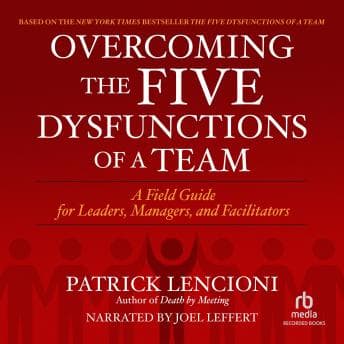

Three and a half hours. That's it. A business audiobook that respects your time. I almost wept.
Look, I've recommended Lencioni's original "Five Dysfunctions of a Team" to probably fifty clients at this point. It's one of those rare business books that actually works in the real world—not just in case studies from companies with unlimited budgets and cooperative employees. So when I found out there was a field guide companion, I had questions. Mostly: is this a cash grab or is there actual meat here?
The Teacher's Edition You Actually Need
Here's the thing about the original book—it's a fable. Great for understanding the concepts, but when you're sitting in a conference room with a dysfunctional leadership team staring at you, you need something more practical. That's what this is. Exercises, assessment tools, real-world examples of how to actually implement the framework.
I've seen teams try to "do Lencioni" after reading the first book and fail spectacularly. They identify the dysfunctions, nod along in agreement, then go right back to their passive-aggressive email chains and meeting-after-the-meeting culture. This field guide bridges that gap. It's the difference between knowing you need to build trust and having a concrete process for building it.
My parents didn't need a book to tell them their dry cleaning business worked because they trusted each other completely. But corporate teams? They need the exercises. They need the facilitation guides. They need someone to tell them exactly how to have the uncomfortable conversations.
Joel Leffert Gets the Assignment
I almost skipped this audiobook. Some reviews complained about the narration being rough, and I've been burned before by business audiobooks where the narrator sounds like they're reading a terms of service agreement. But Leffert actually works here. Clear, enthusiastic enough to keep you engaged, professional enough to take seriously.
Is it the most dynamic performance I've ever heard? No. But this isn't a thriller—it's a field guide. You don't need dramatic pauses and character voices. You need clarity and good pacing, and Leffert delivers both. I listened at 1.5x (yes, I dialed it back from my usual 2.0x) and it flowed perfectly. Some listeners mentioned the ending gets a bit rough. I noticed a slight energy dip in the final sections, but honestly? By that point you've gotten the core value. Not a dealbreaker.
Who Gets Value Here (And Who Doesn't)
If you've read the original Five Dysfunctions and found yourself nodding along but then doing nothing about it, this is your next listen. If you're a facilitator or consultant who works with teams, this is basically required reading. The exercises alone are worth the credit.
If you haven't read the original? Start there. This is genuinely a companion piece, not a standalone. You'll be lost without the foundational concepts. Skip this if you're looking for theory or inspiration—it's pure implementation.
I've already pulled two exercises from this for a client engagement next week. That's the real test of a business book—does it actually change how I work? This one passed.
The 3.5 hour runtime is perfect for a long commute or a focused Saturday morning. No padding, no repetitive stories that make the same point seventeen different ways. That's the same no-nonsense approach I appreciated in Networking for People—another field guide that cuts straight to the practical stuff. Lencioni respects that you're busy and have actual teams to fix.
Would I listen again? Probably not cover to cover, but I'll definitely revisit specific sections before facilitation sessions. That's exactly what a field guide should be—a reference you return to, not a one-and-done experience.
ROI Check
Jenny asked me why I was taking notes during my morning run. I told her I was being aggressively efficient. She rolled her eyes. But those notes are going into a client deck tomorrow, so who's laughing now.