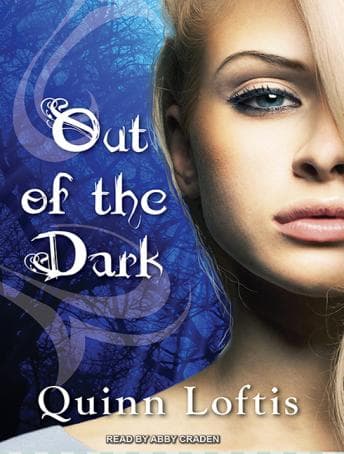

I was grading sophomore essays on The Great Gatsby at 11:30 PM - the ones where every student discovers that the green light symbolizes hope, as if they've cracked the Da Vinci Code - when I decided my brain needed something completely different. Enter four werewolf packs, a vindictive witch, and a curse that threatens to unravel a mating bond. This is not Fitzgerald. This is not even trying to be. And honestly? That's exactly what I needed.
Quinn Loftis's Out of the Dark is the fourth book in her Grey Wolves series, and let me be upfront: jumping in here means you're arriving at the party after the drama has already started. There's an assassination attempt that failed, a Beta named Decebel whose memory has been cursed away, and his mate Jennifer fighting for survival somewhere in the Transylvanian Alps. The witch's curse here has real teeth—unlike the more whimsical magic in Alice's Adventures in Wonderland, this one destroys lives. The stakes are high. The pack politics are messy. The romance is... well, it's fade-to-black, which my students would probably appreciate more than they'd admit.
When the Curse Becomes the Character
What struck me about this particular installment is how Loftis uses Decebel's memory curse as more than a plot device. It's genuinely painful to listen to - a man who can't remember the woman who's supposed to be his other half, while she's out there injured and alone. There's something almost Homeric about it, if Homer had written about werewolves and included text message conversations. (He would have hated the text messages. More on that in a moment.)
The pack dynamics here remind me of what I tell my students about ensemble casts: every character needs a reason to exist beyond filling space. Loftis manages this reasonably well. Vasile, the Romanian Alpha, carries the weight of leadership without becoming a cardboard authority figure. Sally, the gypsy healer, gets moments that feel earned rather than convenient. And Jennifer - Jen - has the kind of sharp-tongued humor that keeps the darker moments from becoming oppressive.
Abby Craden's Balancing Act
Abby Craden narrates with genuine warmth, and she understands something crucial: paranormal romance lives or dies on whether you can sell the emotional beats without making listeners cringe. She does. Her comic timing is legitimately good - there were moments during my late-night grading sessions where I actually laughed out loud, which confused Denise when she came downstairs for water.
But here's where I have to be honest. There's a section - and listeners who've heard this know exactly what I'm talking about - where Jennifer and Decebel are texting back and forth. Short, rapid-fire messages. And Craden announces each one: "Jennifer Text. Decebel Text. Jennifer Text. Decebel Text." Over and over. For what feels like an eternity. I understand why - you need to know who's speaking - but after five minutes of this, I wanted to throw my phone into Lake Michigan. It's not Craden's fault; she's working with what the format demands. But it's a structural choice that does not translate well to audio.
The 300-Year Mystery (And Why It Works)
Loftis threads a mystery through this book that apparently connects to something the Romanian pack has been dealing with for centuries. I won't spoil it, but I appreciate the ambition. Too many paranormal romances treat their supernatural elements as window dressing - pretty set pieces that don't actually matter to the plot. The Once and Future Witches does something similar, making its magic integral to both plot and character rather than decorative. Here, the witch, the curse, the pack history - they're load-bearing walls. Remove them and the story collapses.
Is the prose literary? No. If you loved Middlemarch, this is not its spiritual successor. But that's not what it's trying to be. Loftis writes clean, propulsive chapters that keep you moving forward. At just under ten hours, it's a commitment, but it doesn't drag. The pacing earns its runtime.
Who Should Summon This Particular Wolf (And Who Should Stay Home)
If you're already invested in the Grey Wolves series, you don't need my permission - you're probably already listening. If you're new, I'd genuinely recommend starting earlier in the series; there's too much established history here to fully appreciate cold.
This is for readers who want their paranormal romance with actual stakes, who don't mind fade-to-black intimacy, and who can forgive some structural audio quirks for strong character work. Skip it if you're a literary purist, or if you need your supernatural fiction to take itself completely seriously. Jennifer's humor alone will disqualify you if you can't handle sass with your soulmates.
Class Dismissed
Look, I'm not going to pretend this changed my understanding of literature. But it reminded me why I started reading in the first place - before grad school made everything feel like an assignment. Sometimes you need a curse to be lifted. Sometimes you need the good guys to win. Sometimes you need werewolves in the Transylvanian Alps while you're pretending to read essays about green lights.
Craden's narration carries the emotional weight. The text message thing is genuinely annoying but survivable. And somewhere around hour seven, I realized I actually cared whether Decebel got his memories back.
My students would probably love this. I'm not telling them.