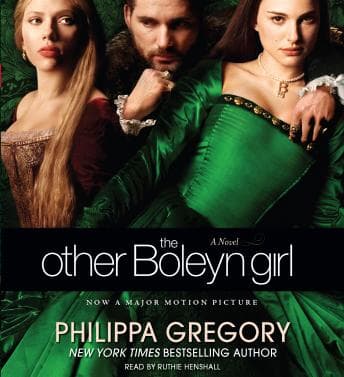

Ruthie Henshall's narration is the IV drip that keeps this Tudor drama alive and pumping for six straight hours.
I picked up The Other Boleyn Girl during a brutal stretch of night shifts, desperate for something to keep my brain engaged while charting at 3 AM. Historical fiction about scheming aristocrats seemed about as far from fluorescent-lit hospital corridors as I could get. Turns out, the Boleyn family operates with the same cold efficiency as a hospital administrator cutting staff—everyone's expendable if it serves the bottom line.
Philippa Gregory drops you straight into Mary Boleyn's world without ceremony. She's fourteen, naive, and about to become Henry VIII's mistress because her family decided she'd make useful bait. The parallels to modern power dynamics aren't subtle, but they don't need to be. I've watched enough families make decisions "for the patient's own good" to recognize the Boleyn playbook. Mary's parents and uncle treat her like a resource to be deployed, monitored, and discarded when her utility runs out. Anne waits in the wings, sharper and hungrier, ready to take her sister's place the moment the king's attention wanders.
Henshall Makes You Want to Save This Girl
Henshall's voice work carries this story in ways the page alone couldn't. She gives Mary a warmth that makes you protective of her—you want to grab this girl by the shoulders and tell her to run, get out, these people will destroy you. But Henshall also captures Mary's gradual hardening, the way repeated betrayals calcify into something like wisdom. When Anne enters scenes, there's an edge to the delivery, a brittleness that suggests danger wrapped in silk. Henry VIII comes across as magnetic and careless, the kind of man who genuinely believes his affection is a gift rather than a trap. I've met doctors like that. The charm works until it doesn't.
The abridged format—just over six hours—actually serves the material well. Gregory's writing is dense with period detail, and a longer version might have bogged down in court protocol and political maneuvering. This version keeps the blood flowing. You get the essential beats: Mary's rise, her fall, Anne's ascent, the family's relentless scheming, and Mary's eventual escape into something resembling an authentic life. The pacing reminded me of a well-run triage—nothing wasted, every scene earning its place.
Production quality stays clean throughout. No audio glitches, no sudden volume shifts, nothing to jolt you out of Tudor England and back into your car or your kitchen or, in my case, the break room at 4 AM. Henshall's diction is crisp enough that I never had to rewind because I missed a crucial name or plot point, even when I was half-asleep and running on vending machine coffee.
Not Your Cozy Historical Romance
Gregory doesn't sanitize the era. The sexual politics are frank—Mary is essentially trafficked by her own family, and the book doesn't pretend this is romantic. The violence lurks at the edges, a constant reminder that one wrong move means the Tower and the block. Anne's eventual fate hangs over the narrative like a diagnosis everyone's pretending not to see. If you're looking for a cozy historical romance, this isn't it. The Boleyns would eat those heroines alive.
Compared to Hilary Mantel's Wolf Hall, Gregory's approach is more accessible, less concerned with literary prestige and more focused on emotional immediacy. That same emotional immediacy shows up in Cast, though the setting couldn't be more different. Mantel gives you Thomas Cromwell's chess-master perspective; Gregory puts you inside Mary's heart as it gets systematically broken and rebuilt. Both are valid approaches. Gregory's just goes down easier after a twelve-hour shift.
The ending earns its emotional payoff. Mary's choice to walk away from court, from power, from her toxic family—it feels like watching someone finally discharge themselves against medical advice, except in this case, leaving is the healthy choice. She chooses a smaller life, a quieter one, and Henshall delivers those final chapters with a warmth that suggests genuine peace rather than defeat.
Who This Is For (And Who Should Skip)
This audiobook works for commutes, for workouts, for any situation where you want your brain occupied but not overwhelmed. The chapters break cleanly, so you can pause without losing the thread. I wouldn't recommend speeding up the playback—Henshall's pacing is deliberate, and rushing it would flatten the emotional beats that make this story land.
If you've got any sensitivity to family dysfunction, manipulation, or the casual cruelty of people who should love you, approach with care. The Boleyns make most dysfunctional families look functional. But if you want to understand how power corrupts from the inside out, how women survived in systems designed to consume them, and how one sister chose to stop playing a game she could never win—this delivers. Skip it if you need your historical fiction sanitized or your heroines rescued by someone else. Mary rescues herself, and that's the whole point.
Clocking Out
Six hours well spent. Like a good shift—intense, sometimes brutal, but you walk away knowing something that matters.