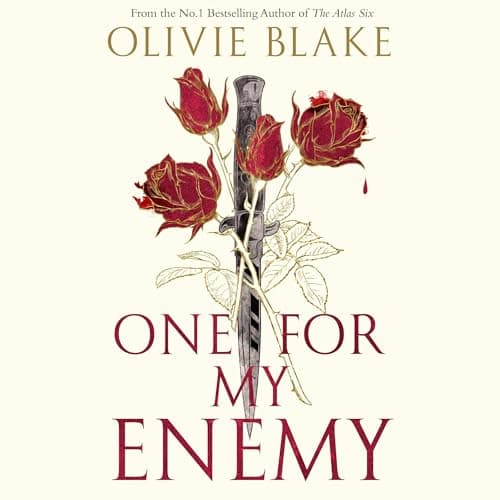

Olivie Blake wrote a Romeo and Juliet retelling about rival witch families in New York City, and it's exactly as ambitious and messy as that pitch suggests.
I spent a full week with this audiobook during my commute and evening walks, and what struck me most was how Blake refuses to simplify her story. You've got the seven Antonova sisters and the three Fedorov brothers, each with their own agendas, desires, and capacity for betrayal. The family matriarchs wage a cold war over magical narcotics territory while their children circle each other — some with knives, some with something closer to hunger. It's a lot. The short chapters and rotating perspectives keep things moving but also demand that you pay attention. Zone out for five minutes and you'll miss a shift in allegiance that matters three chapters later.
The Shakespeare bones are there — forbidden romance, feuding dynasties, the sense that tragedy is barreling toward everyone whether they deserve it or not — but Blake layers on enough original worldbuilding and modern sensibility that this never feels like a costume drama. Her magical Manhattan has texture and rules, even if the book sometimes prioritizes atmosphere and clever dialogue over explaining exactly how the magic system works. If you're the kind of reader who needs hard magic systems with clear limits, this will frustrate you. If you're here for the vibes and the family politics, you'll eat well.
The writing itself is Blake's signature style: sharp, literary, occasionally self-conscious in a way that either charms or annoys depending on your tolerance. Some passages feel like they're performing intelligence rather than conveying it. But when Blake hits, she hits hard. The emotional beats between family members — sisters protecting each other, brothers failing each other — land with genuine weight. The romance, when it finally arrives, burns slow and hot enough to justify the buildup.
Here's where I have to be honest about the pacing, because that's where the book's 3-star average starts making sense. The first third is dense with setup. You're meeting ten-plus named characters, learning two family hierarchies, absorbing the rules of this underground magical economy, and tracking multiple timelines. It rewards patience, but it also asks a lot of it. Some of the middle chapters feel like Blake is moving chess pieces into position rather than telling a story, and a few of the siblings never quite develop beyond their function in the plot. The book is strongest when it narrows its focus to two or three characters in a room, and weakest when it tries to keep all its plates spinning simultaneously.
Now, Ferdelle Capistrano. This is a narrator who makes a complicated book significantly easier to follow. With this many characters shifting between perspectives every few pages, a lesser narrator would have turned this into an indistinguishable blur. Capistrano gives each Antonova sister and each Fedorov brother a distinct vocal identity — you can tell who's speaking even before the dialogue tag arrives. The emotional range is impressive too. Tense confrontations crackle with real menace, and lighter moments with characters like Raphael and Gabriel land with genuine comedic timing. There's a self-assurance to the performance that matches Blake's writing voice perfectly. I'd honestly say Capistrano elevates the material by a half-star; scenes that might have felt overwrought on the page feel earned when spoken aloud.
The production from Macmillan Audio is clean and unadorned — no music, no sound effects, just Capistrano and the text. For a story this character-driven, that's the right call.
So who is this audiobook for? It's for readers who loved the family dynamics and moral ambiguity of something like Ninth House, who don't mind investing in a slow build that pays off emotionally rather than with action set pieces. That slow-burn emotional payoff is something I also found in Small Great Things, where the real weight of the story doesn't land until you've done the work of sitting with characters you've come to care about. It's Shakespeare filtered through a dark fantasy lens with real teeth. The forbidden romance works, the family politics work, the atmosphere absolutely works. Who should skip it? Anyone who needs tight pacing, a clear magic system, or fewer than ten characters to track — you'll spend more time confused than entertained. But the sheer number of perspectives and the slow-burn structure keep it from being the knockout some fans claim.
I walked away from this book genuinely impressed by its ambition, entertained by its best moments, and slightly exhausted by its structural choices. That feels about right for an Olivie Blake novel. She swings big. Sometimes the bat connects. When it does here — in a whispered threat between matriarchs, in a stolen moment between enemies who can't help wanting each other — it's genuinely thrilling. When it doesn't, you're counting the minutes until the next perspective shift brings you back to a character you care about.
Capistrano's narration is the secret weapon that makes this worth the audio format. If you're going to experience this story, experiencing it through this performance is the way to do it.