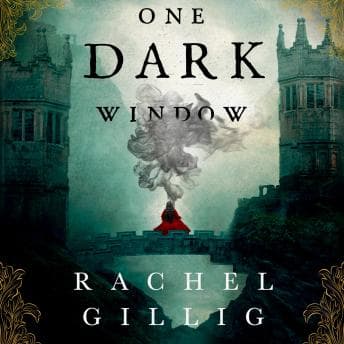
Look, I've seen the reviews trashing Lisa Cordileone's narration, and I went in braced for disaster. What I got instead was 12 hours of genuinely atmospheric gothic fantasy that had me listening in the dark like the masochist I am. Shirley (my cat) was unimpressed. I was not.
The thing about One Dark Window is that it understands something fundamental about horror-adjacent fantasy: dread is earned through atmosphere, not just plot. Rachel Gillig gets this. The mist-locked kingdom of Blunder isn't just a setting—it's a mood. And when you're listening at 2 AM with the lights off, that mood becomes your entire reality.
The Nightmare in Your Ears
Here's where I have to address the elephant in the room. Yes, the Nightmare's whispered sections are soft. Like, concerningly soft. I was walking my neighborhood at dusk (peak spooky hours, obviously) and had to crank my volume way up whenever he spoke, then scramble to turn it down before Elspeth's normal dialogue blew out my eardrums. It's annoying. I'm not gonna pretend it isn't.
But—and this is a big but—Cordileone commits to the character. The Nightmare isn't supposed to sound like your friendly neighborhood demon. He's ancient, mercurial, and genuinely unsettling. The whispery quality works thematically even when it's a practical nightmare (pun intended) for commuters. If you're driving, maybe don't. If you're in bed with headphones like a proper horror enthusiast, it actually enhances the creep factor.
The criticism about "whiny" female voices? I heard it differently. Elspeth is traumatized. She's got an entity slowly consuming her consciousness. She's allowed to sound strained. What some listeners read as weakness, I read as authentic emotional performance. This isn't a stoic warrior princess narrative—it's psychological horror wrapped in fantasy clothing. Cordileone understood the assignment.
Where the Gothic Meets the Romantic
Okay, so the romance. The slow-burn between Elspeth and the treasonous highwayman-who's-actually-the-King's-nephew is exactly the kind of tension I live for. Gillig's prose is lush—almost too lush in places, but that's the gothic tradition, baby. Shirley Jackson walked so this author could run through mist-shrouded forests.
Speaking of psychological complexity in speculative fiction, Invisible Man explores identity dissolution in ways that feel surprisingly relevant here—though Ellison's horror is grounded in social reality rather than literal possession.
The Providence Card quest gives the narrative structure, but honestly? I was here for the psychological complexity. Elspeth's relationship with the Nightmare is the real heart of this book. Is he protecting her or possessing her? Does it matter if the answer is both? This is horror that respects the genre—it doesn't give you easy answers or comfortable resolutions.
Cordileone handles the male voices adequately. Not spectacularly, but adequately. The highwayman sounds distinct enough from other characters that I never got confused during dialogue-heavy scenes. Some listeners found the male voices grating, but I've heard far worse. (Looking at you, every male narrator who voices women like they're auditioning for a Disney villain.)
The Slow Burn That Actually Pays Off
This is a 12-hour-45-minute commitment, and I won't lie—it drags in the middle. There's a section around the halfway point where the card-gathering quest feels more like a checklist than a narrative. I zoned out for maybe twenty minutes before Gillig pulled me back with another gut-punch revelation about the Nightmare's true nature.
The magic system is richly developed, almost to a fault. There's a lot of terminology to absorb early on. If you're the type who needs everything explained immediately, you might get frustrated. But if you're willing to trust the author and let the world-building wash over you—which is honestly how audiobooks work best—it clicks into place beautifully.
My podcast listeners are going to love this. It's exactly the kind of dark fantasy that rewards close attention and repeat listens. The foreshadowing is subtle enough that I'm already planning a relisten before the sequel.
Listen in the Dark or Don't Bother
Yeah. In the dark. With headphones. Like it's meant to be consumed.
Who should listen: Horror fans who want their fantasy with genuine psychological dread. Readers who loved the gothic atmosphere of Crimson Peak or the possession dynamics of Mexican Gothic. Anyone who thinks "is this entity helping me or destroying me?" is a compelling question.
Who should skip: If you need crisp, consistent audio levels for your commute, this will frustrate you. If psychological horror that lingers isn't your thing, look elsewhere.
Horror-adjacent fantasy that doesn't pull its punches. The narration isn't perfect, but Cordileone understood that this story needed atmosphere over polish. Sometimes that's the right call.