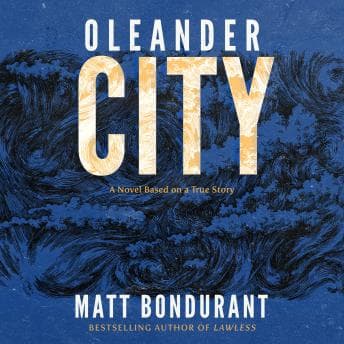

Matt Bondurant wrote a novel that does what I spend half my career begging eleventh graders to appreciate - it makes history feel like it's happening to people you know.
I finished Oleander City on a Sunday afternoon walk along the lakefront with Denise, and I had to stop twice. Not because of the wind off Lake Michigan, but because there's this six-year-old girl named Hester who survives the 1900 Galveston hurricane - the single deadliest natural disaster in American history - while ninety-three other children at the Sisters of the Incarnate Word orphanage do not. And Bondurant doesn't let you look away from that. He doesn't sentimentalize it. He just puts you in the water.
The Kind of History Lesson My Students Actually Deserve
Here's what kills me about this book: I've taught American literature for twenty years, and I couldn't have told you a thing about Jack Johnson's early career in Galveston before the storm. Or that "Chrysanthemum Joe" Choynski - the most successful Jewish boxer in America at the time - ended up fighting Johnson in a bout organized to raise money for hurricane relief. That's real. That happened. And Bondurant builds the whole novel around this collision of desperate people - the Red Cross workers under Clara Barton trying to feed the living, the Klan using the chaos to terrorize Black residents and settle scores, and these two fighters whose careers would become legend.
The novel braids three storylines together: Hester's survival and her witness to a terrible crime in the aftermath, the boxing match and the unlikely bond between Choynski and Johnson, and the Red Cross relief effort with its own internal politics. At eight hours and forty-one minutes, it's tight. Bondurant doesn't waste chapters on backstory dumps. The storm has already happened when we arrive. We're in the wreckage from the start.
This reminds me of what Hemingway said about writing - you can leave out anything as long as you know what you're leaving out. Bondurant knows what the storm took. He trusts us to feel the weight of it through what remains.
Coffey and Atwood Understand That Pause Is Punctuation
Two narrators. Chris Henry Coffey and Julia Atwood split the duties, and they're matched well - neither one overpowers the other, which matters when you're cutting between a bare-knuckle boxing ring and a child hiding from vigilantes. Coffey carries the fight scenes and Joe's simmering rage with a kind of controlled intensity - you can hear the restraint in his delivery, like a man who knows exactly how hard he can hit. Atwood handles Hester's fear and Diana's determination with equal conviction, and she's particularly good at conveying the way a six-year-old processes horror - not with adult vocabulary but with silence and confusion.
The emotional register shifts are where both narrators earn their keep. The book moves between violence, tenderness, bureaucratic frustration, and genuine terror, and neither narrator defaults to a single emotional setting. That's harder than it sounds. I've listened to plenty of dual-narrator audiobooks where one performer clearly got the better material. Here, it's balanced. The memoir Naturally Tan gave me a similar feeling - one narrator, one voice, and yet the emotional range somehow never flattened.
I won't call the performances flawless because I genuinely can't recall specific voice quirks for individual characters - it's more about emotional texture than distinct character voices. But for this kind of historical literary fiction, that works. The prose deserves to be savored, and both narrators serve the language.
Who Should Be Listening (and Who Should Know What They're Getting Into)
If you loved The Great Alone or News of the World, this is their spiritual successor - historical fiction rooted in real events with the emotional core of a survival story. If you're a Bondurant fan from Lawless (which was also based on true events), you already know he can write violence and tenderness in the same paragraph.
But fair warning: this book contains real violence, racial terror, and the death of children. Not gratuitous, but present. I'd flag the content warnings for anyone who needs them. My students would probably struggle with some of it. I love it for exactly the reasons they'd find it difficult - because it doesn't flinch.
The 1.0x speed is non-negotiable here. The sentences have rhythm. Bondurant writes with the kind of careful historical weight that rewards patience. Don't speed through the quiet parts. That's where the grief lives.
The Red Pen Stays in the Drawer
I keep a running list of books I want to teach but can't because of curriculum constraints and school board politics. Oleander City just went on that list. It does what the best historical fiction does - it takes an event you think you know (or don't know at all) and makes it personal. The Galveston hurricane killed somewhere between six and twelve thousand people. That's a statistic. Hester is a story. And Bondurant - and these two narrators - make sure you never confuse the two.
Worth pausing the faculty meeting for. Worth pausing pretty much anything for.