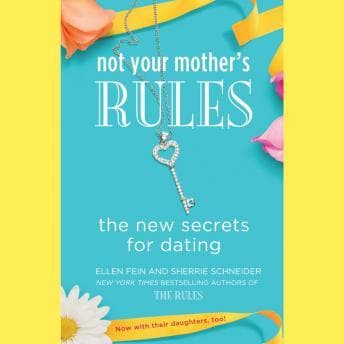

Look, I have a confession. I went into this audiobook ready to hate it. The original Rules book from '95 has always struck me as a fascinating case study in anxiety-based dating strategies - basically, a manual for performing unavailability because you're terrified of rejection. My therapist would have thoughts.
But here I am, seven hours later, with... complicated feelings.
The Psychology Behind the "Rules" (And Why It's Maddening)
So the premise is simple: be mysterious, don't text back too fast, never friend him on Facebook first. And honestly? Some of this tracks with actual attachment theory research. Playing it cool when you're anxious-attached can genuinely help you avoid some self-sabotaging behaviors. The authors aren't totally wrong that desperation isn't attractive.
But here's where I found myself getting annoyed during my morning jog through Cambridge. The book treats all men like they're operating from the same psychological playbook. "Men like the chase." "Men want what they can't have." This is oversimplification dressed up as universal truth. The research actually shows that secure attachment styles - where people are honest about their feelings - lead to healthier relationships than strategic game-playing. But okay, fine, the authors aren't researchers. They're dating coaches. Different goals.
What makes this book compelling (and I'm using that word carefully) is that it does address real problems. The chapter on not stalking his social media? Psychologically sound. Compulsive checking triggers anxiety loops. The advice to stop dating men who cancel repeatedly? Basic self-respect that a lot of people genuinely need to hear. I kept asking myself: why does this obvious advice need to be packaged as "rules"? Because apparently we've lost the plot when it comes to boundaries.
The Voices in My Head (Literally)
Ellen Fein and Sherrie Schneider narrate their own book, and - okay, this is where things get interesting. They sound like your two aunties from Long Island who are absolutely certain they know what's best for your love life. There's something weirdly comforting about it? Like, they've been doing this for decades, they've seen it all, they're not sugarcoating anything.
But also. The New York accents can be... a lot. I'm saying this as someone who grew up in New Jersey surrounded by exactly this energy. After about three hours, I needed a break. Not because the content was dense, but because the delivery is relentless. They're enthusiastic. Very enthusiastic. About everything.
The pacing is actually pretty good though - conversational, easy to follow while cooking or running. I made an elaborate dal while listening to the chapter on texting etiquette, and I didn't miss a beat. (Don't tell my mother I'm learning dating advice from audiobooks instead of just letting her set me up with her friend's son who's "a doctor, Priya, a doctor.")
Where This Falls Apart
The book was published in 2013, which means some of the advice is already dated. They're talking about Facebook like it's the main battleground. Barely a mention of dating apps in the way we use them now. And the underlying assumption that women should always be the pursued, never the pursuer? Psychologically, this doesn't track for everyone. Some people - men included - actually prefer partners who are direct about their interest. Imagine that.
Also, and I need to say this: the book has a judgmental undercurrent that bothered me. There's this implication that if you're single and struggling, it's because you're not following the rules correctly. That's not how human connection works. Relationships are messier than a checklist. They involve two people's attachment styles, trauma histories, communication patterns, and about a hundred other variables these authors don't really address.
The one-star reviewers who called this "not based on science" aren't wrong. It's based on observation and anecdote, which has value, but let's not pretend it's evidence-based psychology.
Who Should Listen (And Who Should Skip)
If you're someone who tends toward anxious attachment - constantly checking your phone, overanalyzing every text, making yourself too available too fast - this book might genuinely help you pump the brakes. Not because the "rules" are magic, but because any structure that helps you slow down and evaluate your own patterns is useful.
If you're secure in yourself and just looking for dating tips? Skip it. Read Attached by Amir Levine instead. Though if you're curious about success frameworks that actually hold up under scrutiny, 7 Eternal Laws of Success takes a more systematic approach—even if it's still not quite research-grade.
And if you're like me - a psychology nerd who finds the whole self-help dating genre endlessly fascinating as a cultural artifact - it's seven hours of entertainment. I'm not sorry I listened. I'm just not following the rules.