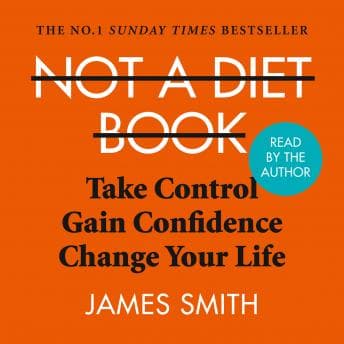

Look, I have a complicated relationship with fitness books. As someone who studies human behavior for a living, I find most of them psychologically... thin. They promise transformation but deliver platitudes. So when I started listening to James Smith's Not a Diet Book during my morning runs through Cambridge, I was fully prepared to be annoyed. I had a similar experience with Girl, Wash Your Face - that mix of irritation and reluctant engagement that keeps you going.
And honestly? I was. But in a way that made me keep listening.
The Psychology of Tough Love (And Why It Works)
Here's the thing about James Smith: he's not trying to be your friend. He's trying to shake you out of whatever comfortable delusion you've wrapped yourself in about why you can't lose weight or get fit. The protagonist of this book - and yes, I'm treating you, the listener, as the protagonist - exhibits classic avoidance patterns. Smith knows this. He's calling you out.
From a psychological standpoint, this approach is fascinating. Research actually shows that for certain personality types, direct confrontation can be more effective than gentle encouragement. Smith operates on the assumption that you've already tried the gentle approach and it hasn't worked. He's probably right. If you were the type to respond to soft motivation, you wouldn't be listening to a book with "Not a Diet Book" as its title.
But - and this is important - his style won't work for everyone. What makes Smith compelling as a character (and yes, I'm analyzing him as a character now, deal with it) is his absolute certainty. He's convinced he's right. Some listeners will find this confidence inspiring. Others will find it grating. I found myself oscillating between both reactions, sometimes within the same chapter.
When the Author Picks Up the Mic
Smith narrates his own book, and this is where things get interesting. His delivery is warm, sincere, and peppered with dry British humor that caught me off guard more than once. I actually laughed out loud during one of my runs - startled a squirrel, very embarrassing.
The strong British accent is... present. Very present. If you're not used to it, you might need to adjust. I grew up on Agatha Christie novels, so British voices feel like home to me, but I can see how non-British listeners might struggle. Some moments feel slightly stilted, like he's reading rather than talking. But honestly? When the content is this direct, the slight formality almost works. It's like getting a lecture from a professor who actually knows their subject.
The audiobook runs just under seven hours - long enough to cover the material properly, short enough that you don't lose the thread. I finished it over about a week of morning runs and cooking sessions. (My therapist would have thoughts about me listening to fitness advice while making elaborate pasta dishes. The irony is not lost on me.)
What He Gets Right - And What He Misses
Psychologically, Smith understands something crucial: most diet failures aren't about information. They're about identity. He spends significant time on mindset, on the stories we tell ourselves about who we are and what we're capable of. This is solid behavioral psychology, even if he doesn't frame it that way.
His chapters on metabolism, "body types," and common fitness fallacies are genuinely useful. He debunks nonsense with the energy of someone who's had to explain the same thing a thousand times and is tired of it. I found myself nodding along, appreciating that he respects his audience enough to explain the why behind his recommendations.
But here's where I have to be honest: some female listeners have reported feeling like the content isn't fully inclusive. I noticed this too. There's a chapter specifically on female fat loss, which is good, but the overall tone sometimes feels like it's primarily addressing men. It's not egregious, but it's there. Worth noting if that's something that matters to you.
Also - and I say this as someone who values directness - there's a fine line between no-nonsense and arrogant. Smith occasionally crosses it. A few times I found myself thinking, "Okay, I get it, you're right about everything." The confidence that makes him effective can also make him exhausting.
Who This Will Work For (And Who Should Run the Other Way)
This audiobook is designed for a specific type of person: someone who's tried the gentle approach, who's sick of being coddled, who wants someone to just tell them what to do and why. If that's you - if you respond to tough love and directness - this will probably work. If you need encouragement and patience, skip it. Seriously. You'll hate it and it won't help.
For my fellow psychology nerds: it's worth listening just to analyze his persuasion techniques. He's good at what he does. Whether what he does works for you is a different question entirely.
The Behavioral Analysis
I'm giving it a solid rating because it accomplishes exactly what it sets out to do. It's not trying to be for everyone, and that honesty is, ironically, refreshing. Just know what you're getting into.