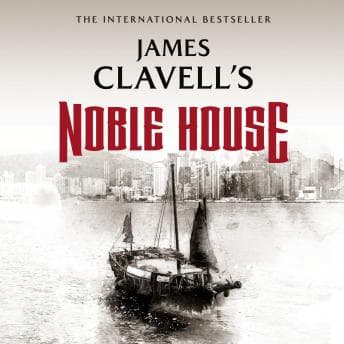

People kept telling me Noble House was Clavell's best work. Fifty-five hours, they said. Worth every minute, they said. And I'm sitting here at 4 AM, three weeks into this beast, realizing they were right - but also that nobody warned me I'd need a spreadsheet to track all the players.
I started this during a brutal stretch of night shifts. The kind where you're charting at 3 AM and the unit is so quiet you're afraid to breathe (knock on wood, always knock on wood). Fifty-five hours seemed insane, but I figured - I've got the commute time. I've got the charting time. What I didn't have was the mental bandwidth for Clavell's version of 1963 Hong Kong, which is basically Game of Thrones with stock portfolios and more backstabbing.
When the Business Deals Hit Harder Than the Action Scenes
Here's what nobody tells you about Noble House: the boardroom negotiations are more tense than any medical emergency I've ever worked. Ian Dunross fighting to save Struan's from hostile takeover while Soviet spies and Triad connections circle like vultures? My heart rate was up. Actually up. Carlos asked why I was gripping the steering wheel so hard during my morning commute. I blamed traffic.
The coin debt scene - you'll know it when you get there - has this mythic weight to it that made me pull into my driveway and just... sit there. Anna Karenina had that same gut-punch quality - moments where duty and desire collide so hard you have to pause and process. Engine off. Staring at nothing. The way Clavell builds obligation and honor into a single moment of transaction? That's not just good writing. That's understanding how power actually works between people.
And the espionage threading through everything isn't the flashy spy stuff. It's the slow, paranoid kind. The kind where you're never quite sure who's playing who. Promise does something similar with its layered deceptions - everyone's got an agenda, and you're piecing together the truth alongside the characters. Which, honestly, felt very familiar after fifteen years of hospital politics.
Ralph Lister's Upper Crust English Is Perfect (His Scottish... Less So)
Lister's narration is nearly excellent - and I say nearly because the man does beautiful work with the British colonial elite, captures the American millionaire's energy perfectly, makes the Cantonese characters distinct without falling into caricature. But every time a Scottish accent showed up, I winced a little. It's not terrible. It's just... you can hear him trying. And when you're fifty hours deep, you notice these things.
The emotional delivery in the tense moments though? Perfect. When Dunross is carrying the weight of his entire family legacy while pretending everything's fine? Lister gets that achingly real sense of responsibility and fear. As someone who's actually worked a code, I know what controlled panic sounds like. He nails it.
Some listeners apparently found certain voices grating. I get it. Fifty-five hours with any voice is going to have moments. But for me, the consistency outweighed the occasional irritation.
The Commitment Level Is Real
Let me be practical here: this is not a casual listen. This is not background noise while you fold laundry. This is a relationship. You need focus. You need to remember who owes what to whom, which company is trying to destroy which other company, and why that throwaway conversation from hour twelve suddenly matters in hour forty-three.
I listened at normal speed because 1.25x made me miss connections. Your brain needs time to process the layers. And there are so many layers.
Content-wise - violence, language, sexual content. It's the sixties, it's Hong Kong, it's men with too much power and not enough oversight. Clavell doesn't shy away from the uglier parts of colonialism or the casual cruelty of wealth. Which I appreciated, actually. It felt honest.
Who's Going to Love This (And Who Should Run)
If you loved Shogun or Tai-Pan, this is more complex, more sprawling, more demanding. It's Clavell at his most ambitious. If you want something you can half-listen to while doing other things - absolutely not. Skip this. You'll be lost by hour three and frustrated by hour ten.
But if you want to disappear into a world so detailed you can smell the humidity and feel the tension of a city caught between empires? If you've got a long commute, a night shift schedule, or a road trip coming up? This is the one.
Clocking Out
Three weeks of my life. Fifty-five hours of Hong Kong in 1963. And I'm genuinely sad it's over. The audiobook isn't perfection - nothing is - but it's close. It's the kind of story that makes you understand why people build empires and why those empires destroy them.
My mom would love this. She still thinks I should've been a doctor, but she'd appreciate the ambition. The scope. The way Clavell makes you care about people who are, objectively, kind of terrible.
Carlos asked why I was crying in the car after the ending. I blamed allergies. He didn't believe me.