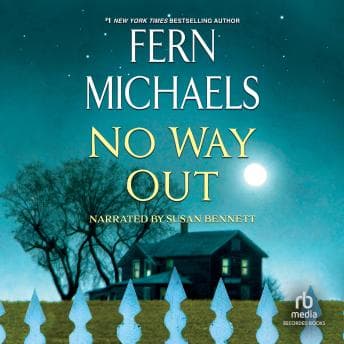

I was sitting at the kitchen table at 8 AM, post-shift, too wired to sleep but too tired to do anything useful. Carlos had already taken the kids to school. The house was that specific kind of quiet that only happens when you've been awake for 22 hours and the world feels slightly unreal. I'd been listening to No Way Out on my drives home all week, and I had about an hour left, so I poured coffee number four and hit play.
Here's the thing I figured out somewhere around hour three: this is not the book the title promises.
The Title Says Thriller, The Book Says Something Else Entirely
No Way Out sounds like something where someone's trapped in a building with a serial killer, right? That's what I expected. Woman in a coma, missing boyfriend, starting over in hiding - the setup has all the ingredients for a suspense novel that would make me check my rearview mirror on the drive home. But Fern Michaels took those ingredients and made... a casserole. A warm, comforting casserole. With a side salad of mild unease.
Ellie Bowman moves to rural Missouri after waking from a coma with fragmented memories and a missing boyfriend named Rick. She's got her cottage, her dog, and her video game development income. And then an eight-year-old neighbor kid starts showing up every day to talk to her pup over the fence. And honestly? That kid and that dog are the emotional center of this book, not the suspense. The community that slowly forms around Ellie - neighbors with their own baggage, small-town dynamics, the careful way a traumatized woman learns to trust again - that's what Michaels is actually interested in writing about. That slow rebuilding through community is something Walk to Remember also does quietly and well, if you're in that same headspace.
Once I stopped waiting for the thriller to kick in and accepted this as women's fiction with a thin suspense thread, I liked it a lot more. But it took me until about hour four to make that adjustment, and I'll admit I was yelling at my dashboard for different reasons than usual. Not "THAT'S NOT HOW DEFIBRILLATORS WORK" but more like "WHERE IS THE TENSION, FERN?"
What a Trauma Nurse Notices About Recovery Stories
Here's where it got interesting for me, professionally. Ellie's recovery arc - the fragmented memories, the hypervigilance, the way she isolates and then slowly, painfully re-engages with other humans - that actually tracks. I've watched patients come back from traumatic brain injuries and comas, and the way Michaels writes Ellie's unease, the sense that something terrible happened but your own brain won't give you the details? That rings true. The nightmares returning when Rick resurfaces? That's how trauma memory works. Your brain protects you until it decides you're strong enough, and sometimes it's wrong about the timing.
I appreciated that. I did. The medical details aren't deep enough for me to really grade them, but the emotional recovery felt honest.
What I'm less sure about is whether the Rick storyline pays off with enough weight. When Ellie finally starts piecing together what happened, the revelations felt... tidy. Neat. Like the kind of resolution you get in a book that's more interested in the healing than the wound. Which is valid! But if you're coming in expecting Harlan Coben-style twists, you're going to be disappointed.
Susan Bennett Does Exactly What This Book Needs
Susan Bennett has this calm, steady delivery that works perfectly for a story about a woman slowly rebuilding. She's an Earphones Award winner and you can hear why - there's a warmth to her read that makes eight hours feel shorter than they are. She doesn't oversell the suspense moments, which is smart because the book doesn't really support that kind of intensity anyway. Her pacing kept things moving during sections that could've dragged - and in a book that's more character study than thriller, that matters.
I don't have enough to say about her character differentiation because honestly, this book lives mostly in Ellie's perspective and the supporting cast blends together a bit. That's more a writing issue than a performance issue. Bennett did her job. She kept me company through four 3 AM drives home, and I never had to rewind because I'd zoned out.
Perfect For That Post-Shift Decompression
Look. If you want a book that's going to spike your adrenaline, this isn't it. But if you've had the kind of day - or night - where you've seen too much of the worst of humanity and you need a story where a broken person gets gently put back together by a community of imperfect people? This is that book. It's comfort food that happens to have a mystery in it, like finding a crouton in your soup.
My mom would love this (she still thinks I should've been a doctor). She'd also spend 45 minutes telling me how Ellie should've gone to the police sooner, and she'd be right.
Who Gets the Recommendation and Who Doesn't
If you're a Fern Michaels fan who loves her character work - go for it. If you're in the mood for light women's fiction with a recovery arc and don't mind that the "suspense" is more of a gentle simmer than a boil, you'll be fine. If you're picking this up because the title and description made you think edge-of-your-seat thriller? Skip it or reset your expectations hard before you press play.
Night shift approved - but only for the drive home, not the drive in. You need something with more bite to get you through the 11 PM commute.