
Everyone told me this was a cute, feel-good kids' book. And it is. But I found myself standing at the stove, stirring dal at 9 PM on a Tuesday, genuinely fascinated by the social psychology playing out in a fifth-grade classroom. Which tells you something about either the book or about me. Probably both.
A Silence Experiment That Would Make Any Researcher Jealous
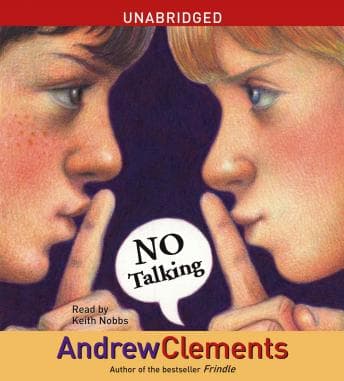
Here's the premise: Dave Packer, the noisiest kid in fifth grade, challenges the girls to a contest — who can stay quiet longer? Boys vs. girls. No talking, with a three-word-per-sentence limit when you absolutely must speak. And suddenly this elementary school becomes, psychologically speaking, a fascinating natural experiment in communication deprivation and group identity.
What makes this character compelling is that Dave doesn't start the contest for the reason you'd expect. He's not some class clown pulling a prank. He's actually been thinking about silence — about Gandhi, about what happens when you strip away the noise. For a fifth grader, that's a sophisticated internal motivation, and Andrew Clements doesn't dumb it down. The kid has a genuine insight and then — because he's eleven — channels it into a competitive game. That's exactly how children process abstract ideas. Sun Tzu understood something adjacent — that constraint and strategy are inseparable — and Art of War keeps surfacing in my mind whenever I watch a character figure out how to win by doing less, not more. The research actually shows that kids this age conceptualize moral and philosophical concepts through play and social hierarchies, not through quiet reflection. Clements clearly knows this.
The three-word limit is genius. Not total silence, but constrained speech. It forces every character to choose their words with surgical precision, and watching a bunch of ten-year-olds navigate that constraint — trying to ask for lunch, answer a teacher's question, argue with each other — is both hilarious and surprisingly instructive. I found myself asking: why does Dave really need this silence? And the book gives you just enough psychological texture to chew on without becoming a lecture.
Mrs. Hiatt vs. The Machine
Now, here's where Clements does something I respect. The adults in this book aren't cartoon villains or saints. Mrs. Hiatt, the principal, exhibits classic authoritarian anxiety — she sees the silence as defiance, as disorder, as a threat to her control. Because of course she does. Silence from children registers as resistance in institutional settings. Any school psychologist will tell you that. But then you've got the teacher who flips the script, recognizing the pedagogical opportunity in the chaos. That tension between "this is a discipline problem" and "this is actually learning" — that's real. That's how schools actually function.
Clements was a teacher, and you can feel it. The hallway dynamics, the cafeteria politics, the way kids form alliances and break them within a single recess — it all tracks psychologically. No manufactured drama, no kids acting like tiny adults or like aliens pretending to be human. Just accurate, slightly exaggerated fifth-grade behavior.
Keith Nobbs and the Three-Word Challenge
Keith Nobbs narrates with a voice that genuinely sounds like it belongs in an elementary school — youthful, energetic, not condescending. At under three hours, this is a quick listen, and his pacing matches the book's brisk energy. Where it gets interesting is during the constrained dialogue scenes. When characters are limited to three words, Nobbs has to convey a LOT with very little, and he mostly pulls it off.
That said — and this is worth mentioning — the book has a narrative tic that some listeners love and others find maddening. Clements uses this device where the narrator says things like "but this is not the time to tell about that," teasing future plot points. On the page, it probably reads as playful. In audio, with Nobbs delivering it multiple times, it started to pull me out of the flow. Not a dealbreaker, but I noticed it, and once I noticed it, I kept noticing it. My therapist would have thoughts about my need for narrative control, but that's a separate conversation.
Who This Is Really For (And Who'll Be Surprised)
Obviously this is marketed at kids, and it works beautifully for that. Car rides, family listening — it's pitched perfectly. But here's what I didn't expect: as someone who studies how stories shape identity and group behavior, I found genuine substance here. The contest becomes a lens for examining how communication — and its absence — restructures social hierarchies. The popular kids lose their power. The quiet kids suddenly have an advantage. It's a miniature social experiment, and Clements plays it out with enough honesty that adults will find it interesting too.
If your kid is between 8 and 12, this is a fantastic listen. If you're an adult looking for psychological complexity — look, it's a children's book. Calibrate accordingly. But don't be surprised if you find yourself thinking about it while stirring dal at 9 PM.
Case Study: Closed
The protagonist exhibits classic intrinsic motivation masked as competition, and the book is smart enough to know the difference. At 2 hours and 35 minutes, it respects your time, delivers a genuine insight about silence and communication, and doesn't moralize too heavily. Clements understands human nature — even the under-twelve version of it. Pretty much exactly what good children's fiction should do.