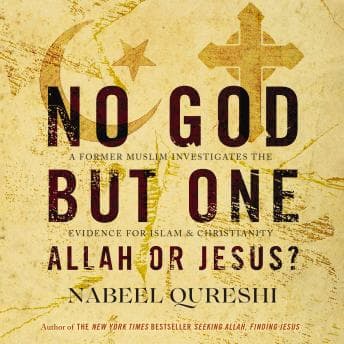

I was grading sophomore essays on The Great Gatsby - you know, the ones where every student thinks they're the first person to notice the green light is a symbol - when I started this audiobook. And look, I'll be honest: comparative religion isn't my usual territory. I'm more comfortable with Fitzgerald than faith debates. But Nabeel Qureshi's voice stopped me mid-red-pen.
There's something about hearing an author narrate their own spiritual autobiography that hits different. Qureshi isn't performing. He's confessing. And that distinction matters more than I expected.
When the Scholar Becomes the Story
Here's the thing about apologetics books - and I've listened to a few, mostly because Denise went through a C.S. Lewis phase and I'm a supportive husband - they can feel like term papers read aloud. American Religious History had some of that academic dryness, though it made up for it with scope. Evidence presented, conclusion drawn, reader expected to nod along. Qureshi does something smarter. He weaves his personal cost into every argument.
The man lost his family. Not metaphorically. He's talking about his mother, his father, his entire community turning away from him. And when he narrates those sections, you can hear it. The pauses aren't dramatic effect. They're a man still processing grief while making his case.
I kept thinking about what I tell my students about ethos in persuasive writing. "Your reader needs to trust you've earned your argument." Qureshi earned it. Painfully.
The Comparative Approach Actually Works
Okay, so the structure is pretty straightforward: he takes major theological questions - the nature of God, the reliability of historical sources, the problem of violence in religious history - and examines both Islam and Christianity side by side. Jihad versus the Crusades. The Quran's preservation versus the New Testament manuscripts. Muhammad's life versus Jesus's claims.
My students would hate this. (Too much thinking required, not enough TikTok pacing.) I loved it.
What surprised me is how respectful Qureshi remains toward Islam even while arguing against it. This isn't a hit piece. He's not mocking his former faith. He's a scholar who happened to change his mind, and he's showing his work. This reminds me of what Hemingway said about writing true sentences - Qureshi writes true arguments, even when they're uncomfortable.
The sections on historical evidence were particularly strong. He gets into the weeds on manuscript traditions, early sources, the telephone-game problem of oral transmission. Dense stuff. But his narration keeps it accessible - conversational, almost, like he's explaining it to a friend over coffee rather than lecturing from a podium.
The Voice in My Head
Qureshi narrating his own work was absolutely the right call. His pacing is measured - some might say slow, but honestly? The prose deserves to be savored. You can't speed through questions about the Trinity and expect to follow the logic. I listened at 1.0x and didn't regret it.
His accent adds authenticity. When he pronounces Arabic terms or discusses Islamic theology, you're hearing someone who grew up inside that tradition. It's not an outsider's approximation. That matters for a book making the claims this one makes.
I will say - and this is minor - there are moments where his earnestness borders on intense. Not preachy, exactly, but... fervent. If you're looking for detached academic analysis, this isn't it. Qureshi believes what he's arguing. Deeply. Whether that's a feature or a bug depends entirely on what you're looking for.
Who Should Listen (And Who Should Skip)
Let's be real for a second. This book has a perspective. Qureshi converted from Islam to Christianity, and he's making the case that his conversion was intellectually justified. If you're looking for a neutral comparison of world religions, this isn't that - skip it. It's a convert's apologia. But if you want to understand why someone would make that journey - the specific questions they wrestled with, the evidence they weighed, the personal devastation they accepted - this is remarkably honest. Worth pausing the faculty meeting for. (Sorry, Principal Martinez.)
Readers who loved Lee Strobel's The Case for Christ or J. Warner Wallace's cold-case approach to apologetics will find familiar territory here. But Qureshi's personal stakes raise the emotional temperature considerably.
The audiobook includes some bonus content - a Q&A session and discussion guide material - which makes it useful for group studies if that's your thing. Production quality is clean, no technical complaints.
I finished this on the lakefront last Tuesday, watching the sun set over the water, thinking about how rare it is to hear someone articulate what they gave up for what they believe. Agree with his conclusions or not, Qureshi paid for them. And that authenticity carries the whole nine hours.