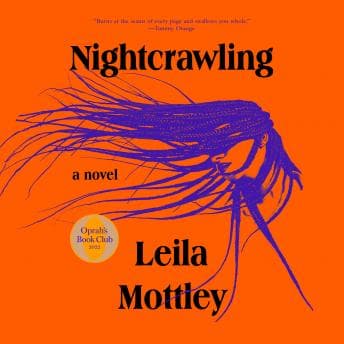

"She doesn't want to be touched but she needs the money."
I don't remember exactly when in the audiobook this line hit, but I had to pause. Set down my stylus. Let Frida headbutt my hand while I stared at my monitor, the design project completely forgotten. Because Leila Mottley had just cracked my chest open with eight words.
This Book Felt Like Swallowing Glass
Kiara is seventeen. She's raising herself, her older brother Marcus who's chasing a rap dream that's going nowhere, and Trevor—the nine-year-old next door whose mom just... left. The Regal-Hi apartment complex in East Oakland is falling apart around them, rent's doubled, and Kiara is doing what she has to do to keep them all alive. What starts as one desperate night becomes nightcrawling—sex work on the streets of Oakland—and then it becomes something so much worse when cops get involved.
I listened to this over three days. Couldn't do more than a few hours at a time. Not because it's slow—it's not—but because my body needed breaks. I'd catch myself holding my breath during Kiara's encounters, releasing it only when she made it home. Mottley writes survival with such visceral precision that you feel the cold of the sidewalk, the weight of a stranger's hand, the specific exhaustion of being young and Black and female and poor in America.
Abuela would have clutched her rosary so hard it left marks. But she also would have understood Kiara in her bones—that fierce, impossible love that makes you sacrifice everything for the people you're trying to protect.
The themes are miles apart, but that same bodily understanding of sacrifice is why Bronze Horseman also left me with my hand pressed to my sternum.Joniece Abbott-Pratt Becomes Kiara
I don't say this lightly: this is one of the best narrator performances I've experienced. Abbott-Pratt doesn't just read Kiara's first-person narration—she is Kiara. There's this quality to her voice that's simultaneously tough and tender, like she's built walls but you can hear the cracks in them. When Kiara describes taking care of Trevor, there's warmth. When she's on the street, there's a flatness, a dissociation that made me physically uncomfortable in the best way.
The emotional intimacy here is almost unbearable. Abbott-Pratt captures the specific anguish of a teenager who's been forced to grow up too fast but still has moments of childlike hope. Her delivery during Kiara's interactions with Marcus—that complicated love between siblings who are both failing and saving each other—had me ugly-crying at my desk. (Diego looked concerned. Frida did not care.)
She won an AudioFile Earphones Award for this, and honestly? Should have won everything. The way she shifts between Kiara's internal monologue and her spoken dialogue creates this layered portrait of a girl who shows the world one face while thinking something entirely different.
The System That Eats Its Children
Here's where the book becomes something beyond a survival story. When Kiara's name surfaces in a police scandal—when the people who are supposed to protect become the predators—Mottley exposes the machinery that grinds up Black girls and spits them out. This is based on real events in Oakland, and knowing that makes every scene with law enforcement feel like a documentary horror film.
I kept pausing to text my friend who works in social services. "Have you read this?" She had. "It's accurate," she said. "That's the worst part."
Mottley was nineteen when she wrote this. Nineteen. The Oakland Youth Poet Laureate channeled her city's pain into something that reads like testimony. The prose has this raw, poetic quality—sentences that cut deep, paragraphs that build like pressure until they release. It's not easy. It's not supposed to be.
My Heart. MY HEART.
I cried four times. Added to the spreadsheet. But these weren't the cathartic cries I get from romance novels. These were the kind that leave you feeling hollowed out, then filled with something sharper—anger, maybe. Grief for all the Kiaras who don't get their stories told.
There's beauty here too, though. The way Kiara loves Trevor, fierce and maternal at seventeen. Her complicated relationship with her incarcerated father. The moments of tenderness between her and Marcus before everything fractures. Mottley doesn't let you look away from the darkness, but she also doesn't deny her characters their humanity, their capacity for love.
Content warning: this book contains sexual content, abuse, violence, and language. It's not gratuitous—it's necessary to the story Mottley is telling—but go in prepared.
Who Needs This Story (And Who Should Wait)
Listen if you want fiction that functions as witness—if you're ready to sit with discomfort and let a story change how you see the world. Skip if you need escapism right now, or if you're in a fragile place. This book demands emotional bandwidth you might not have, and that's okay. It'll wait.
Clear Your Schedule and Your Heart
This is a book that requires your full attention and emotional bandwidth. I'd recommend listening during focused time, maybe with something comforting nearby. A blanket. A pet. The ability to pause and breathe.
I listened at 1.0x because Abbott-Pratt's pacing is already perfect—speeding up would feel like rushing through someone's trauma. Let it unfold at its intended rhythm. Let it change you.
The vibes are not immaculate. The vibes are devastating and necessary and true. And that's exactly why you should listen.