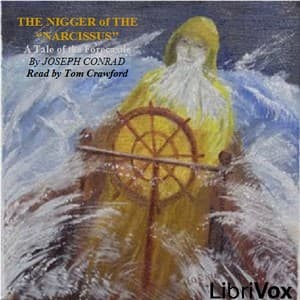

Look, I need to get something off my chest right away. Joseph Conrad wrote one of the most psychologically intense novellas about life at sea ever put to paper - and this audiobook version nearly killed it for me. Not because of the source material. Because the narration is, and I'm being generous here, like listening to someone read a grocery list for six hours straight.
Let me cut to the chase: this is a skip in audio form. Which genuinely pains me to say.
Conrad Deserved Better Than This
I was up late last night, couldn't sleep - one of those nights where the brain won't shut off and you just need something to occupy it. Figured I'd finally get around to Conrad's maritime novella, the one that predates Heart of Darkness and supposedly laid the groundwork for everything he did after. And the writing itself? The author clearly did their homework. Well, he lived it - Conrad spent years in the merchant marine, and you can feel salt spray in every paragraph. The storm sequence off the Cape of Good Hope, where the crew is literally fighting to keep the ship from going under while simultaneously dealing with the dying James Wait below deck - that's writing that puts you inside the hull. Conrad understood what it means to be trapped with men you didn't choose, bound together by circumstance and survival. I've been on enough deployments to know that dynamic intimately. The motorcycle brotherhood in Own the Wind tries to capture that same locked-in loyalty, though it never quite earns the weight Conrad finds in a single watch on a sinking ship.
The ship Narcissus and her crew function as a pressure cooker. You've got Donkin, the malingering agitator who'd be familiar to anyone who's ever dealt with a barracks lawyer - that guy who poisons morale while contributing nothing. And Wait himself, whose illness becomes this moral black hole that the entire crew orbits around, unable to decide if he's dying or faking. Conrad doesn't give you easy answers. The racial dynamics are uncomfortable - and yes, the title itself is a flashing warning sign that this is a product of 1897. You need to know that going in.
Six Hours of Flatline
This is where it lost me. Tom Crawford's narration is - and I'm quoting other listeners because they nailed it - "just one word after another after another for six hours." No inflection. No emphasis. No differentiation between characters. When old Singleton, the ancient mariner who's been at sea for decades, speaks, he sounds exactly like the young sailors, who sound exactly like the officers, who sound exactly like the narrative prose. It's all one flat tone.
Conrad's prose is already dense. He writes in long, rolling sentences that mirror the sea itself - beautiful on the page, but demanding of a narrator who can find the rhythm, hit the beats, let you breathe. Crawford doesn't find that rhythm. He plows through sentences the way a bulldozer goes through a fence. There are mispronunciations scattered throughout - and with nautical terminology, that matters. If you're going to narrate a book about sailing, you'd better know how to say "fo'c'sle" and "belaying pin" without stumbling. It's like someone narrating a military thriller who can't pronounce "ordnance" - it breaks trust instantly.
I bumped it to 1.5x at one point trying to inject some energy. Didn't help. Just made the monotone faster.
The Book Itself Still Stands
Here's what frustrates me. Strip away this particular audio performance, and you've got a genuine piece of literature that any sailor, soldier, or anyone who's been part of a crew under pressure should experience. Conrad's central question - what do we owe each other when things go sideways? - never gets old. The way the crew's solidarity fractures and reforms around Wait's sickness is honest in a way most fiction about group dynamics isn't. The storm scene alone is worth the price of admission if you can actually follow it through the narration.
At six hours twenty-two minutes, the length is right. This isn't a novel that should be longer than it is. Conrad knew when to bring the ship to port.
But the delivery here turns what should be an intense, claustrophobic listen into background noise you can't even use as background noise because you'll lose the thread of Conrad's already complex sentences.
Who Gets the Assignment
If you want to experience this novella, read the print version. Or find a different audio edition - there are other recordings out there. This particular version is for completists only, people who've already read it and just want Conrad's words flowing while they do something else. Even then, the monotone will test you.
Skip this recording. But don't skip Conrad. Ranger fell asleep during hour two, and honestly, I can't blame him.
Worth your time? The book, absolutely. This audiobook, negative.