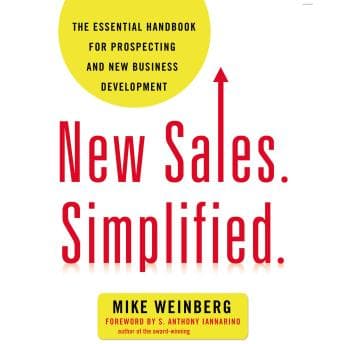

Bottom line: This is the sales book I wish someone had handed me when I was 26 and too proud to admit I didn't know how to prospect.
I finished this one during a red-eye from LAX to JFK last week. Couldn't sleep, client deck wasn't coming together, and I figured I'd finally knock out a book that's been sitting in my queue since three different founders recommended it. Here's the thing—most sales books fall into two camps: either they're written by people who've never actually sold anything, or they're so focused on "relationship building" that they forget businesses need revenue to survive. Weinberg lands somewhere refreshing.
What My Parents Already Knew (But With Better Vocabulary)
The core thesis isn't revolutionary: salespeople fail because they don't prospect enough, and they don't prospect because they're scared of rejection and distracted by "busy work" that feels productive but isn't. My dad figured this out running his dry cleaning business in Koreatown—you don't wait for customers to find you, you go knock on doors of every hotel and restaurant within a five-mile radius. Weinberg just gives it structure and a framework.
What I appreciated is his brutal honesty about why sales teams underperform. He calls out the excuses I've heard from every struggling startup sales team I've consulted with: "Our leads are bad," "The market's tough," "We need better marketing." Weinberg's response is essentially: stop whining and pick up the phone. It's not gentle, but it's accurate.
Why Author-Narrated Actually Works Here
Weinberg narrates his own book, and honestly—this is how business audiobooks should work. You can hear the frustration when he talks about salespeople who spend their days "playing CRM" instead of actually selling. There's genuine passion here, not some voice actor reading words they don't understand. When he describes bad sales calls he's witnessed, you can tell these are real memories that still irritate him.
The humor lands better in audio format too. His sarcasm about executives who expect their sales teams to hit quota while providing zero support comes through perfectly. That same no-BS energy shows up in 50th Law, though applied to power dynamics instead of sales quotas. I found myself nodding along at 2x speed—which is saying something, because most business narration makes me want to claw my ears off.
The 45 Minutes of Gold (And the Filler)
Here's where I get honest. The "sales story" framework in the middle section is genuinely valuable. The idea of crafting a customer-focused narrative that addresses their problems rather than listing your features—I've seen this work. It's the same principle behind why Little Book Big Profits from Small Stocks focuses on what small-cap companies actually do rather than their marketing spin. I've also seen the opposite fail spectacularly at three different Series B companies I advised.
But there's padding. The chapters on email and voicemail feel dated (this book's been around since 2012, and you can tell). The social media section is basically "LinkedIn exists, use it professionally." Not exactly groundbreaking in 2024.
Skip to the prospecting methodology and the sales call structure chapters. Those are worth the credit alone. The rest is context that some listeners will need and others—especially anyone with actual sales experience—can safely 2x through.
Who Should Listen (And Who Should Skip)
If you're a founder who came from product or engineering and now needs to sell—this is your crash course. If you're managing a sales team that's underperforming and you can't figure out why—Weinberg will probably identify the problem within the first two hours. If you're an experienced enterprise sales rep looking for advanced tactics, you'll find this too basic. Skip it.
The book assumes you're starting from a place of either ignorance or bad habits. If that's you, no shame—but own it. If you're already prospecting consistently and just need optimization, look elsewhere.
Worth a Credit, Not Worth Eight Hours
At 8 hours, this is longer than it needs to be. I'd have cut two hours easy. But the core content—the prospecting mindset, the sales story framework, the call structure—that's solid. It's what my parents did instinctively, now packaged for people who need someone to explain why cold outreach works.
Jenny would say I'm being harsh about the padding. Jenny is right. But I'm also right that business books need editors who aren't afraid to cut. Weinberg's message is important enough that it deserves a tighter package.
For founders and new sales managers, this is worth a credit. For everyone else, maybe catch it on a sale or borrow it. The prospecting framework is worth the listen. The other 7 hours? Not so much.