
What happens when someone who helped break the system decides to tell you exactly how it works?
I listened to this on my drive home from a particularly brutal night shift - we'd had three codes and a trauma that didn't make it. I needed something to occupy my brain that wasn't replaying the last twelve hours. And honestly? John Perkins delivered. Maybe not in the way I expected, but he delivered.
The Part Where I Yelled at My Dashboard (But Not About Medicine)
Look, I'm used to yelling at my car when books get hospital scenes wrong. This time I was yelling for different reasons. Perkins lays out how corporations and governments basically run a playbook of economic manipulation - bribes, debt traps, coups when the soft stuff doesn't work. And the thing is, once you hear it, you can't unhear it. It's like when you finally understand why certain medications are priced the way they are, or why hospital billing is deliberately confusing. Systems within systems.
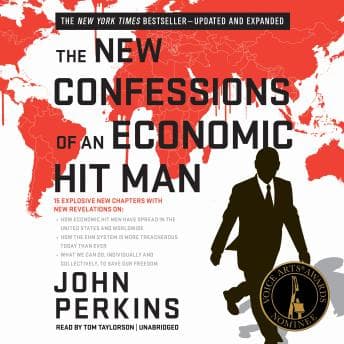
The original book came out in 2004, but this updated version adds about 40% new material. He brings it home - literally. Shows how the same tactics used on Ecuador and Indonesia are now being used on American citizens. On us. That part hit different at 7 AM when I'm exhausted and just trying to get home to my family.
Now, here's where I have to be honest. Some of this feels... dramatized. Like Perkins is telling a story he's told a hundred times and he knows exactly which beats to hit for maximum impact. A few of the reviewers I looked up called it "fiction-ish" and I get that. There's a memoir quality to it that sometimes overshadows the hard facts. My brain - trained to want documentation, evidence, peer review - kept asking "but where's the proof?" Not everything lands with the weight of a medical journal, if you know what I mean.
But does that make it less valuable? I don't think so. Sometimes the story IS the evidence. I've seen enough in healthcare to know that systems can be both completely legal and deeply corrupt at the same time.
Tom Taylorson Gets It
The narrator, Tom Taylorson, has apparently won an Earphones Award, and I can see why. He reads this like he understands the weight of what he's saying without making it feel like a lecture. Clear, engaging, knows when to push the drama and when to pull back. For a 12-hour listen, that pacing matters. I never felt like I was slogging through it, even when Perkins gets into the weeds of economic policy.
His delivery on the personal stuff - Perkins' family struggles, his guilt, his attempts at redemption - actually made me care about this guy who admits to doing terrible things. That's not easy to pull off. Taylorson doesn't try to make Perkins a hero. He just lets the story breathe.
Who Should Listen (And Who Should Skip)
If you want to understand why the world feels rigged - but you don't want to read a dry economics textbook - this works. It's accessible. Perkins writes like he's explaining it to a friend, not defending a thesis. But if you need everything verified and sourced and triple-checked? You might get frustrated. This is one man's account of one man's experience. Take it for what it is.
My husband Carlos asked me why I was sitting in the driveway for an extra ten minutes after I got home. I told him I was finishing a chapter about how the banking system is designed to keep developing nations in debt. He just nodded and went back inside. (He's used to me by now.)
The book ends with hope - practical steps, things you can actually do. I appreciated that. Same thing I appreciated about Girl, Stop Apologizing - actionable steps instead of just diagnosis. After 15 years of night shifts, I'm tired of problems without solutions. Perkins at least tries to offer a way forward, even if it feels a little optimistic given everything he just described.
Clocking Out on This One
Would I recommend it? Yeah. With caveats. It's not journalism. It's confession. And sometimes confession is exactly what you need to understand how the world really works - even if you can't verify every detail.