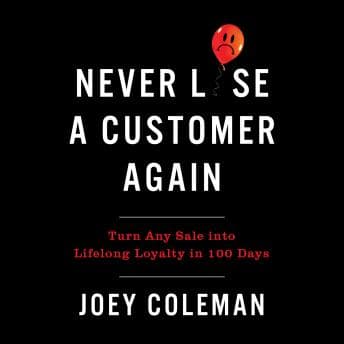

Look, I get it. Joey Coleman trademarked "First 100 Days®" - registered trademark and everything - because that's what consultants do. We name things, we framework things, and then we charge for things. I say "we" because I spent eight years at McKinsey doing exactly this. Takes one to know one.
But here's the thing. Coleman's actually right about the core problem. And it irritates me that I had to sit through 9 and a half hours (4 hours 45 minutes at my speed, thank you) to fully appreciate it.
The Framework My Parents Ran on Instinct
Coleman breaks down the post-purchase customer experience into eight phases: Assess, Admit, Affirm, Activate, Acclimate, Accomplish, Adopt, Advocate. All alliterative. All starting with A. Very consultant-y. Very effective.
Here's what got me though. My parents ran their dry cleaning business in Koreatown for over 20 years. They remembered every regular's name, their kids' names, what starch level they preferred. When a new customer walked in, my mom would over-explain the process, walk them through turnaround times, personally call when their order was ready. She didn't call it the "Acclimate" phase. She called it being a decent business owner.
Coleman packages this into a system - six communication channels (in-person, email, phone, mail, video, and gifts) mapped across those eight phases. And honestly? The systematization matters. Because my parents could do it with 200 regulars. You can't do it with 20,000 without a framework.
The case studies are where the book earns its keep. PolicyMedical turning boring software implementation docs into a physical puzzle that customers assemble as they complete each milestone? Brilliant. Sephora's VIB Rouge giving members a metallic card for private status and a members-only lipstick shade for public signaling? That's behavioral psychology executed perfectly. Everybody Lies does the same thing with big data, showing you what people actually do—not what they say they'll do—and it's just as unsettlingly useful. MastermindTalks spending zero on marketing and selling out their conference through referral bonuses including an all-expenses-paid safari? I've pitched retention strategies to startups for years and I'm taking notes on that one.
Where Coleman Loses His Own Customer (Me)
Here's my problem. At 9 hours 28 minutes, this book violates its own principle. Coleman spends whole chapters telling you he's going to tell you something, then telling you, then telling you what he told you. The man who wants you to respect your customer's experience doesn't always respect your time.
Skip to the second half of the book. Thank me later. That's where the eight phases get actual tactical depth. The first several hours are heavy on "why customer retention matters" stats - 20-70% of new customers leave in the first 100 days, acquiring new customers costs 5-25x more than retaining existing ones. Valid points. But if you're picking up a book called "Never Lose a Customer Again," you probably already know you have a retention problem. You don't need four hours of convincing.
Coleman narrating his own book works better than most author-narrated audiobooks I've suffered through. He's a keynote speaker, and it shows - the delivery has energy and genuine conviction. He believes this stuff. You can hear it. But it also means he occasionally slips into keynote cadence, where he pauses for emphasis like he's waiting for applause that isn't coming through my AirPods. At 2x speed those dramatic beats hit awkward.
Who Gets the ROI
I was reviewing churn data for a SaaS client last Tuesday night when I started this. By Wednesday I'd already sent the client the eight-phase framework (properly credited, I'm not a monster). That tells you something.
If you run a startup burning cash on acquisition while your back door is wide open with churning customers - this is your book. If you're in customer success, account management, or any client-facing role where you've ever lost a customer and thought "what happened?" - the framework gives you a genuine diagnostic tool. If you've already read "The Effortless Experience" and you're implementing retention strategies at scale, you'll find the case studies useful but the framework somewhat familiar.
Bottom line: there's a legitimately great 5-hour book hiding inside this 9.5-hour audiobook. The eight-phase framework is practical, the case studies are specific and stealable, and Coleman's passion makes it a decent listen even when he's padding. The key takeaway is worth the listen. The other 4 hours? Not so much.
This is what my parents did instinctively. Now it has a TED talk. And a registered trademark. And an audiobook that's about 4 hours too long.
Jenny would say I'm being harsh. Jenny is right. But she also never had to sit through a consultant explaining what she already knows for the first half of the book.