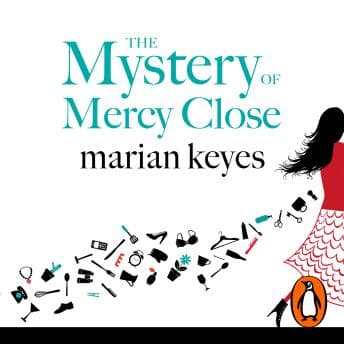

Look, I came to this expecting a cozy mystery with some laughs. What I got was a fifteen-hour sucker punch disguised as Irish wit, and I'm still not sure how I feel about that.
I should back up. Everyone knows Marian Keyes as the queen of funny-sad, the author who'll make you snort-laugh on one page and quietly devastate you on the next. I've heard this comparison a hundred times. What nobody prepared me for was how much Helen Walsh's internal monologue would feel like sitting inside someone's anxiety spiral - except the anxiety spiral is hilarious and also deeply, deeply not funny. It's a trick that shouldn't work. It works.
Helen Walsh Is Not Your Quirky Detective
Here's what separates this from every other "damaged PI solves a case" story I've listened to: Helen doesn't believe she's damaged. I ran into a similar setup - the investigator who can't see her own fractures - in Secondhand Spirits, though that one leans into the supernatural where Keyes goes somewhere much more interior and unsettling. She's a private investigator tracking down Wayne Diffney, the "Wacky One" from a boy band called Laddz (yes, with two d's, and yes, the book is as aware of how ridiculous that is as you are). But the missing persons case is almost secondary to what's actually happening, which is Helen's depression closing in like walls in a trash compactor. Keyes doesn't announce this. She lets you figure it out through Helen's narration getting progressively darker, her jokes getting sharper and more brittle, her observations about the world tilting from acidic-funny to something that made me set the book down and stare at my ceiling.
I was shelving returns at the library during a slow afternoon shift, earbuds in, and I had to pause because Helen made an offhand comment about "the clicky feeling" in her head - this casual, almost throwaway reference to her mental state - and it landed like a brick. Keyes writes depression the way it actually feels: not cinematic, not poetic, just this grinding presence that sits underneath everything else.
Niamh Daly Understands the Assignment
The narrator commits. That's rare. Niamh Daly's Irish lilt carries Helen's voice with exactly the right balance - caustic enough that you believe Helen's tough exterior, warm enough that you hear the cracks underneath. But where Daly really earns it is with Mammy Walsh. She shifts into this particular cadence for Helen's mother - slightly higher, slightly more breathless, with this very specific Dublin mammy energy that turns every one of her appearances into a scene-stealer. You can hear the woman gesturing with a wooden spoon.
And the thing is, Daly doesn't oversell the emotional beats. When Helen's depression surfaces, the performance gets quieter, not louder. Subtler. She trusts the text, which is exactly what a good narrator should do with writing this sharp. Some listeners have said the plot itself is predictable - the boy band mystery, the ex-boyfriend complications, the romance with Artie Devlin - and honestly? They're not wrong. The whodunit isn't the point. But Daly keeps you locked in through stretches where the mystery goes slack because her delivery of Helen's internal monologue is so specific, so committed, that you'd listen to Helen describe filing her taxes.
When Funny-Sad Becomes Just Sad (And That's the Point)
I keep coming back to the genre question. This is shelved as romance, as mystery, as contemporary fiction. It's all of those and none of those. What it actually is - and this is where my horror brain perks up - is a book about something pursuing Helen that she can't outrun, can't investigate her way out of, can't joke past. Shirley Jackson walked so this author could run, except Keyes's haunted house is clinical depression and the ghost is Helen's own neurochemistry. That's scarier than most horror I've covered on the podcast.
The book is fifteen and a half hours, which is a commitment. Around hour eight, I felt the pacing soften - the Laddz investigation meanders, Jay Parker's charm offensive gets repetitive - but Keyes always pulls you back with a line so sharp it draws blood. Helen describing her apartment being repossessed isn't played for sympathy. It's played for laughs. And it's devastating.
If you're looking for a tight, propulsive thriller, this isn't it. If you want a mystery where the mystery matters more than the detective, skip. But if you want to spend fifteen hours inside the head of a woman who is simultaneously the funniest person in any room and the one most likely to be drowning? If you scare easily - emotionally, I mean - maybe brace yourself. If you don't, you need this.
Content note: this book deals honestly with depression and mental health crises. It's wrapped in comedy, but it's there, and it's real.
Shirley (My Cat) Was Unimpressed. I Was Wrecked.
My podcast listeners are going to love this recommendation because it's going to confuse them. It's not horror. It's not even technically a thriller. But this understands that horror isn't about gore - it's about dread. And Helen Walsh's particular dread - funny, furious, Irish, and unbearably human - is the kind that follows you after you press stop. I listened to the last hour at home in the dark, out of habit, and for once the darkness felt less like atmosphere and more like empathy. Weird thing to say about a book with a boy band subplot. I stand by it.