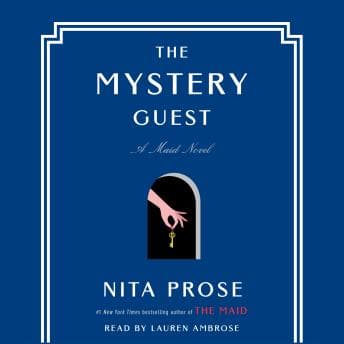

Look, I need to rant for a second. I picked up a book called Mystery Guest expecting, you know, mystery. Dread. Maybe a little menace lurking in hotel corridors. What I got instead was... cozy? Agatha Christie in a cardigan? This isn't a complaint, exactly—more like the disorientation of reaching for your coffee and tasting chamomile tea. Pleasant. But not what I ordered.
I was reshelving our true crime section at the library (we have exactly one shelf, and someone keeps stealing the Ann Rule books) when I decided to give this a proper listen. Shirley was unimpressed. I was... charmed against my will.
The Horror That Wasn't (And Why That's Fine, I Guess)
Here's the thing about Molly Gray: she's genuinely delightful in a way that made me feel like a cynical gremlin. Her rigid adherence to etiquette, her inability to read social cues, her obsessive cleaning rituals—Nita Prose writes neurodivergence with such tenderness that I kept forgetting I wanted someone to be properly menacing. J.D. Grimthorpe drops dead on the tearoom floor (very dead, the book assures us, which—yes, thank you for the clarification) and instead of creeping dread, we get Molly methodically working through her grandmother's old diary for clues.
The mystery itself is solid. Suspects everywhere: Lily the new maid-in-training, Serena the secretary with too many secrets, even Mr. Preston the doorman who's hiding something behind that professional smile. Detective Stark returns as Molly's antagonist, and their dynamic has this wonderful prickly energy. But the real tension isn't whodunit—it's watching Molly navigate a world that wasn't built for her brain.
Lauren Ambrose Commits (Mostly)
Lauren Ambrose's narration is warm, lively, and genuinely pleasant to spend eight hours with. She captures Molly's internal monologue beautifully—the formality, the earnestness, the occasional confusion when humans behave illogically. Her emotional delivery during the grandmother diary sections? I'll admit it. I got a little misty. At the library. During my lunch break. (My coworker asked if I was okay. I blamed allergies.)
Here's where I have to be honest, though: she doesn't quite nail the vocal differentiation between characters. When we're bouncing between Lily and Serena, or between older and younger versions of characters in Molly's memories, you're relying on context rather than distinct voices. It's not a dealbreaker—Ambrose's natural expression and tone shifts carry most scenes—but if you're used to narrators who do full theatrical transformations for each character, you might notice the limitation.
What she does brilliantly is Molly's old-fashioned speech patterns. There's something almost musical about how she delivers lines like "posthaste" without making it sound ridiculous. The narration adds drama without veering into melodrama. That's harder than it sounds.
Who Gets the Master Key (And Who Should Stay in the Lobby)
If you want atmospheric horror or genuine menace, skip this. Seriously. This isn't that book, and expecting it to be will only frustrate you.
But if you want a cozy mystery with genuine heart, a protagonist who sees the world differently and is never treated as broken for it, and a narrator who brings empathy and charm in equal measure? This is your book. It's comfort food in audiobook form. The kind of thing you listen to while doing dishes or driving through rain, letting Molly's particular logic wash over you. I get that same warm, uncomplicated feeling from White Fang—different era, sure, but both understand how to make you care about someone navigating a world that doesn't quite fit them.
My podcast listeners who come for the dread will be disappointed. My podcast listeners who secretly love a good cozy mystery when they think no one's watching? They're going to eat this up.
Checking Out
I didn't expect to like this as much as I did. It's not horror—not even close—but it understands something horror often forgets: character matters more than carnage. Molly Gray is the kind of protagonist you root for, and watching her untangle both a murder mystery and her own complicated past is genuinely satisfying.
The audiobook production is clean, Ambrose's narration adds genuine warmth, and at eight and a half hours, it doesn't overstay its welcome. Just don't listen in the dark expecting to scare yourself. This one's for the light.









