
Look, I teach high school English. I've spent two decades watching teenagers roll their eyes at required reading while secretly hoping they'll fall in love with stories the way I did. So when a book captures the voice of a seven-year-old who's smarter than most of my seniors? I pay attention.
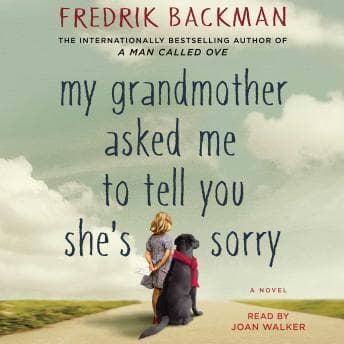
Elsa is seven, she's weird (her word, not mine), and her grandmother is the kind of crazy that makes you wish you'd had someone like that in your corner. Standing on balconies firing paintball guns at strangers crazy. Building entire fantasy worlds to help her granddaughter survive the cruelty of being different crazy. And when Granny dies and leaves behind a scavenger hunt of apology letters, Elsa has to deliver them to an apartment building full of people who are, frankly, just as broken and beautiful as she is.
Where Backman Gets You
Fredrik Backman does this thing—and I've seen it in A Man Called Ove too—where he makes you laugh and then sucker-punches you with grief. If you haven't experienced that emotional whiplash yet, A Man Called Ove is where Backman perfected the technique. It's not fair. It's also exactly what good literature does. The fairy tale elements threaded through the story (the Land-of-Almost-Awake, the Kingdom of Miamas) aren't just whimsy for whimsy's sake. They're how Elsa processes a world that doesn't make sense. They're how her grandmother taught her to survive.
My students would probably find the fantasy stuff confusing. They'd want clear lines between what's real and what's imagined. But that's the point, isn't it? For a kid dealing with bullies and divorce and the death of her only friend, the line between reality and story is exactly where safety lives. Backman understands that pause is punctuation—the moments between the humor and the heartbreak are where the meaning lives.
This is why we still read the classics, by the way. Because the best contemporary fiction does what Dickens did, what Eliot did: it takes marginalized characters and makes them the heroes of their own stories. Elsa's grandmother is a flawed, complicated woman who hurt people. The apology letters aren't about redemption so much as they're about truth. (Don't tell my students I compared a Swedish novelist to George Eliot. They already think I'm insufferable.)
Joan Walker's Balancing Act
Here's where I have to be honest. Joan Walker does something genuinely difficult—she voices a seven-year-old without making you want to throw your earbuds into Lake Michigan. Mostly. There are moments where the childlike pitch feels a bit much, where Elsa sounds more like an adult's idea of a precocious kid than an actual precocious kid. But the emotional range? Spot on.
Walker captures the tonal shifts with real precision. One minute you're laughing at Granny's antics, the next you're pausing your walk along the lakefront because your eyes are doing that thing they do when you're definitely not crying in public. She gives each character in the apartment building a distinct voice—the drunk, the monster (who isn't really a monster), the attack dog owner. The whole performance pulled me in so completely that my faculty meeting disappeared entirely. (Sorry, Principal Martinez. The budget presentation was very important, I'm sure.)
Some listeners have noted pacing issues, and I get that. There are stretches where the fairy tale world-building slows things down. But I'd argue that's the prose deserving to be savored. This isn't a thriller. It's a meditation on grief and belonging wrapped in a children's story. Listen at 1.0x. Trust me.
The Gut-Punch Moments
What got me—really got me—was how Backman writes about the right to be different. Elsa is weird. Her grandmother was weird. The people in that apartment building are all weird in their own ways. And the book doesn't try to fix them. It just lets them be. It says: you don't have to be normal to be worthy of love.
I've been teaching for twenty years. I've watched kids who remind me of Elsa get chewed up by a system that rewards conformity. This book is for them. It's for anyone who's ever felt like they don't fit. It's for the grandmother figures who build worlds for the kids who need them. If you need thrillers or tight plotting to stay engaged, this probably isn't your listen—it moves at its own pace and lives in feeling more than plot.
Denise and I listened to the last hour together, walking the lakefront at sunset. She squeezed my hand during the ending. Neither of us said anything for a while after.
Would I Listen Again?
Yeah. I would. Not right away—I need to recover emotionally first. But this one stays with you. It's warm without being saccharine, sad without being manipulative. If you loved A Man Called Ove, this is its spiritual successor. I gave Ove five stars for good reason—it's the book that made me trust Backman completely. If you haven't read Backman yet, this is a beautiful place to start.
Just maybe don't listen during faculty meetings. You'll definitely cry, and that's hard to explain.