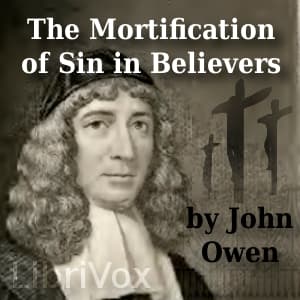

I was grading a stack of sophomore essays on The Scarlet Letter — it was maybe 11:30 PM, Denise had already gone to bed, and I was losing the will to explain to yet another sixteen-year-old that Hester Prynne is not, in fact, "basically the same as a Kardashian" — when I decided I needed something to reset my brain. Something old. Something severe. Something that would make Hawthorne look like beach reading. So I queued up John Owen's Mortification of Sin in Believers and poured another cup of coffee.
I did not expect to be genuinely shaken by a four-and-a-half-hour Puritan treatise at midnight on a Tuesday. And yet.
Owen Doesn't Ask — He Diagnoses
Let me give you some context, because Owen deserves it. This is a man who was Vice-Chancellor of Oxford, chaplain to Oliver Cromwell, and one of the heaviest theological minds of the 17th century. He wrote this in 1656, and it reads like he's sitting across from you, looking you dead in the eye, refusing to let you squirm away from his central thesis: "Be killing sin or sin will be killing you."
That line. I had to pause and sit with it. Not because it's unfamiliar — anyone who's spent time in Reformed circles has heard it quoted on coffee mugs and Instagram graphics — but because hearing it in context, surrounded by Owen's relentless logic, it hits differently. This isn't a motivational poster. It's a surgical argument. Owen doesn't just tell you sin is dangerous; he walks you through the mechanics of how it operates, how it disguises itself, how it uses your own spiritual confidence against you. He's not preaching at you. He's diagnosing you.
The structure is methodical — almost obsessively so. Owen lays out the nature of indwelling sin, then the means of its mortification, then the dangers of neglecting the work. Each chapter builds on the last like a legal brief. My students would hate this. I love it. There's a kind of ruthless clarity here that reminds me of what Hemingway said about writing — "All you have to do is write one true sentence" — except Owen writes dozens of them, and each one lands like a verdict.
The Language Problem (And Why It's Worth the Struggle)
Let's talk about the elephant in the room: the English. This is 17th-century prose, and Owen was not writing for accessibility. Sentences coil and loop. Subordinate clauses nest inside subordinate clauses. There were moments — particularly in the middle chapters where Owen distinguishes between the "acts" and "habits" of sin — where I had to rewind fifteen or twenty seconds just to untangle what he was saying.
And honestly? That's part of the experience. The prose deserves to be savored, not because it's elegant in the way we'd use that word now, but because Owen chose every phrase with theological precision. He's not being difficult for sport. He's being exact. At 1.0x speed — and I wouldn't listen to this any other way — you start to feel the weight of his arguments accumulate. By the time he reaches his discussion of the Holy Spirit's role in mortification, you realize he's built an airtight case across several hours.
But I won't pretend it's easy listening. If you're coming to this cold, without some background in Puritan theology or at least a comfort level with older English, you're going to drift. I caught myself drifting during a few of the more densely doctrinal passages, and I literally teach literature for a living.
Stephen Escalera Reads It Straight — And That's the Right Call
Here's where I have to be honest about the limits of what I can tell you. Stephen Escalera's narration is workmanlike in the best sense — clear, measured, respectful of the text. He doesn't try to dramatize Owen, which is the correct instinct. This isn't material that needs theatrical flair. It needs someone who understands that the pause is punctuation, who can let Owen's sentences breathe even when they're running long. Escalera does that.
Is it a performance that will make you forget you're listening to a 370-year-old theological treatise? No. But it shouldn't be. The narrator understands that pause is punctuation, and he trusts Owen's words to carry their own gravity. I didn't find any moments where the reading distracted from the content, which — for prose this dense — is no small thing.
Who Needs This in Their Ears
If you're a Christian who takes sanctification seriously and you haven't read Owen, this is your entry point. Period. If you loved Pilgrim's Progress in audio form, this is its spiritual successor — less allegory, more direct confrontation, but the same Puritan seriousness about the interior life. Pastors, seminary students, anyone who's tired of shallow self-help dressed up as theology — Owen will wreck you in the best possible way. Though I'll say — if you've been circling the drain on something like Deadly Pursuit and wondering whether a book can actually chase you down and corner you, Owen does it more thoroughly than anything else I've encountered in this genre.
If archaic English makes you check out, or if you're looking for something devotional and warm, this probably isn't your book. Owen is warm the way a surgeon is warm — he cares deeply, but he's going to cut.
The Assignment I'd Give Myself
I finished this at 1 AM, essay stack still ungraded, coffee cold. And I sat there thinking about how Owen wrote this almost four centuries ago, and the central human problem he's describing — the gap between who we want to be and what we keep doing — hasn't moved an inch. This is why we still read the classics. Not because they're old. Because they're true.
Worth pausing the faculty meeting for. Worth losing sleep over. Worth the struggle with the language. Just don't expect it to be comfortable.