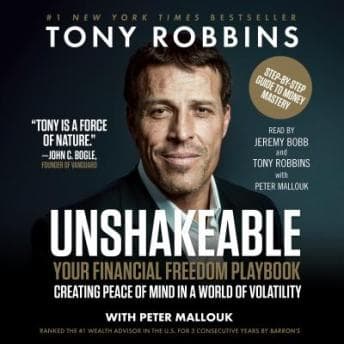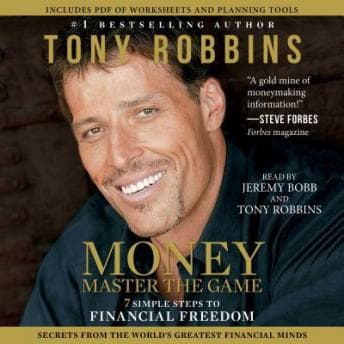

I was chopping onions for a vindaloo—the spicy kind that makes you question your life choices—when Tony Robbins stopped talking.
And some guy named Jeremy started.
I literally stopped the track. Pulled my phone out with wet, onion-scented hands to check if I'd accidentally skipped to a different book. I hadn't. (My phone screen still smells like cumin, by the way.)
Here's the psychological reality of this audiobook: It's a massive, jarring case study in Contrast Effect. You buy this book because you want Tony. You want the teeth, the gravelly voice, the sheer, unadulterated dopamine hit of a man who sounds like he could bench press your mortgage. That same intoxicating energy is what makes Awaken the Giant Within work so well—Tony actually narrates the whole thing himself. He reads the introduction here. He gets you hyped. You are ready to conquer Wall Street.
Then, Chapter 1 ends. And Jeremy Bobb steps in.
The Great Energy Crash
Look, I'm a psychologist. I understand that Tony Robbins is busy. The man probably schedules his bathroom breaks three years in advance. He can't sit in a booth for 21 hours. But the transition here is... violent.
Jeremy Bobb is a professional narrator. Clear enunciation. Competent. But following Tony Robbins with Jeremy Bobb is like following a fireworks display with a PowerPoint presentation on municipal zoning laws.
Psychologically, it creates immediate disengagement. My brain, primed for Tony's high-arousal vocal patterns, basically went into withdrawal. Jeremy sounds... fine. Just fine. But "fine" feels like a failure when you were promised a revolution. It's dry. It's monotone. It lacks the soul of the text. Because this text is written in Tony's voice—lots of exclamation points and bold declarations—hearing it read in a calm, "library voice" creates a cognitive dissonance that's frankly exhausting.
(I eventually got used to it, but I had to crank the speed up to 1.5x just to simulate a normal human heart rate.)
The Behavioral Finance Framework Actually Works
If you can get past the narration bait-and-switch (and that's a big if), the actual behavioral mechanics inside this book are fascinating.
I usually hate finance books. They assume humans are rational actors. We aren't. We are emotional wrecks who buy high because of FOMO and sell low because of panic. What Robbins (and his ghostwriters/researchers) did here is brilliant—they built a system designed to bypass the human amygdala.
He interviews the titans—Dalio, Buffett, Bogle. And instead of just listing their returns, he digs into their mindsets. The "All Weather" portfolio concept, for instance, is psychologically designed to reduce the volatility that makes people freak out and sell. It's an investing strategy for people who have anxiety.
Which, let's be real, is all of us.
There's a section on the "myths" of investing that actually made me pause my run along the Charles River to take notes. (I looked ridiculous, standing there in spandex typing "fiduciary standard" into my notes app, but whatever.) The book forces you to confront your own cognitive biases regarding fees and active management. It's uncomfortable. Good therapy usually is. Girl, Stop Apologizing does something similar with goal-setting—forcing you to look at the mental blocks you've built around your own ambitions.
The Verdict
This is a 21-hour marathon. It is long. It is repetitive. Tony repeats himself for emphasis, which works on stage but feels like nagging in an audiobook—especially when it's not even his voice doing the nagging.
Is the information life-changing? Potentially. My mother would say, "Priya, why do you need a book to tell you to save money? Just don't buy the expensive coffee." But the psychological framework for automation—taking the decision-making power away from your future, weaker self—is spot on.
Who should listen: Anxious investors who want a behavioral psychology approach to money, not just spreadsheets. People who can tolerate dry narration for solid content. Who should skip: Anyone who needs Tony's energy to stay engaged—the audio version will kill your vibe by Chapter 2.
My advice: If you want the data and can tolerate a dry delivery, the content is actually worth the credit. Just do yourself a favor: speed it up. Seriously. 1.25x minimum. Otherwise, you'll be asleep before you reach financial freedom.