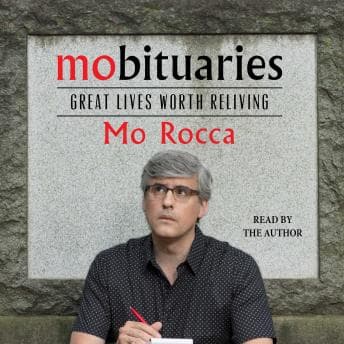

Look, I'll admit it - I picked this up expecting lightweight entertainment. Mo Rocca? The quirky guy from CBS Sunday Morning? How much substance could there possibly be?
I was wrong. And I don't say that often.
When History Gets the Business Treatment
Here's what Rocca does that most popular historians don't: he treats every forgotten figure like a case study. The Herbert Hoover section alone is worth the price of admission. Before he was the guy we blame for the Depression, Hoover saved tens of millions of people from starvation. Tens of millions. That's not a footnote - that's a Fortune 500 turnaround story that got buried by bad timing and worse PR.
That tension between achievement and perception shows up in I'm Still Standing too, where personal legacy gets rewritten by circumstances beyond your control.
My parents would've understood Hoover. You do the work, you build the reputation, then one thing goes sideways and suddenly nobody remembers the fourteen-hour days. Rocca gets this. He's not just telling you who died - he's showing you how reputations get made and unmade. That's applicable intelligence.
The Marlene Dietrich section hit different too. Here's a woman who risked her life entertaining troops on the front lines, actively working to defeat the Nazis from her own homeland. Most people just remember the legs. Rocca reframes her entire legacy in about twenty minutes. That's efficient storytelling.
Why Author-as-Narrator Works Here
Rocca narrating his own work is the right call. His delivery is folksy but sharp - like your smartest friend who happens to have done way too much research on dead people. (And honestly? That's exactly what he is.) The humor lands because you can hear him enjoying his own jokes without being insufferable about it.
The pacing works for how I actually listen to audiobooks - in chunks between client calls and during airport waits. Each "mobituary" is its own contained unit. You don't need to remember what happened three chapters ago. This is the anti-epic, and I mean that as a compliment.
There's a warmth to his delivery that makes even the more obscure subjects feel relevant. Billy Carter and the whole "embarrassing presidential brother" phenomenon? I never knew I needed that analysis. But Rocca frames it as a question about family dynamics in high-pressure environments. Suddenly it's not trivia - it's insight.
The ROI Question
Bottom line: this is nearly twelve hours of content, and unlike most books that length, it earns the runtime. The episodic structure means you can cherry-pick what interests you. Skip the dragons section if that's not your thing. (I skipped it. No regrets.)
The production is clean, no weird audio issues. Won an Earphones Award, which tracks - this is clearly a labor of love that got the technical execution right.
Who's In, Who's Out
This is for history nerds who don't want to feel like they're back in lecture hall. Podcast listeners who want something meatier than true crime. Commuters who need content that works in thirty-minute chunks. Basically, busy people who want to feel smarter without suffering through academic prose.
Skip it if you need a continuous narrative arc. It's more like a really good anthology. Some people hate that format. I get it.
My 2.0x speed worked fine here - Rocca's delivery is measured enough that you don't lose the jokes. Jenny would probably tell me to slow down and enjoy it. Jenny would probably be right.
Completion Rate Tells the Story
Here's the thing: I finished this one. The whole thing. That puts it in the top 30% of my Audible library by completion rate alone. For a book about dead people, that's saying something.