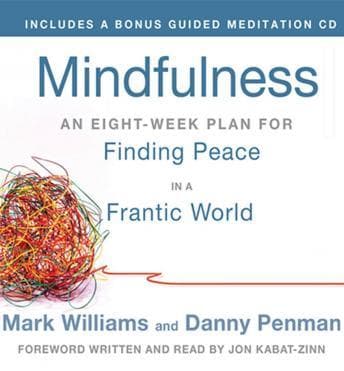

Two hours and thirty-one minutes. That's it. A mindfulness book that doesn't waste your time. I almost cried from gratitude.
I finished this at my desk on a Tuesday night after a brutal client call where a founder told me his "pivot strategy" was basically lighting the remaining runway on fire. I needed something to bring my blood pressure down before Jenny found me stress-eating Korean rice crackers at midnight. So I pulled this up.
The Dry Cleaner's Secret, Now With Academic Credentials
Here's what got me. The core insight - that we spend so much time ruminating on what's wrong or chasing what's next that we forget to actually exist in the present - is something my mom figured out standing behind a pressing machine for 14 hours a day. She called it "just doing the work." Williams and Penman call it Mindfulness-Based Cognitive Therapy. Same thing, different packaging, but the packaging here is genuinely well-done.
The eight-week program is structured the way I wish every business book was structured: here's the concept (brief), here's why it works (briefer), now do this specific thing for 10-20 minutes a day (actionable). The chocolate meditation exercise early on - where you eat a single piece of chocolate like you've never encountered food before - sounds absurd until you actually try it and realize you've been inhaling meals like a competitive eater for the past decade. That one landed hard. I eat lunch at my desk most days without tasting a single bite.
The 3-minute breathing space practice is the real workhorse here. Three minutes. That's less time than I spend deciding which Audible book to abandon next. And the body and breath meditation is solid grounding work - the kind of thing I now do before walking into a pitch meeting instead of checking Slack one more time.
Mark Williams Sounds Like a Friend You Actually Want to Keep
Williams narrates with this warm, straightforward delivery that somehow doesn't make you feel like you're being sold crystals. He's authoritative without being preachy - Oxford professor energy without the condescension. Jon Kabat-Zinn contributes as well, and between the two of them, you get this feeling like a couple of deeply credible guys are sitting across from you saying, "Look, just breathe. It's not that complicated." And they're right.
The production is clean and simple. No ambient rain sounds, no wind chimes, no new-age nonsense. Just clear instruction. I respect that enormously.
One legitimate gripe: when Williams says something like "now do the meditation if you please," it's not always clear where to find the corresponding guided meditation tracks. Multiple listeners have flagged this, and it's a real UX problem. For a book about being present and not anxious, creating a scavenger hunt for the meditation audio is... ironic. Check whether your platform includes companion tracks before you start, or you'll be Googling mid-session, which defeats the entire purpose.
Who This Is Actually For (And Who Should Skip)
If you're a founder, consultant, or anyone running on cortisol and cold brew - this is the most efficient mindfulness primer I've found. Two and a half hours of audio, 10-20 minutes of daily practice. The ROI math works. If you've been "meaning to try meditation" for three years but keep not doing it because every book is 12 hours long and requires you to buy a cushion, start here.
Skip if you want deep neuroscience or a comprehensive meditation library. This is a starter kit, and it knows it. Also skip if you need hand-holding on the tech side - the meditation track navigation issue is real.
I'll be honest: I listened at 1.5x instead of my usual 2.0x. Partly because the pacing is already tight, and partly because - and I can't believe I'm typing this - slowing down was kind of the point. McConaughey makes a similar case for deceleration in Greenlights - less structured than this, more campfire than classroom, but the underlying argument that presence is a competitive advantage landed the same way for me. Jenny would be proud. We won't tell her.
The Consulting Fee Is $0 and the Advice Is Actually Good
Bottom line: this is what my parents did instinctively. Now it has a TED talk. But the structure is genuinely practical, the narration is warm without being soft, and at 2.5 hours it respects your time more than 95% of the self-help shelf. The key takeaway is worth the listen - and for once, there's almost no padding to skip. Finally, a book that practices what it preaches about not wasting your life.