
Look, I've sat through a lot of business books that promise to change your life. Most of them are recycled LinkedIn posts stretched into 8 hours. So when a book claims that your chronic back pain is basically your brain throwing a tantrum? I'm skeptical. Very skeptical.
But here's the thing - Dr. Sarno's argument is actually pretty solid. And I say this as someone who watched my dad work through back pain for 30 years at the dry cleaners, never once considering that his stress about making rent might be connected to his herniated disc diagnosis.
The Core Thesis (And Why It's Not As Crazy As It Sounds)
Sarno's basic premise: your unconscious mind creates physical pain to distract you from repressed emotions. Rage, mostly. The kind of rage that "good people" - perfectionists, people-pleasers, the chronically responsible - can't allow themselves to feel. So your brain invents a back problem instead.
Is this convenient? Sure. Is it also backed by decades of clinical observation from a professor at NYU Medical School? Also yes.
What I appreciated - and I don't say this lightly - is that Sarno actually respects your intelligence. He walks through the physiology, explains why structural abnormalities often don't correlate with pain levels, and presents case study after case study. This isn't some guy telling you to "manifest wellness." He's essentially saying: your brain is lying to you, and here's the evidence.
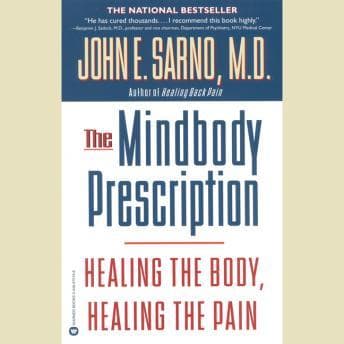
The Howard Stern endorsement on the cover? I rolled my eyes. But then I read that Stern literally credits this book with eliminating his chronic back pain. So. There's that.
Brian Holsopple's Steady Hand
Here's where I have to be honest - the narration is fine. Just fine. Holsopple reads with clarity and a soothing tone that works for medical content. He doesn't get in the way, which is exactly what you want for a book that's asking you to rewire your understanding of your own body.
But is it dynamic? No. Some listeners will find it dry. I listened at 1.75x (couldn't quite hit my usual 2.0x because the concepts require actual processing) and found the pacing worked. The ideas are complex enough that a flashier narrator might actually hurt the message.
Think of it like a really good PowerPoint presentation. Not exciting, but effective. The content carries the weight here.
Where It Gets Repetitive (Skip to Chapter 5? Maybe.)
Okay, here's my complaint. Sarno makes his point in the first third of the book. And then he makes it again. And again. Different examples, same thesis. By hour four, I was muttering "I get it, my rage is manifesting as sciatica" while folding laundry.
For people who are resistant to the idea - and many will be, because we're trained to believe pain = structural damage - the repetition might be necessary. It's almost like Sarno knew he was fighting against decades of medical conditioning and decided to hammer the point until it stuck.
But for those of us who bought in early? It drags.
My recommendation: listen to the whole thing once, then bookmark the key chapters for re-listening when your pain flares up. Several reviewers mentioned they return to this book repeatedly, and I can see why. The healing apparently happens through repeated exposure to the concepts.
The Business Case for Your Body
Here's where my consulting brain kicked in. Sarno is essentially describing an organizational dysfunction - your conscious mind is the CEO making rational decisions, while your unconscious is the disgruntled middle manager sabotaging operations because nobody's addressing the real problems.
I've seen this pattern in companies. Leadership ignores systemic issues, symptoms pop up everywhere (turnover, missed deadlines, quality problems), and everyone treats the symptoms instead of the root cause. Sarno's saying your body works the same way.
My parents didn't have time for therapy. They had a business to run, kids to raise, a community to serve. Their stress became physical - my mom's migraines, my dad's back. Adult Children of Emotionally Immature Parents explores similar territory—how our parents' unprocessed emotions shape us in ways we don't recognize until much later. This book made me wonder what might have been different if someone had told them their pain was trying to communicate something.
Who Should Listen (And Who Should Skip)
This isn't a quick fix. It's a paradigm shift. And paradigm shifts are uncomfortable.
If you're dealing with chronic pain that hasn't responded to conventional treatment, this is worth 7 hours of your time. Skeptics might find Sarno's clinical background and methodical approach at least makes them curious. Skip it if you need high-energy narration to stay engaged - maybe read the physical book instead.
The production is clean, the ideas are genuinely useful, and the worst case scenario is you've learned something about the mind-body connection. Best case? You're one of those people leaving reviews saying "this book eliminated 10 years of pain."
I'm not there yet. But I'm paying attention to my stress levels differently now. And that's something.